2021
East Perth, Western Australia
Percent for Art: Sculpture
Daniel Giuffre, Jon Tarry
City of Perth
Capital House Engineering
6.5m H x 4.5m W x 6.3m L
Composite carbon fibre
$297,000
[Composite Constructions](https://www.compositesconstructions.com.au/)
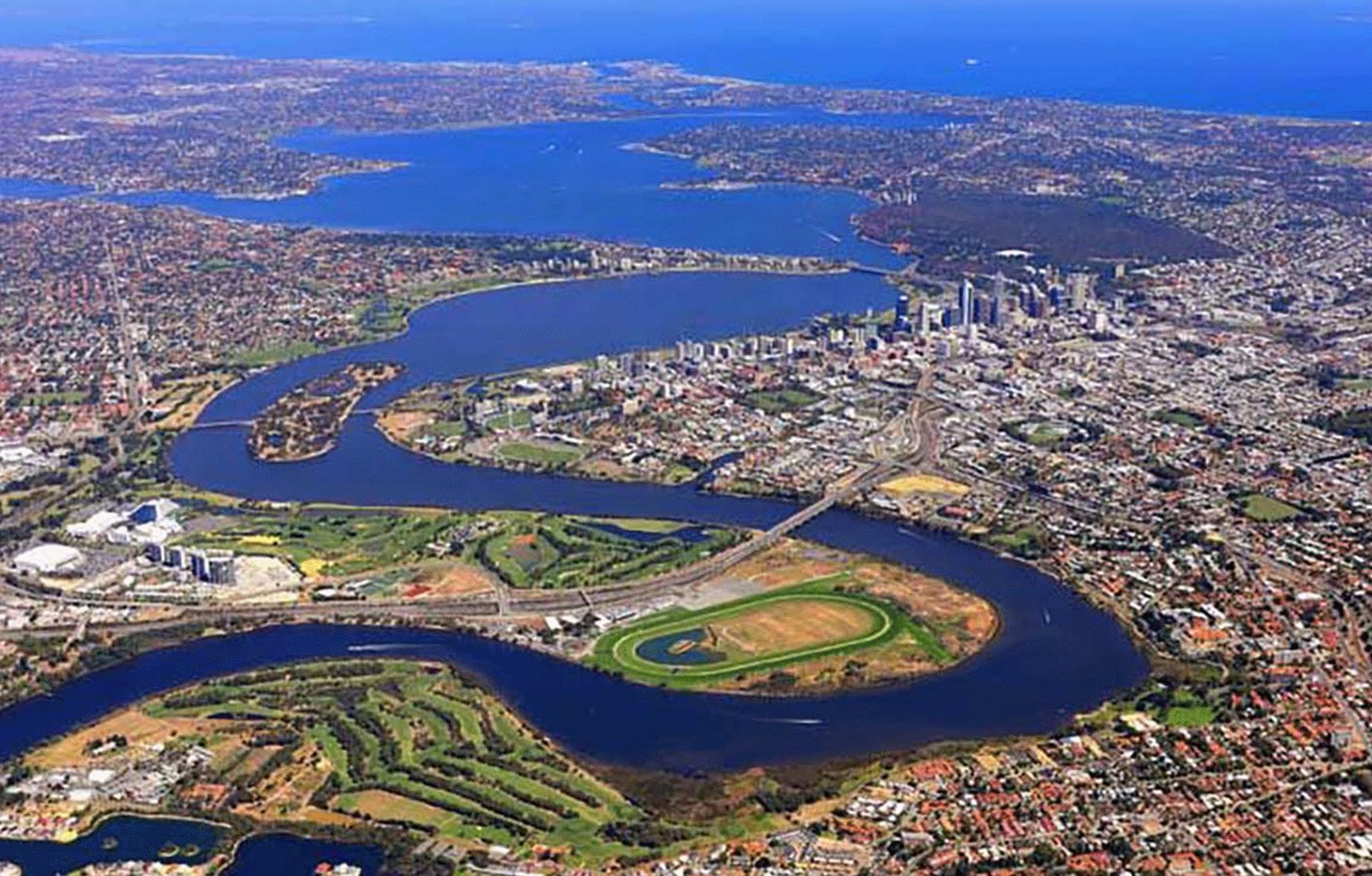
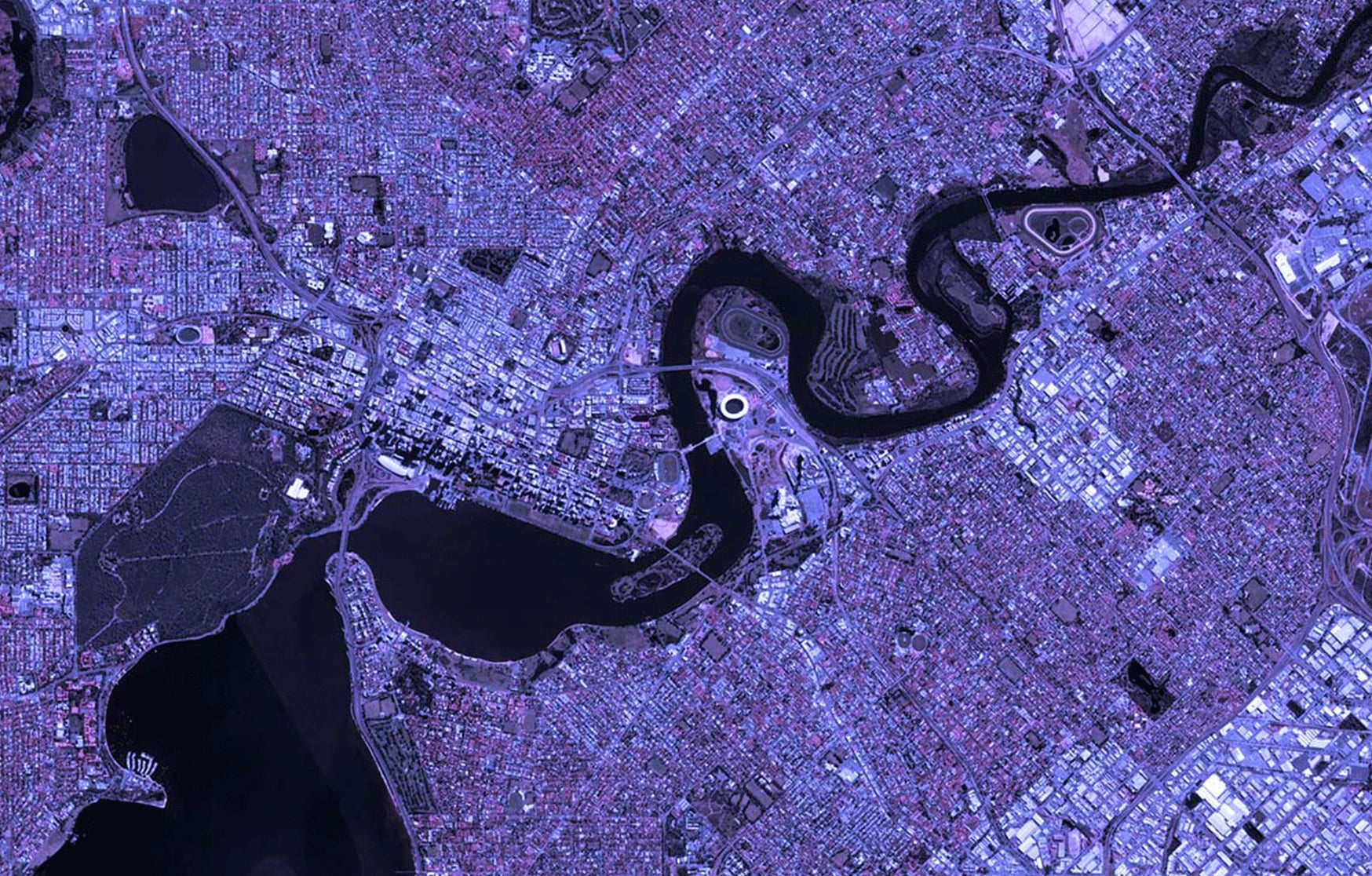
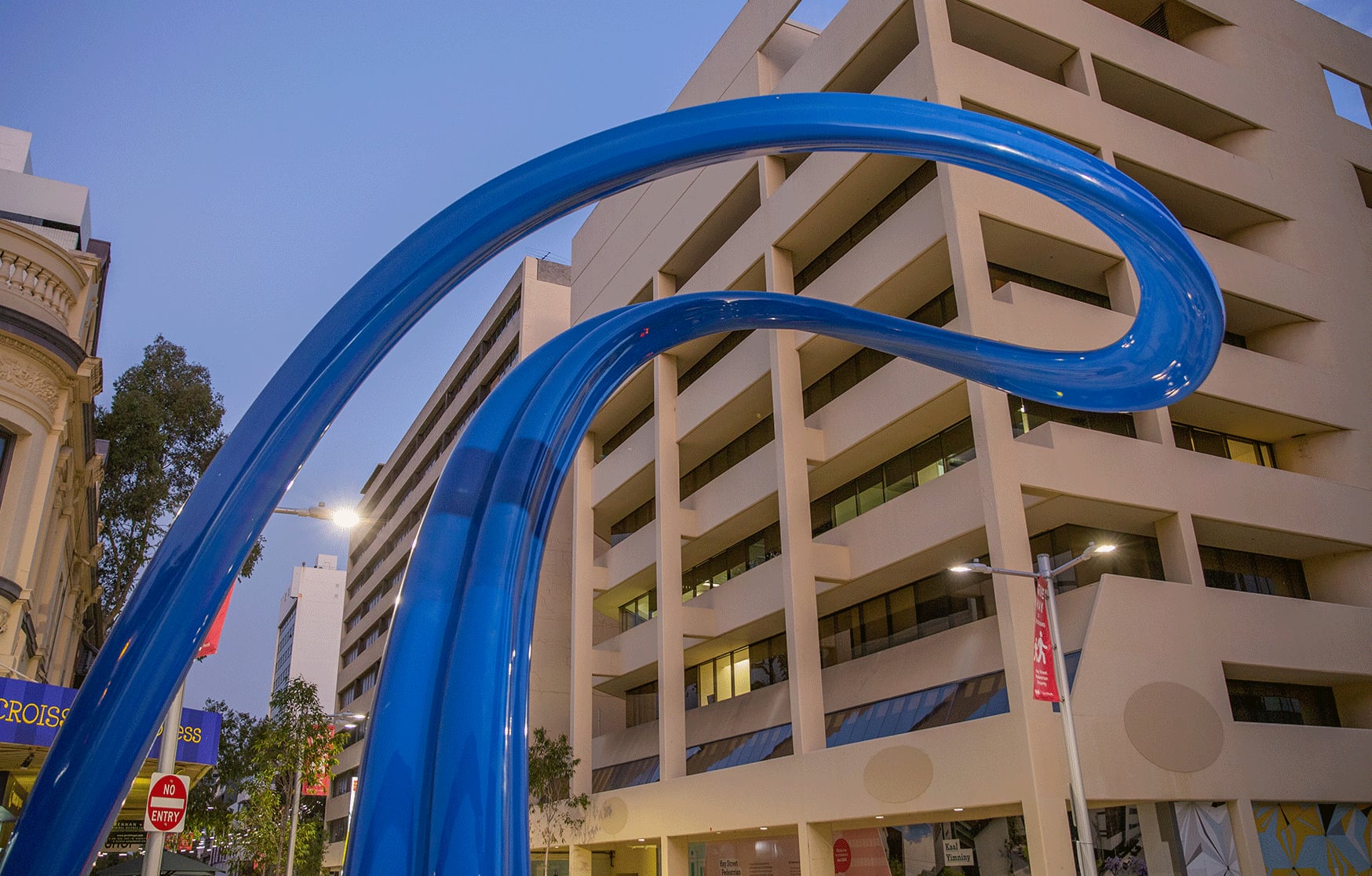
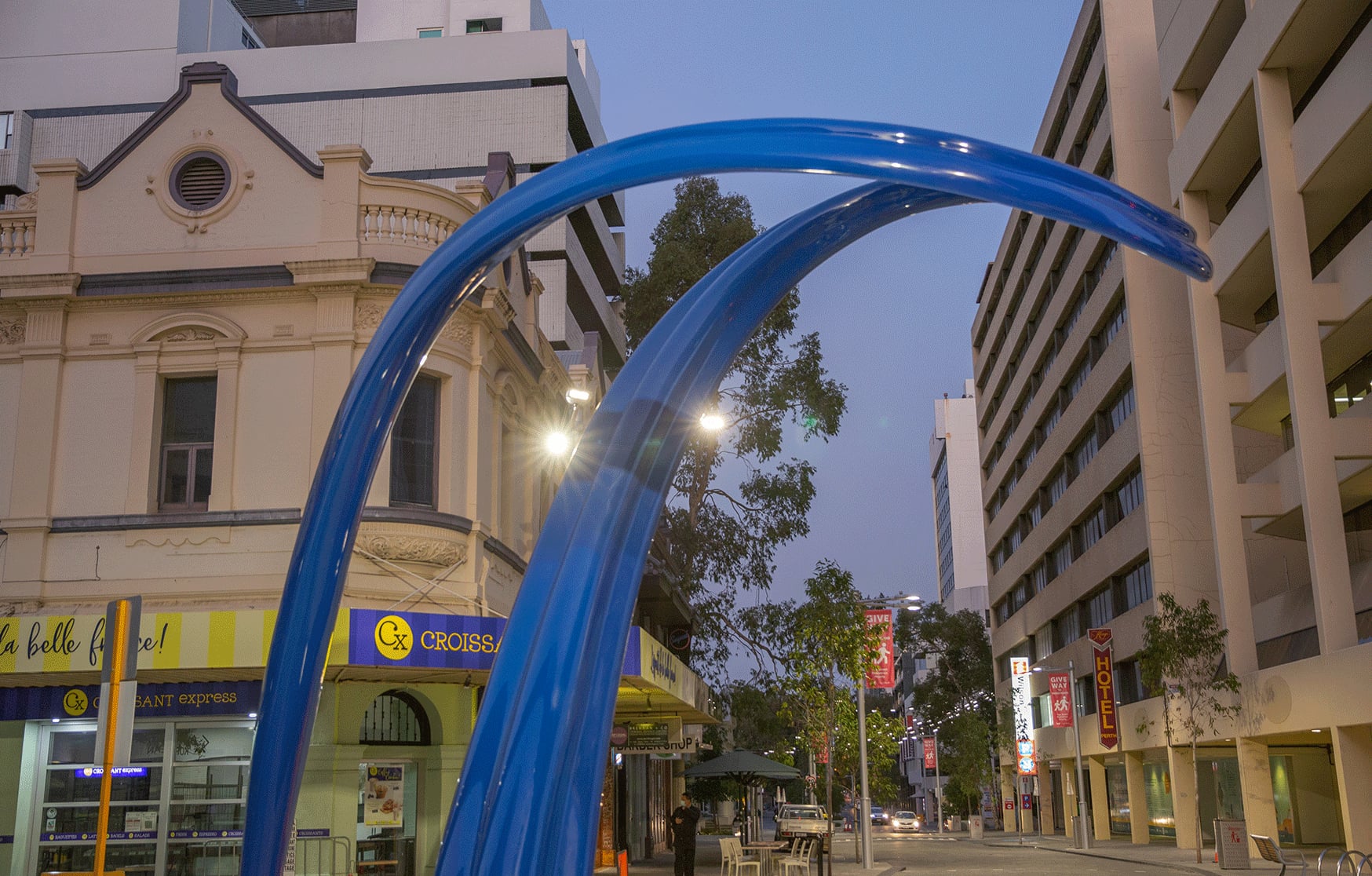
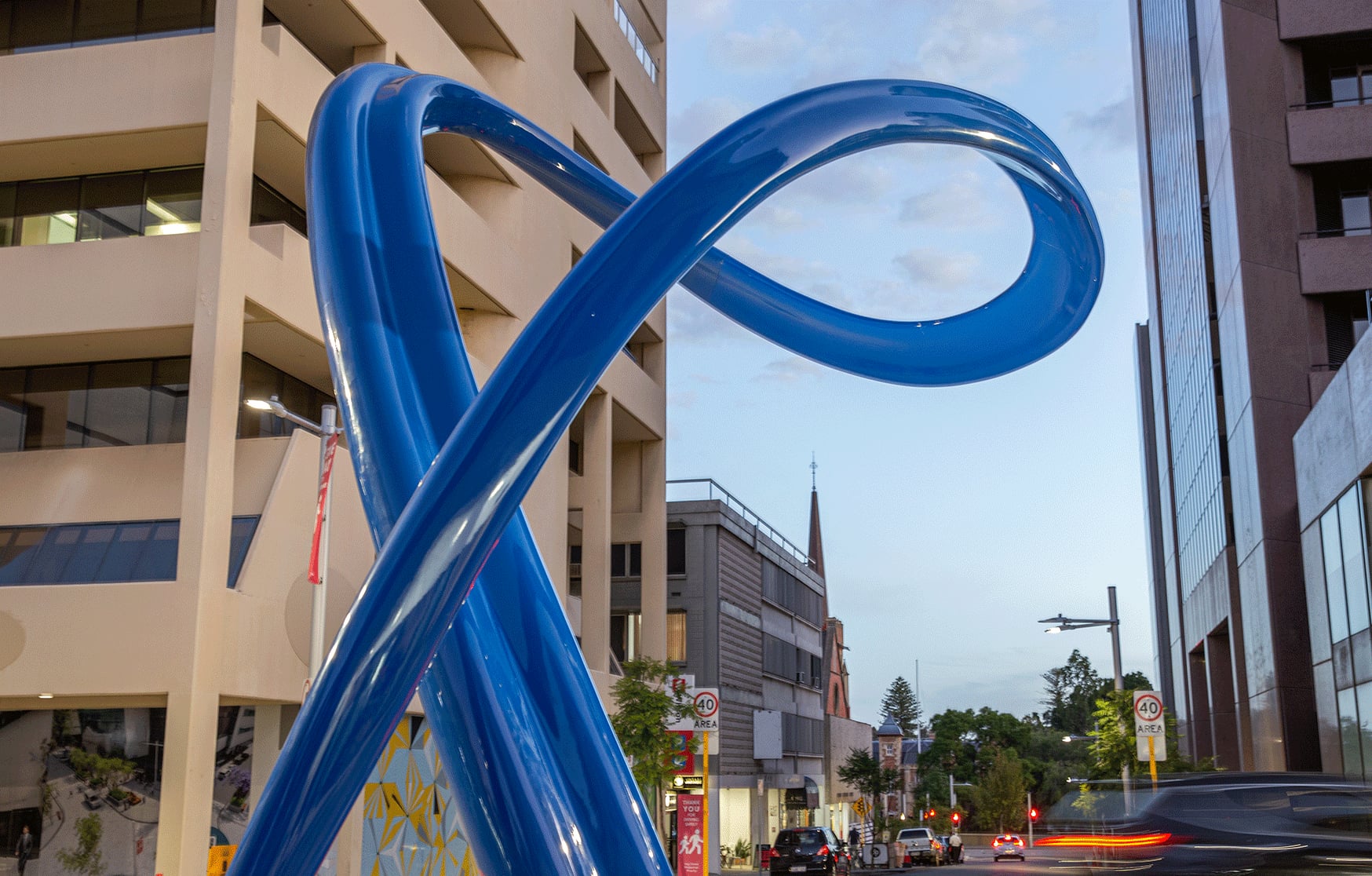
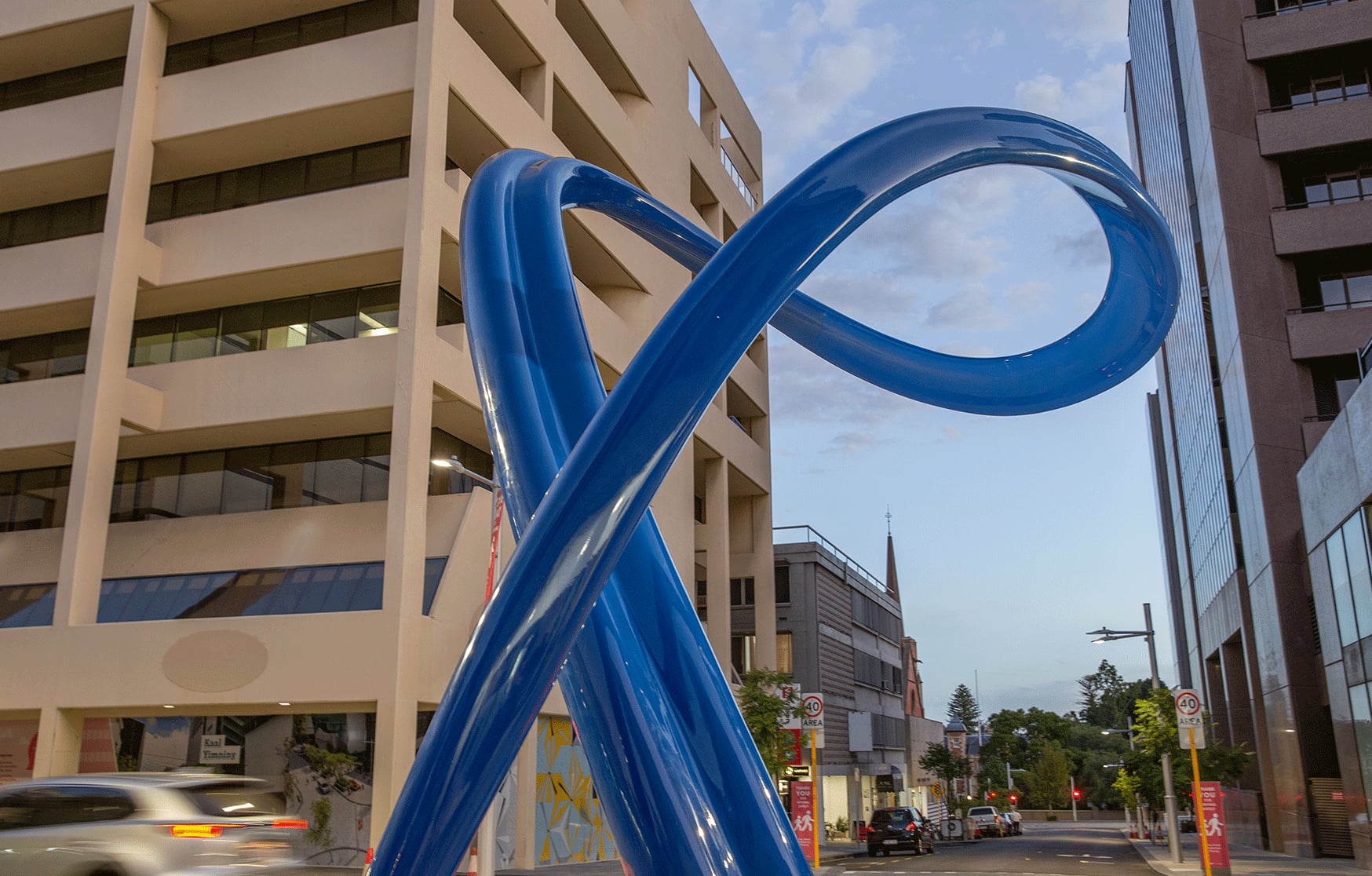
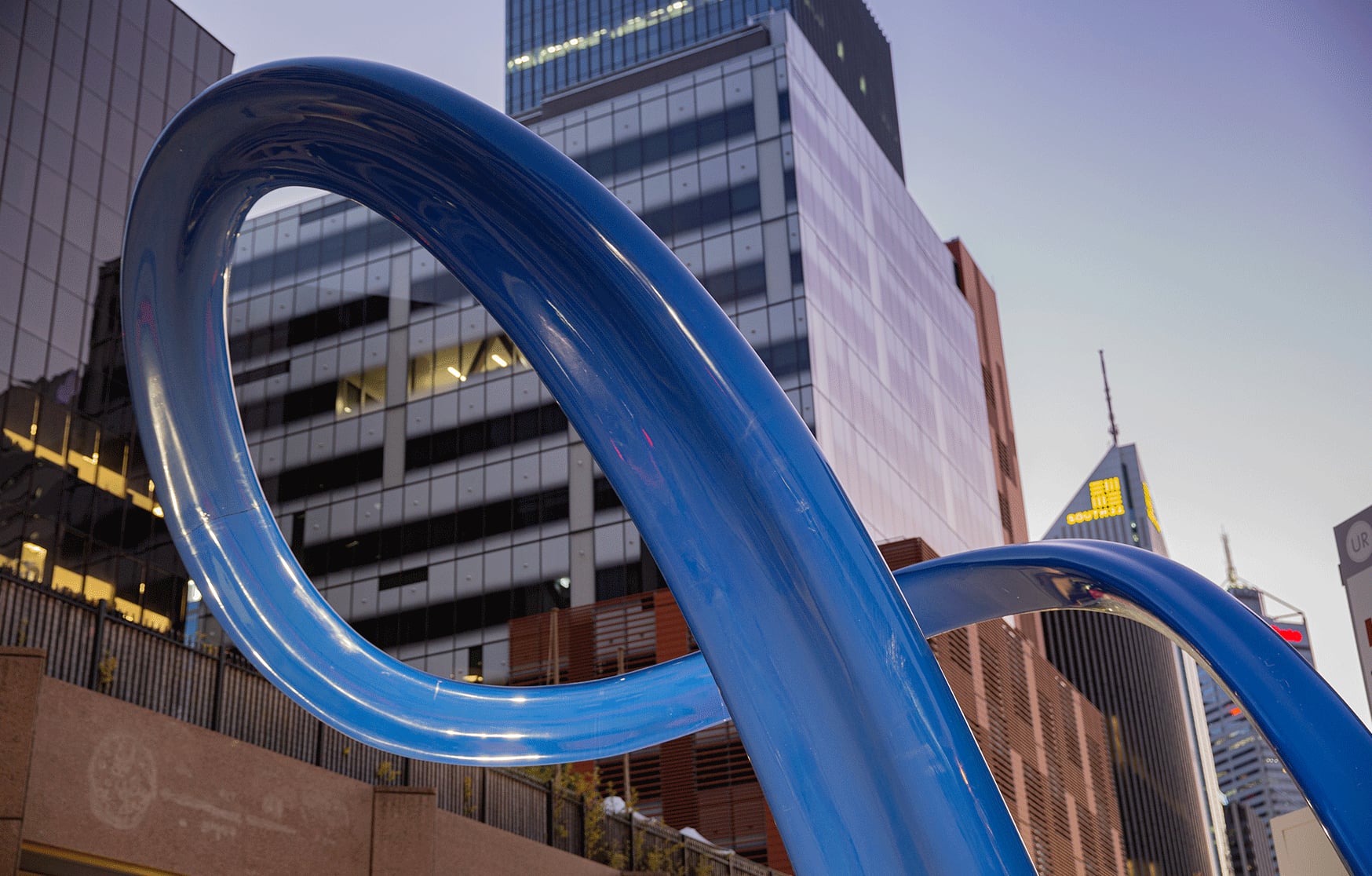
The Swan River's winding course, lifted off the map and looped over the street corner in carbon fibre, pointing the city back to its water.
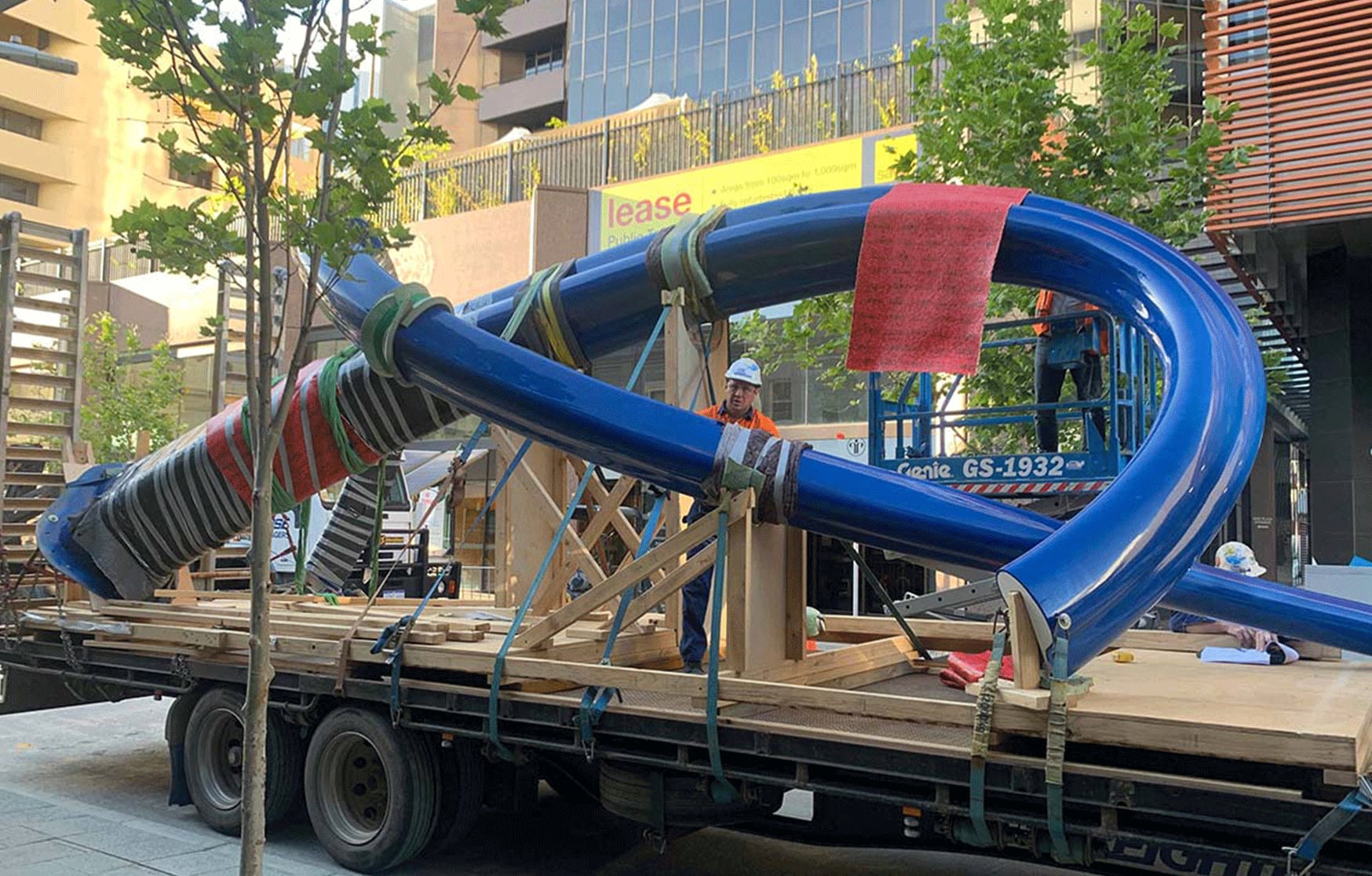
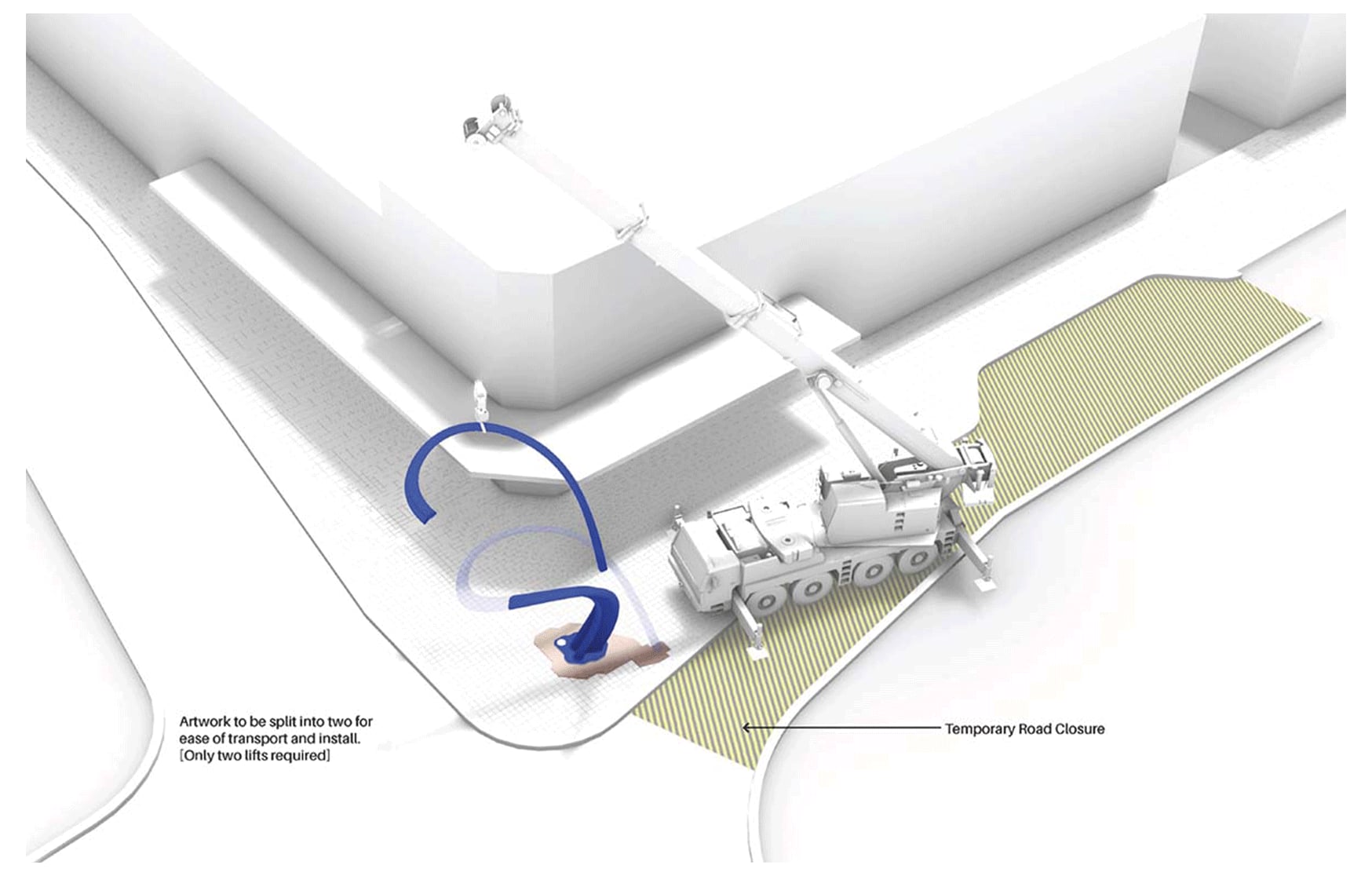
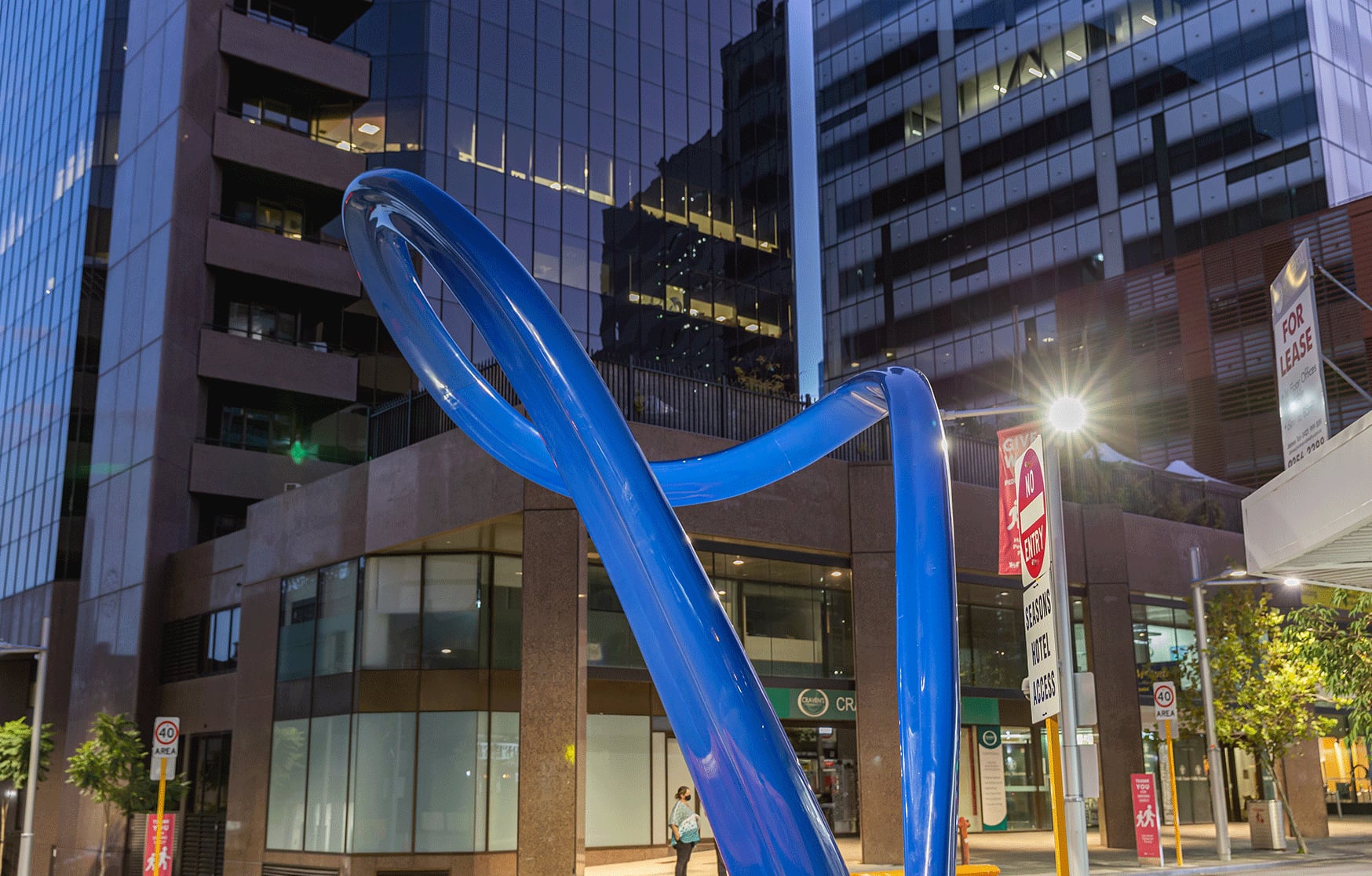
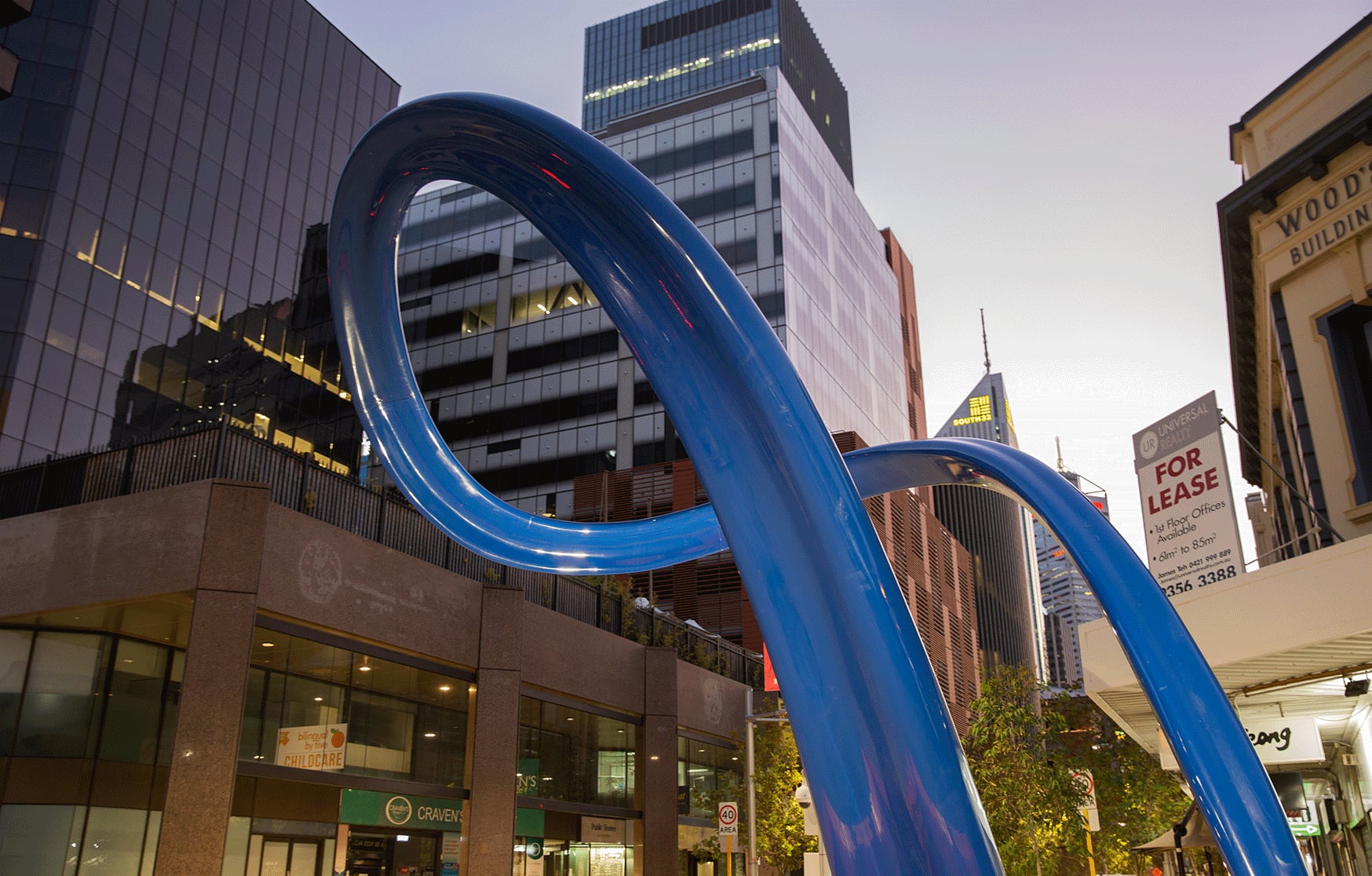
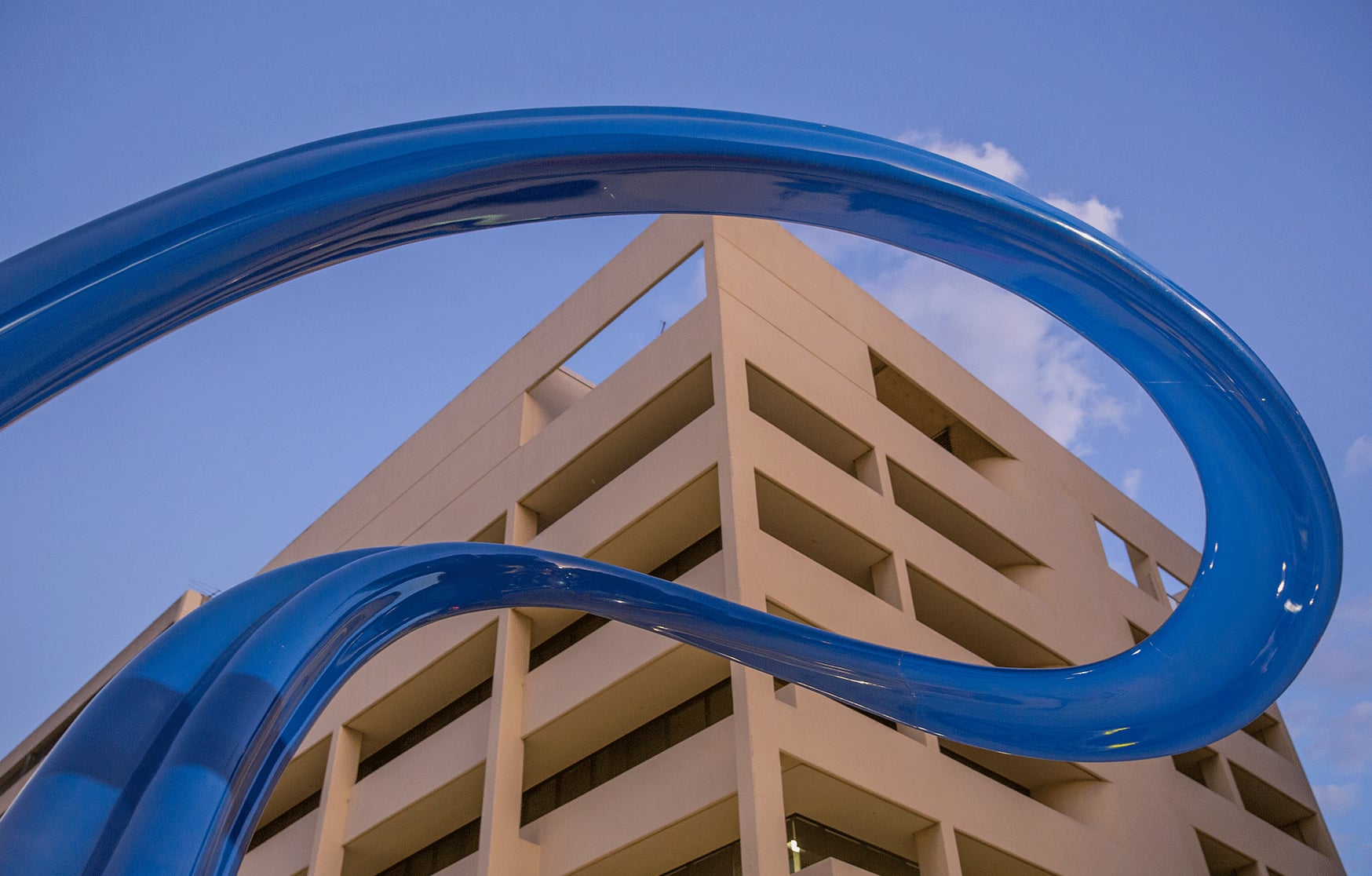
On the corner of Hay and Pier Streets, Cygna rises in a single sweeping loop: the winding course of the Swan River, as seen from the air, lifted off the map and stood on end. The great meander that wraps the city in plan view becomes a black ribbon turning through space, tracing the shores of the river in the middle of the street grid. The sculpture marks the east end of the city as an iconic landmark and visual drawcard, and its gesture is a form of wayfinding: the loop points down Pier and Hay Streets to the water it describes.
The concept is one of cultural mapping. Rivers, shorelines and the flight paths of birds are all lines drawn across country over time, and Cygna gathers them into a single continuous stroke. Like the river it maps, the form is in deep constant flow, its surface undulating whether read from a distance or up close, and within its turning geometry sits a second reading: the agile articulation of a black swan's neck, the bird that gave the river its name. The work traces the pathways of history and overlays them with the poetic, a thread linking the past of this place with its present.
The material carries its own quiet poetry. A black swan's feathers are built from layered keratin fibres, nature's own composite, light, strong and endlessly renewed. Cygna is made the same way: layers of carbon fibre laminated into a form with twice the strength of mild steel at a quarter of the weight. The sculpture borrows the bird's own engineering, and that lightness is what allows its dramatic poise, a mass of black curvature held in the air with apparent ease.
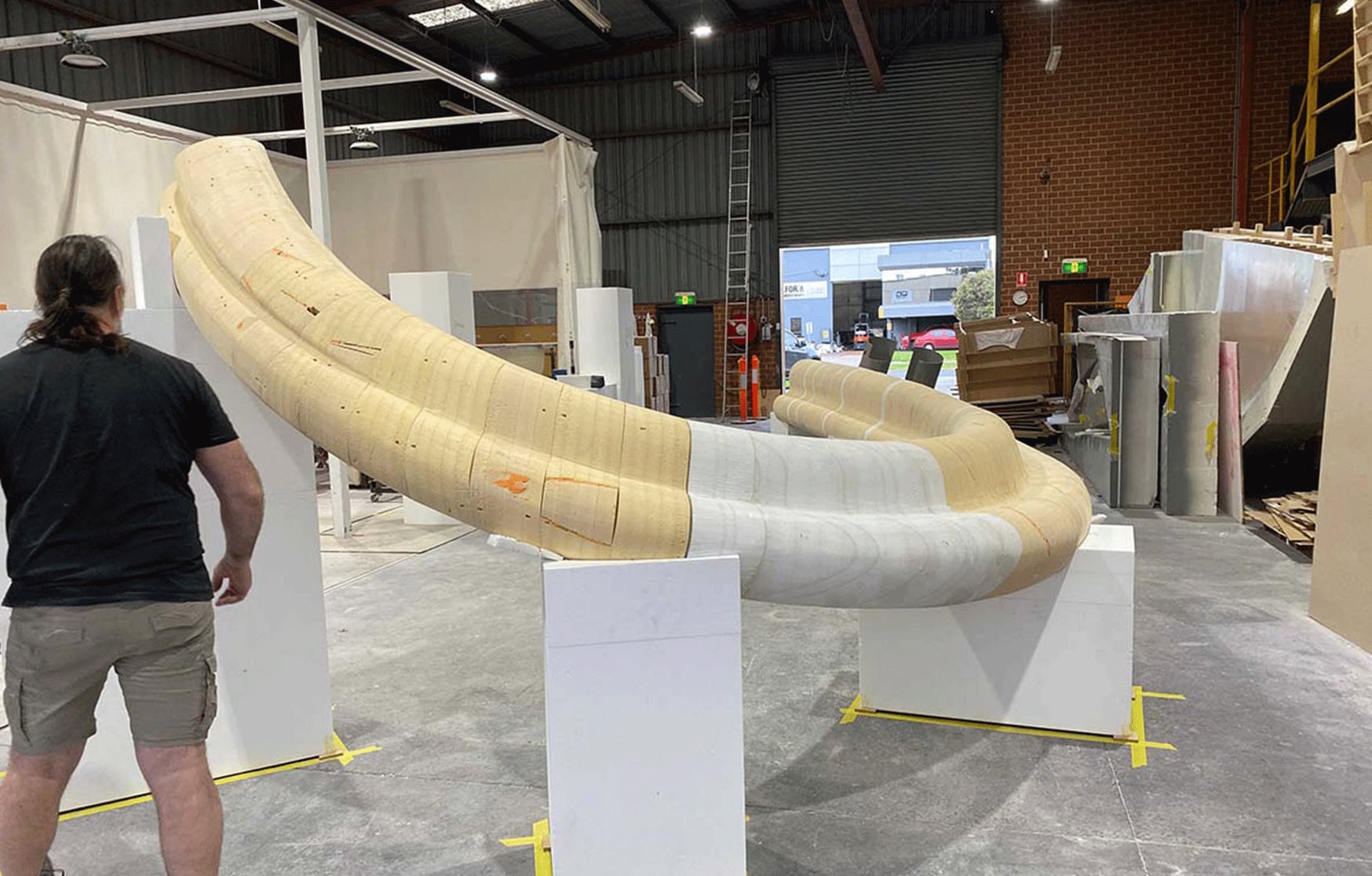
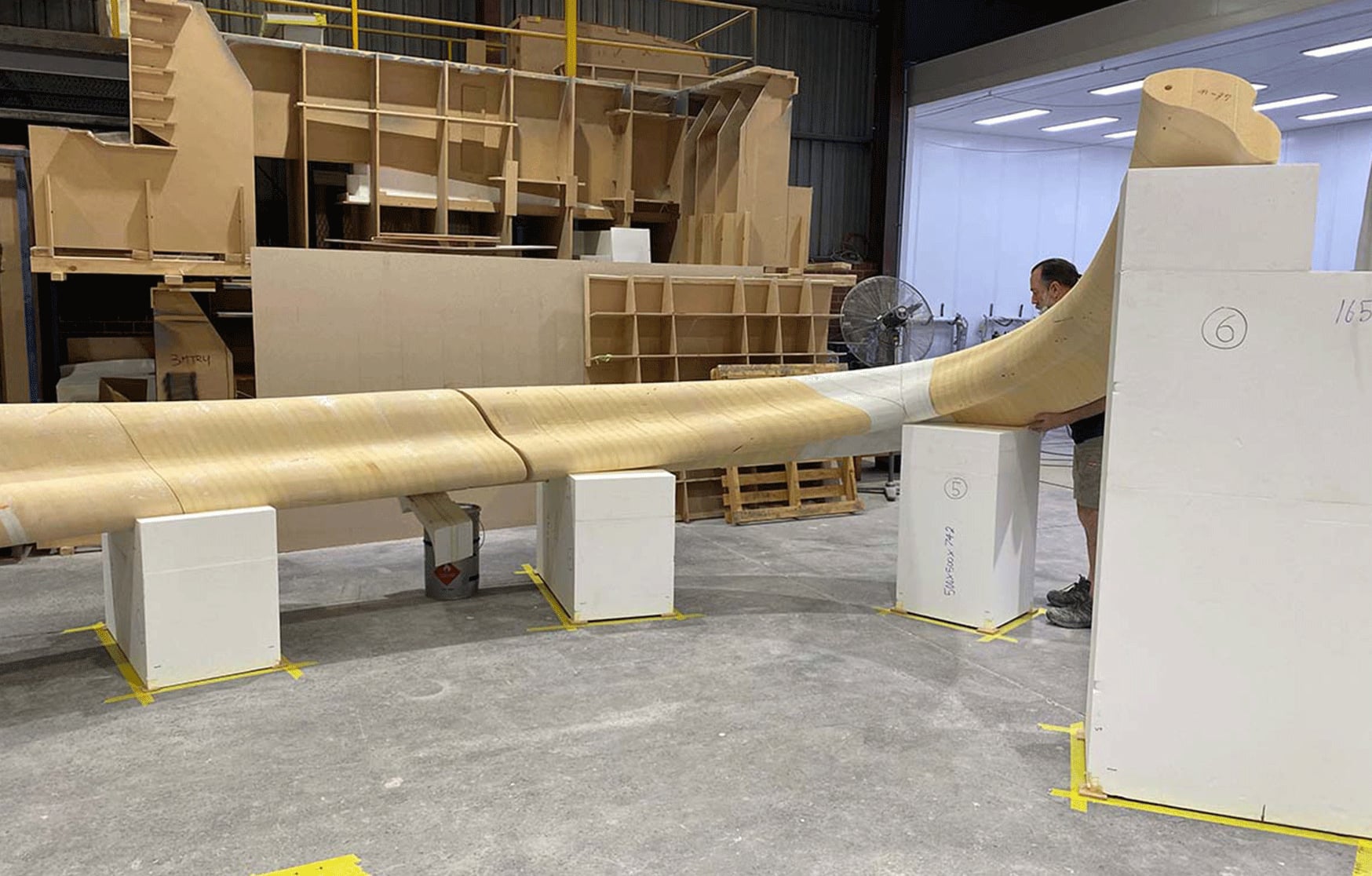
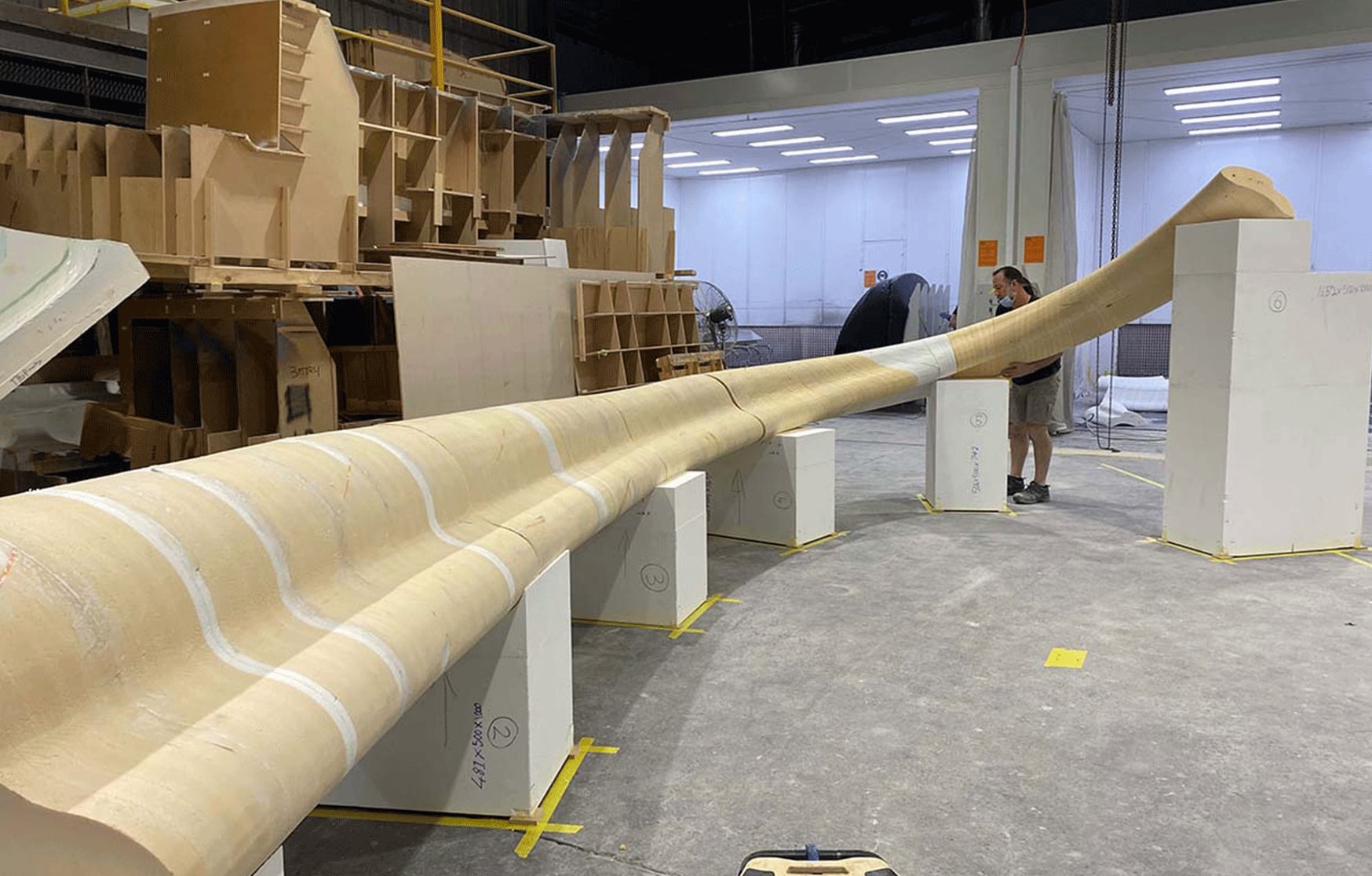
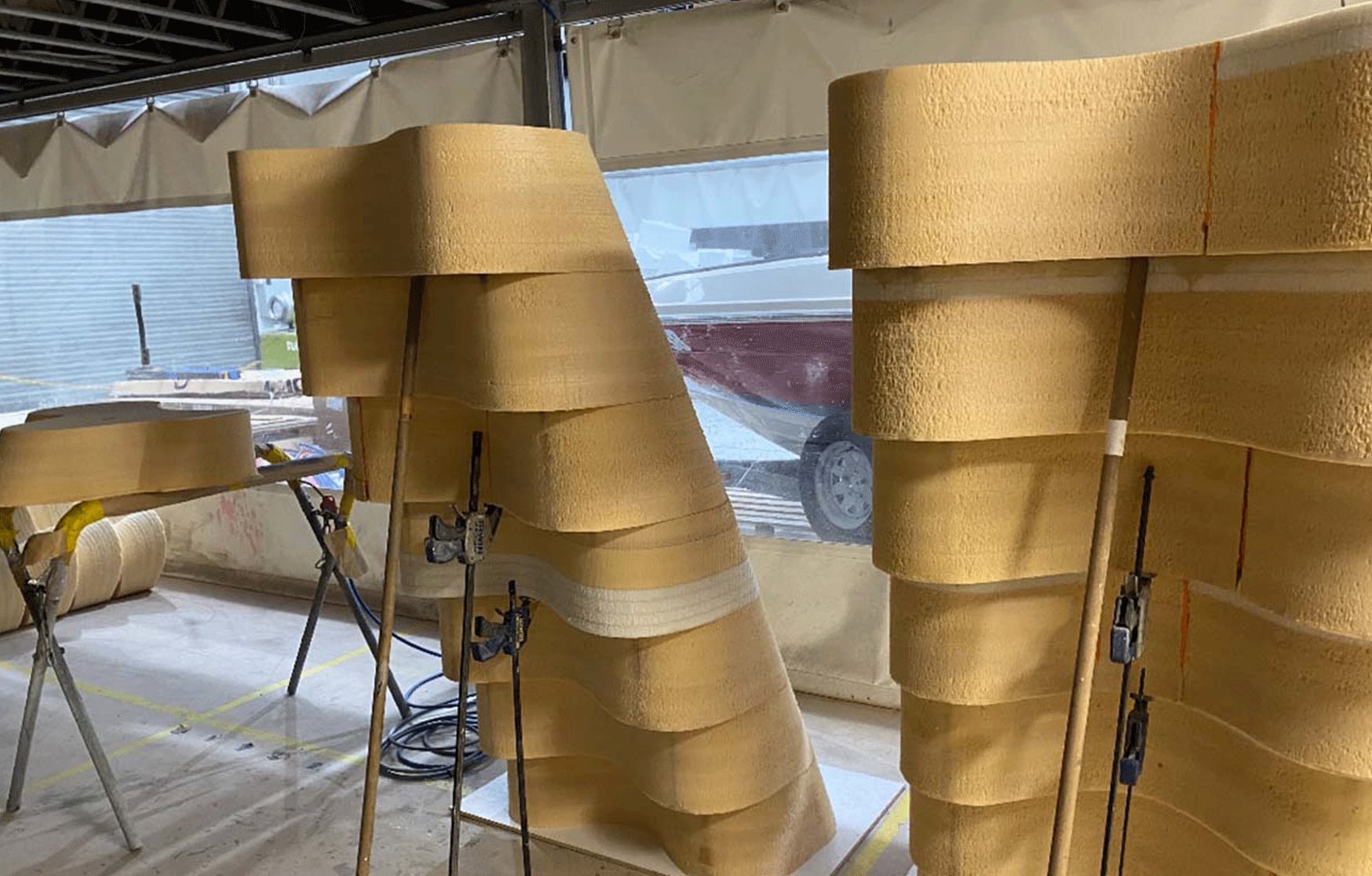
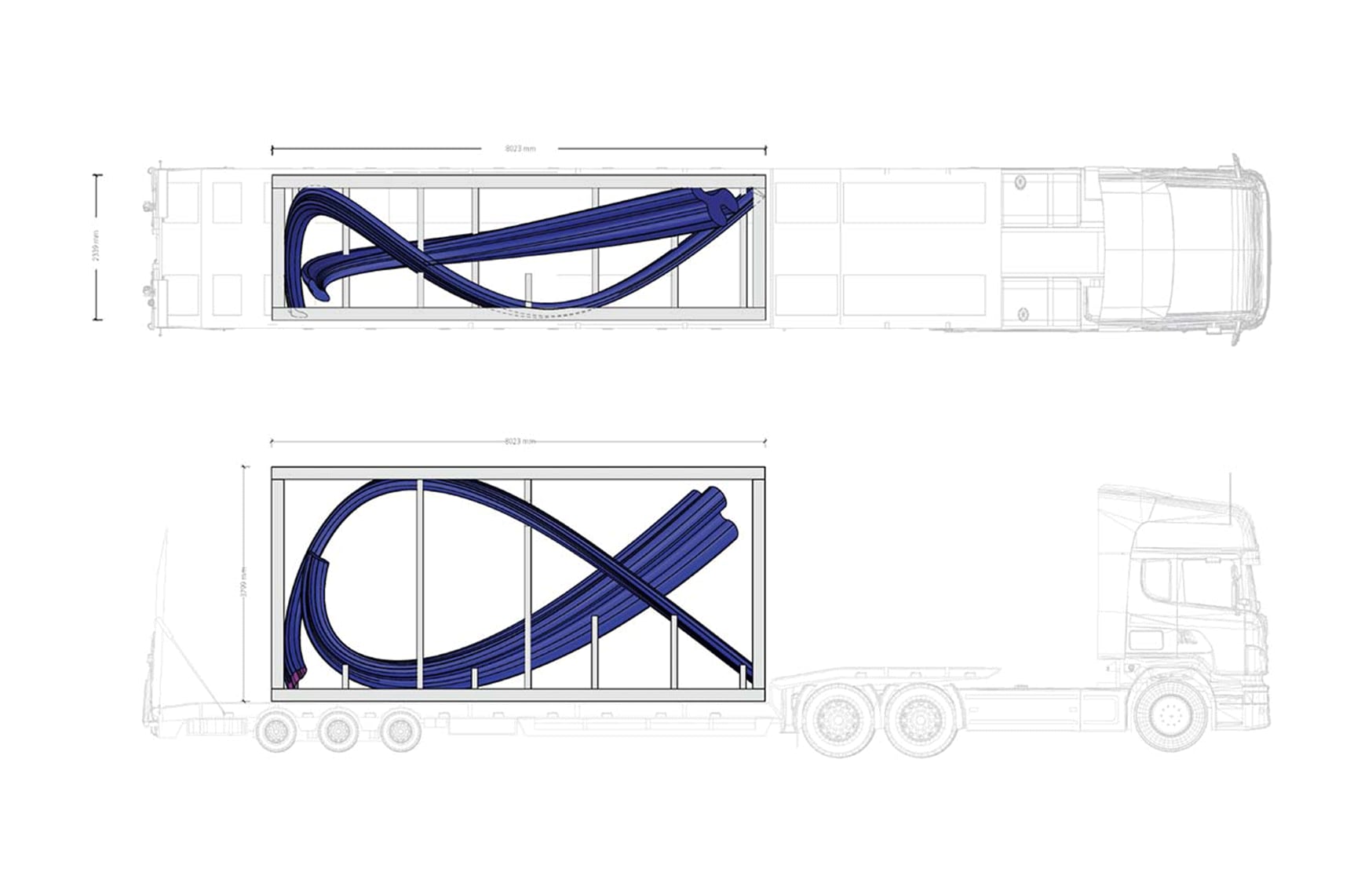
The form was developed through computational design simulation and modelling, generating a sweeping, flowing geometry that was then deconstructed into parts for fabrication. A five axis robotic CNC arm milled the form in foam, which was laminated with carbon fibre and finished in resin, the same processes used to build racing yachts and aircraft. The result is durable, environmentally responsible and built for a long life with minimal maintenance: a work of advanced manufacturing with its own language and presence, in dialogue with the streets around it.
Cygna was developed in joint partnership between Daniel Giuffre of if/LAB and artist Jon Tarry, who together won the EOI concept submission and carried the collaboration through every stage to completion.