2019
Fremantle
Percent for Art: Soffit
Daniel Giuffre + Rick Vermey
Defence Housing Australia
Hassell
200 sqm
Trespa Meteon and LED lighting
$500,000
Denmac
Light Application
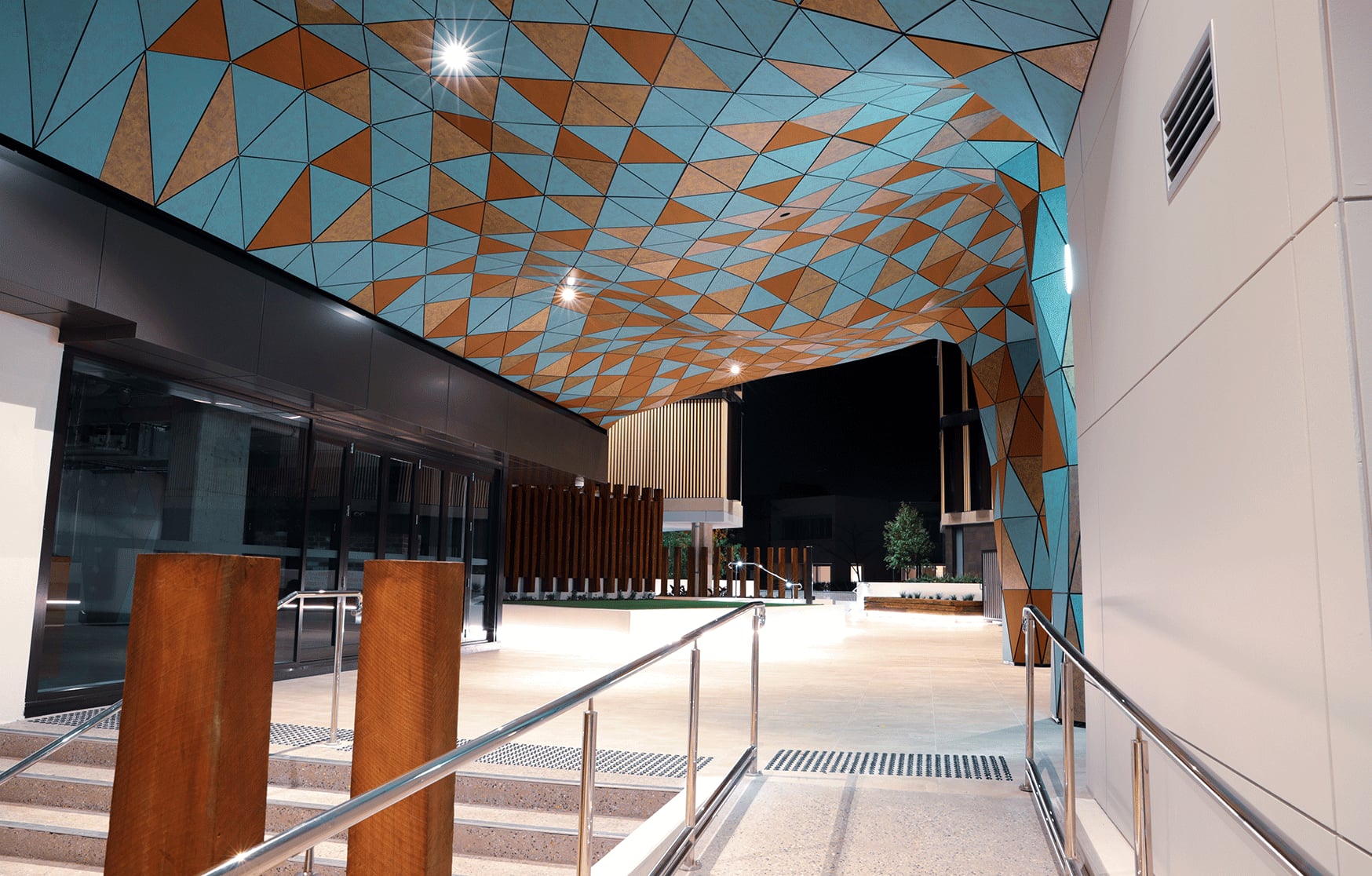
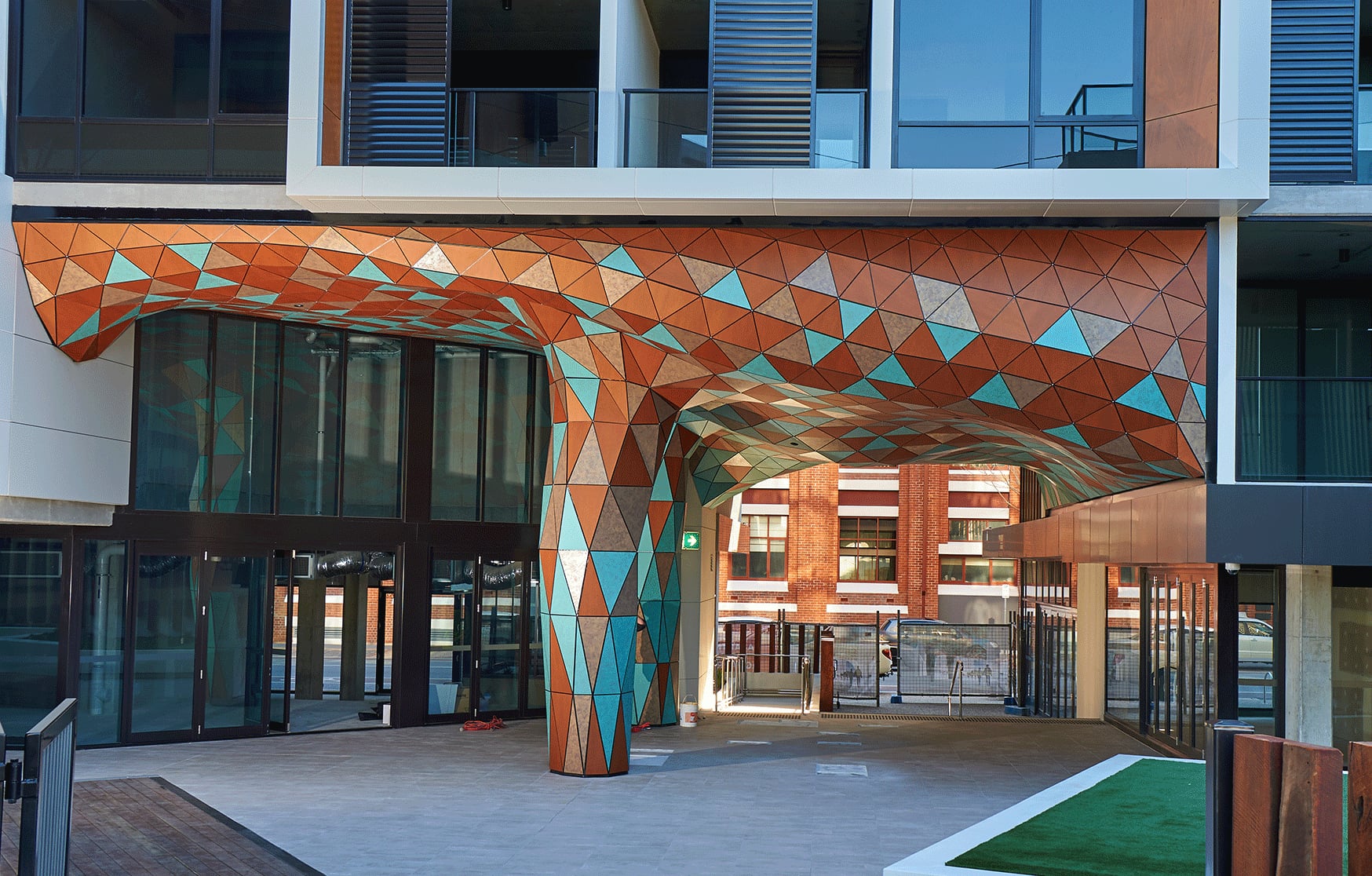
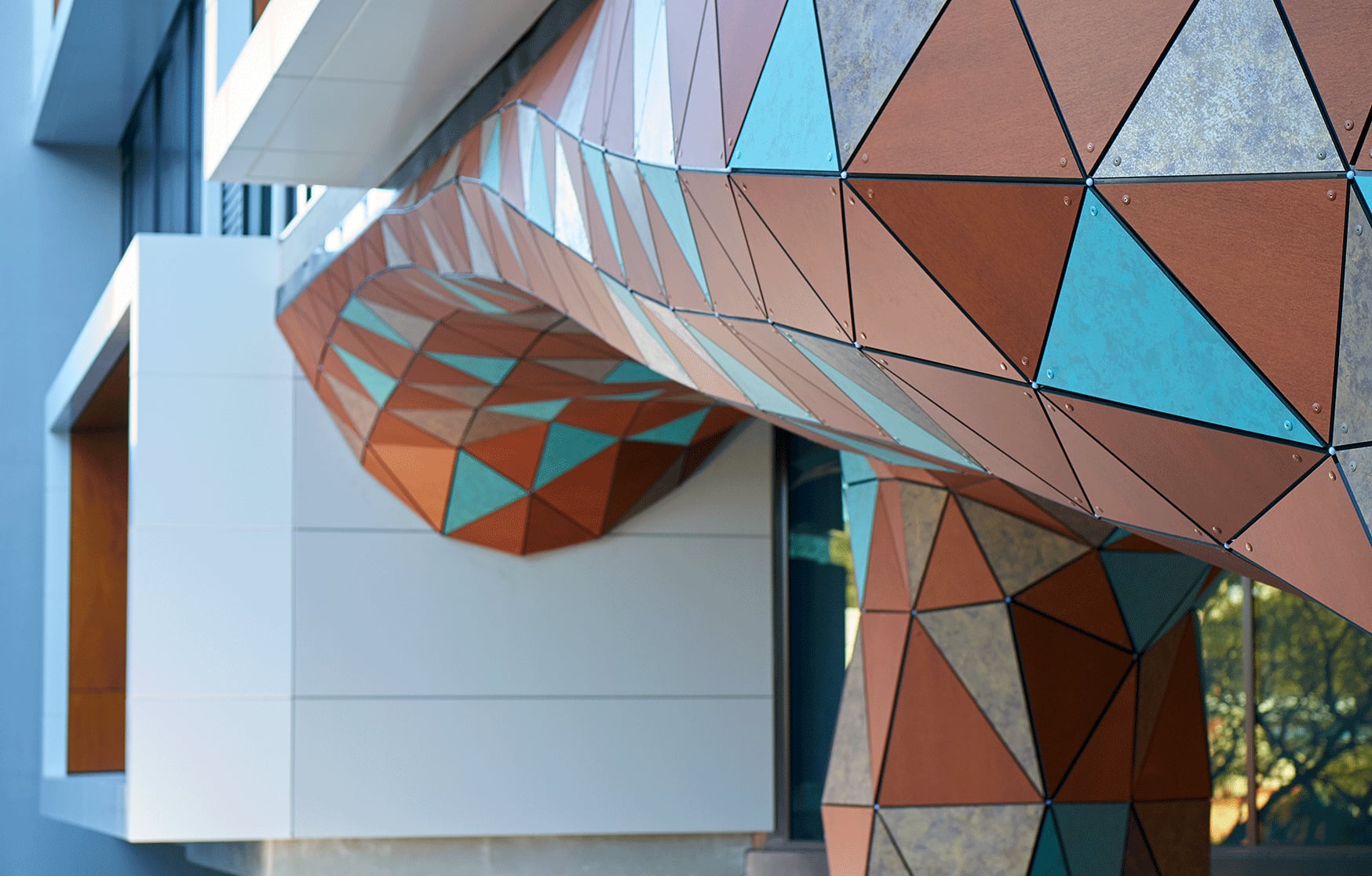
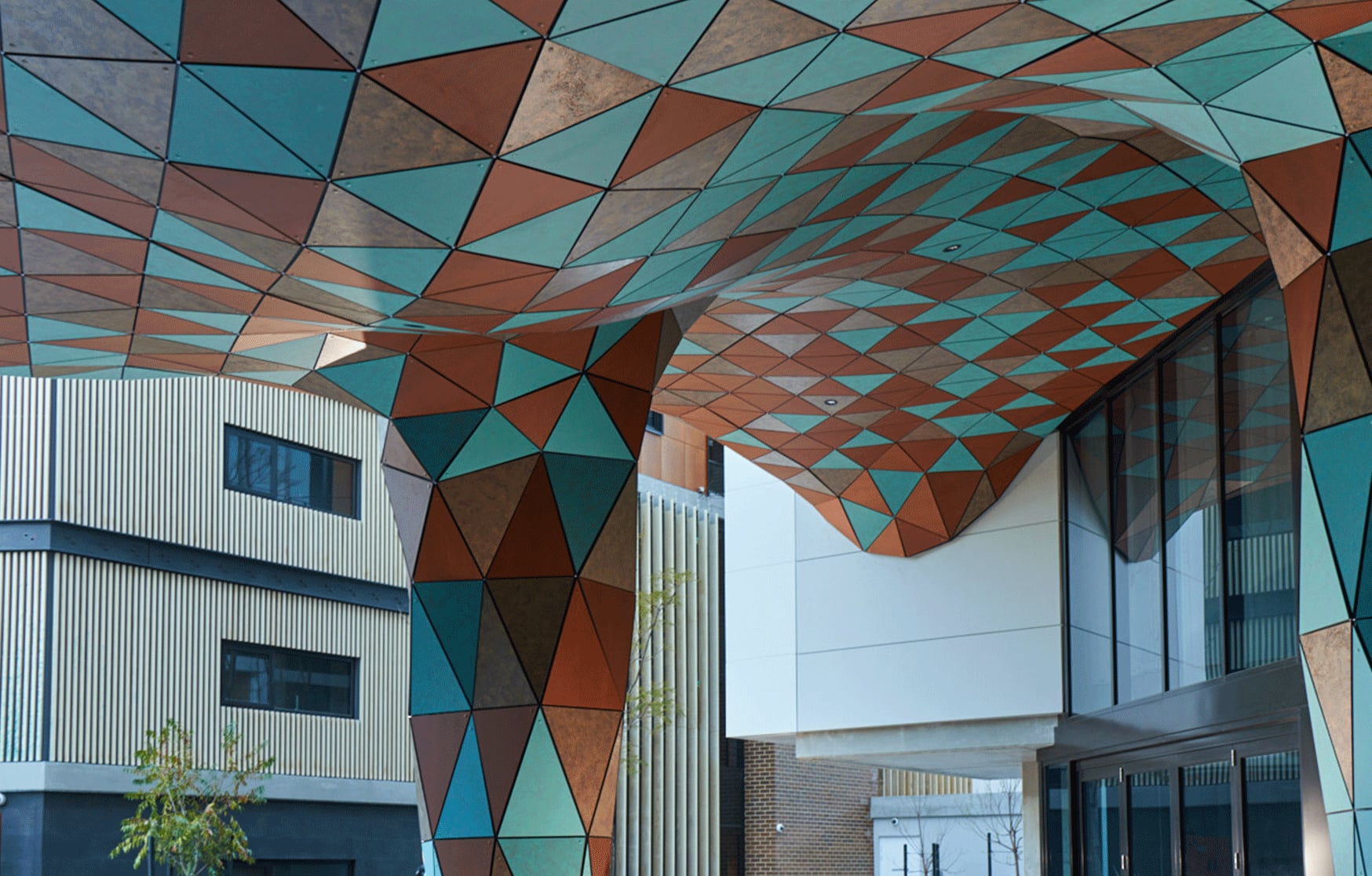
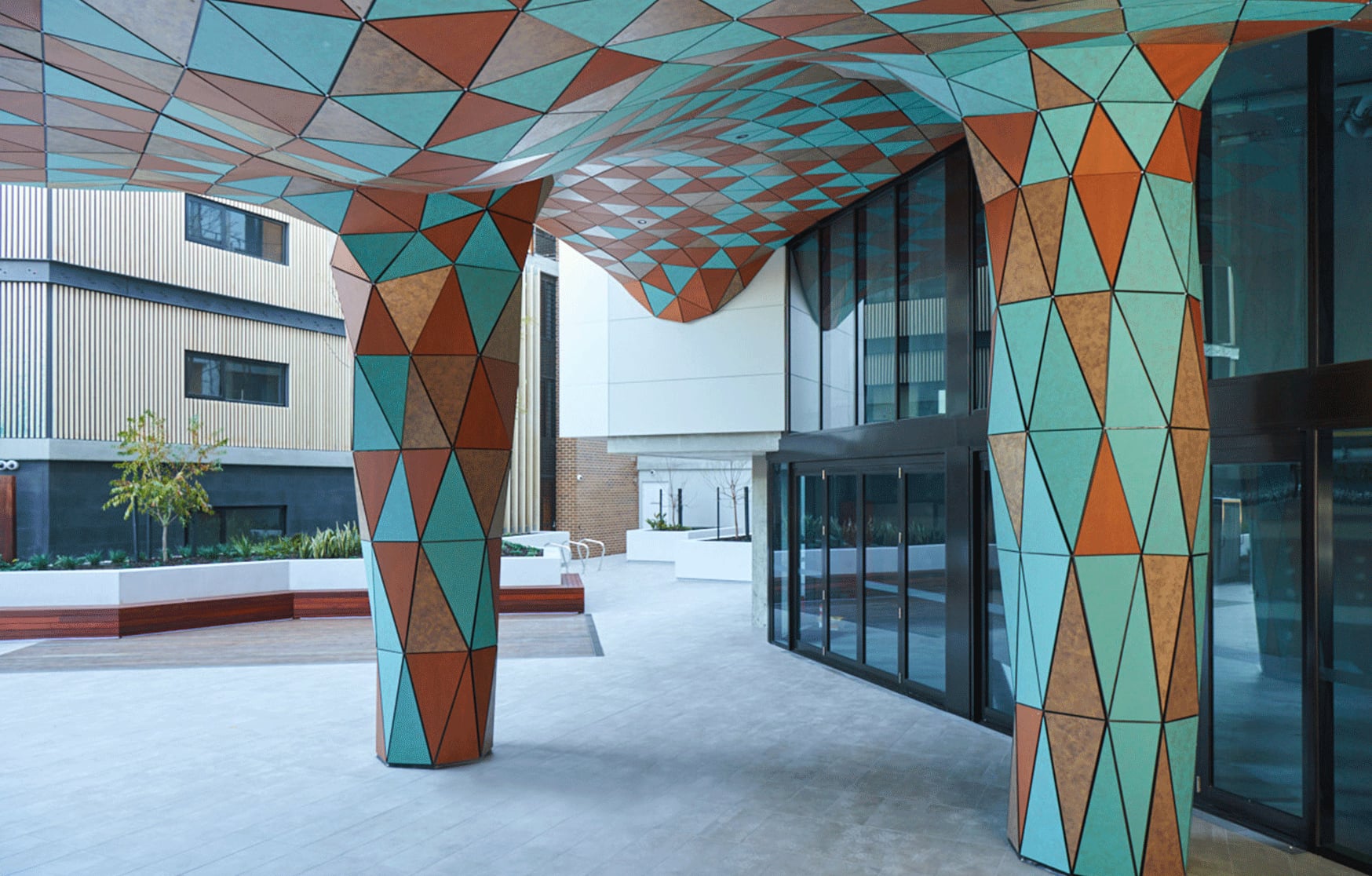
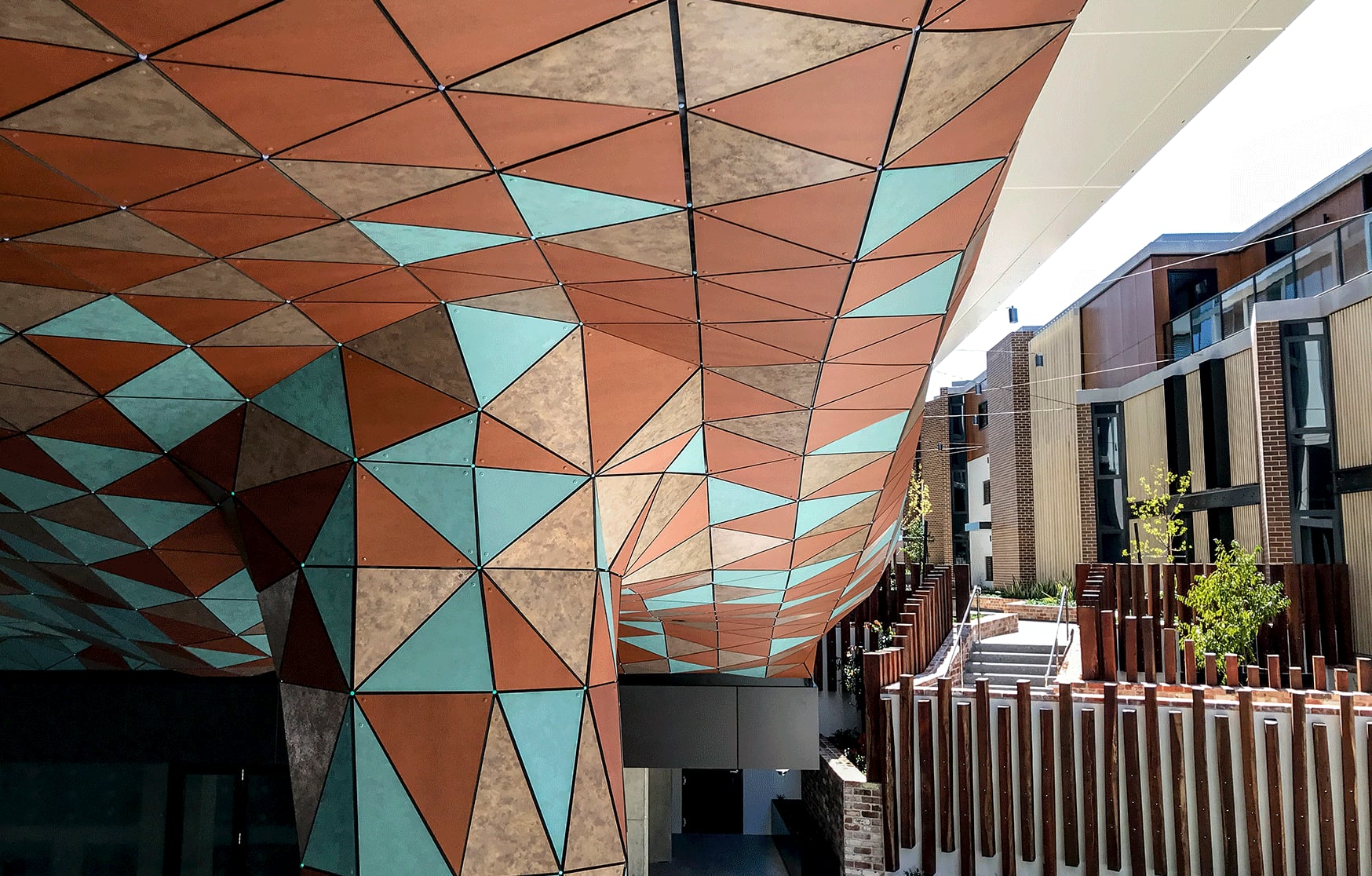
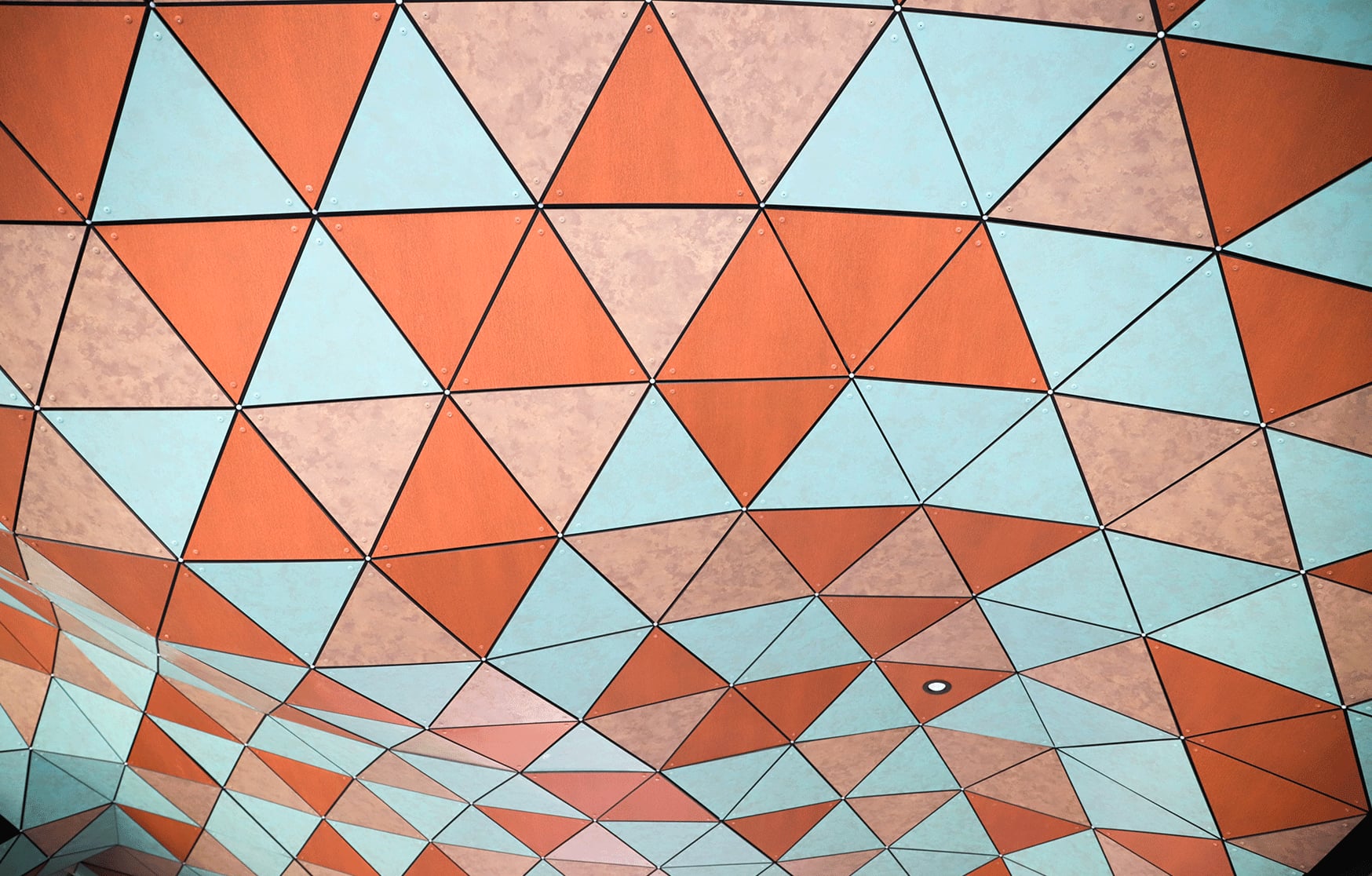
A wind-shaped canopy and twin columns wrapping the entry of a residential tower. The triangulated skin reads as a single continuous surface that lifts, twists and lands - choreographed by the prevailing southerlies of the Indian Ocean.
Anemoi gives form to the "Fremantle Doctor" — the dependable summer sea breeze that has shaped the character of this port city.
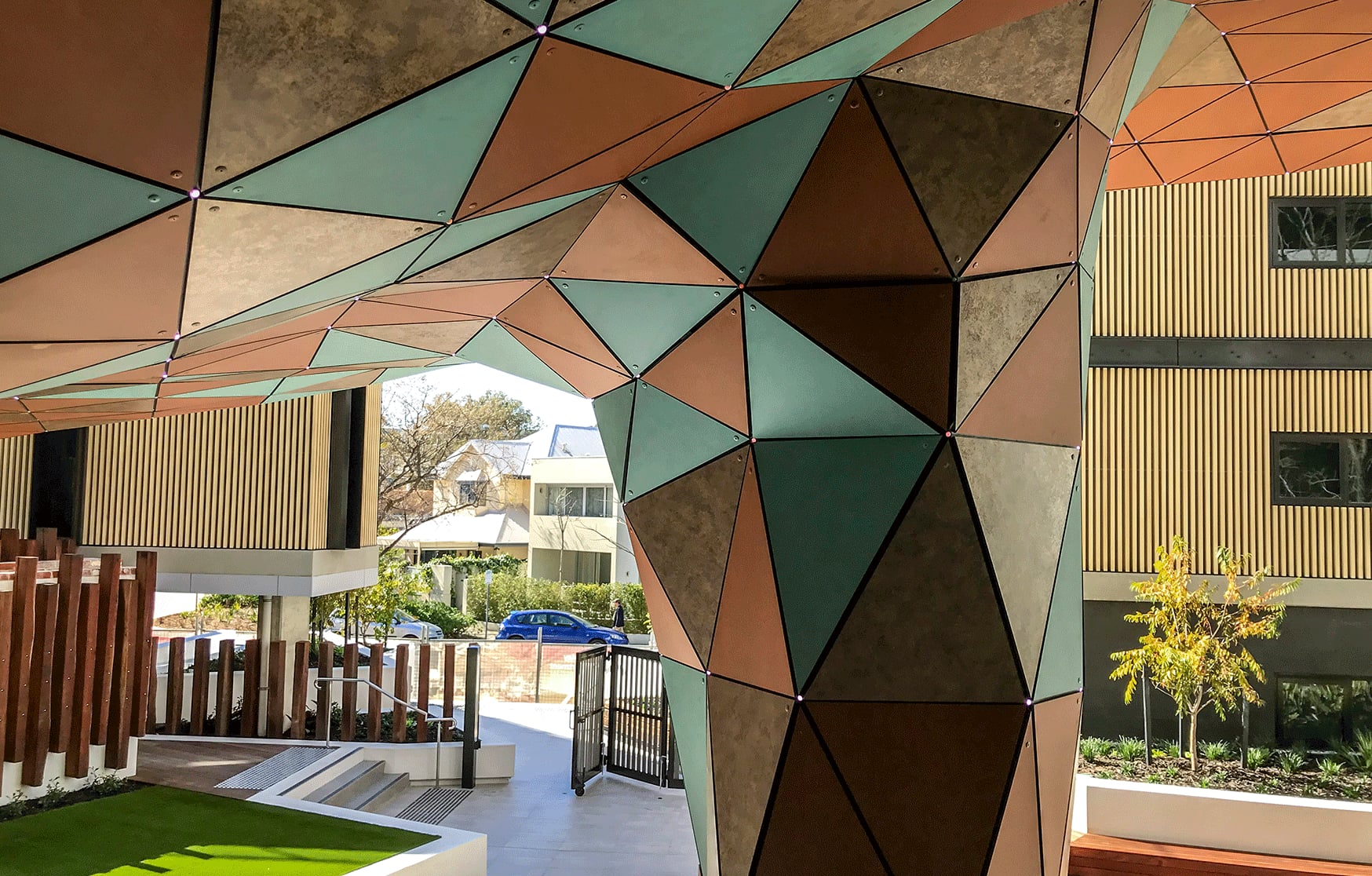
The design draws on the invisible forces of the coast: wind, weather, currents and swell. Its sculptural form abstracts the imagery of maritime Fremantle — weather maps, bathymetric contours, wind-filled sails, drifting nets, billowing flags and pennants — into a single continuous surface.
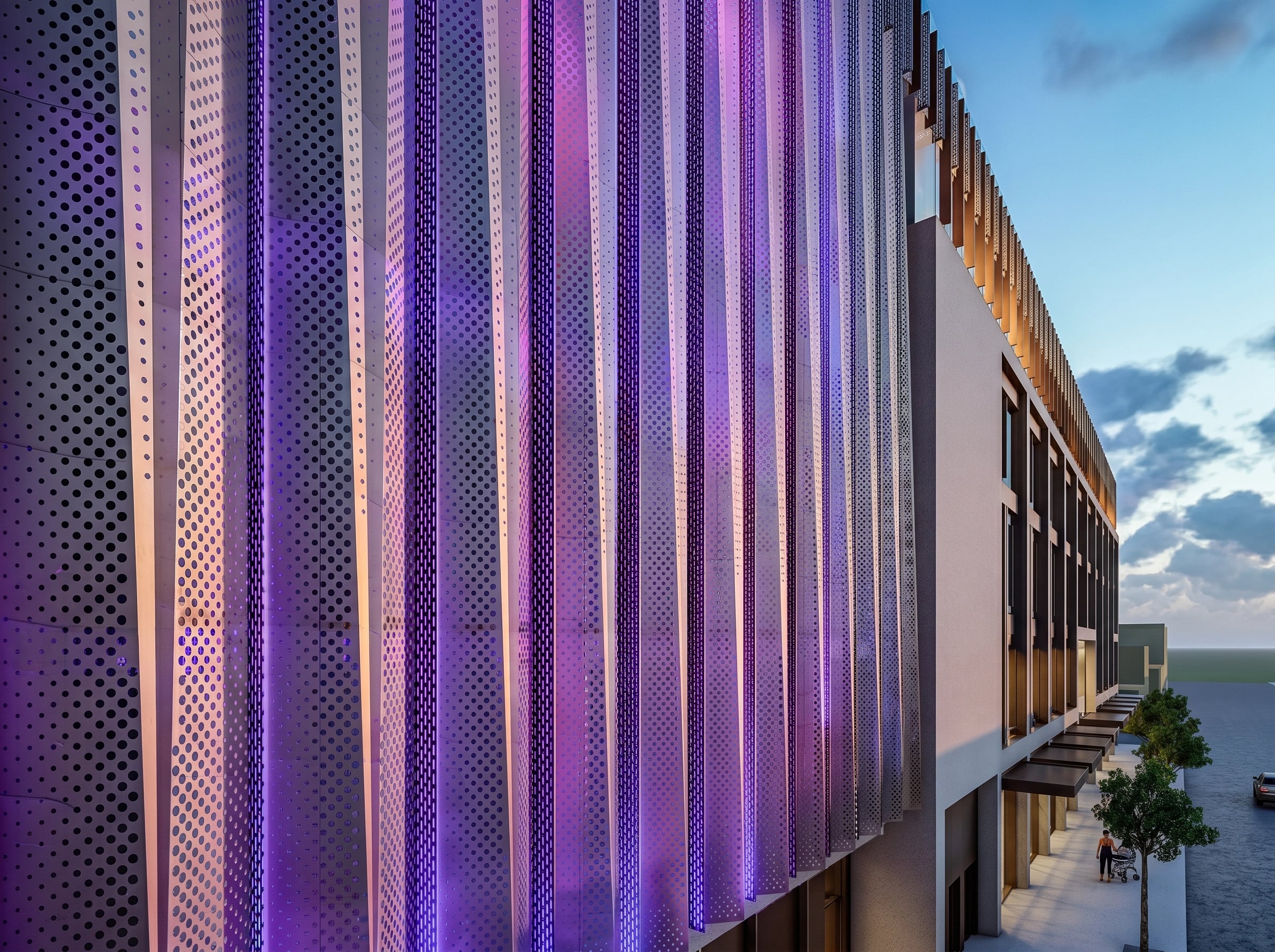
Materials, texture and colour reflect the coastal setting. A rooftop anemometer drives the LED lighting in real time, so the weather itself sets the patterns and colours: the behaviour of the wind, made visible as light in motion.
Anemoi was shortlisted in the CODAWORX awards top 100 projects
The artwork is fully integrated into the fabric of the building, developed in close collaboration with the architects, contractors and fabricators.
The geometry was modelled parametrically in Grasshopper and Rhino, allowing it to be refined as the building was constructed — with shop drawings updating in real time. The result: a perfect fit into the building's entrance corridor.
The form was found by simulation: a digital sail was hung from the corridor soffit and blown by a modelled Fremantle Doctor. The wind gave the artwork its shape.
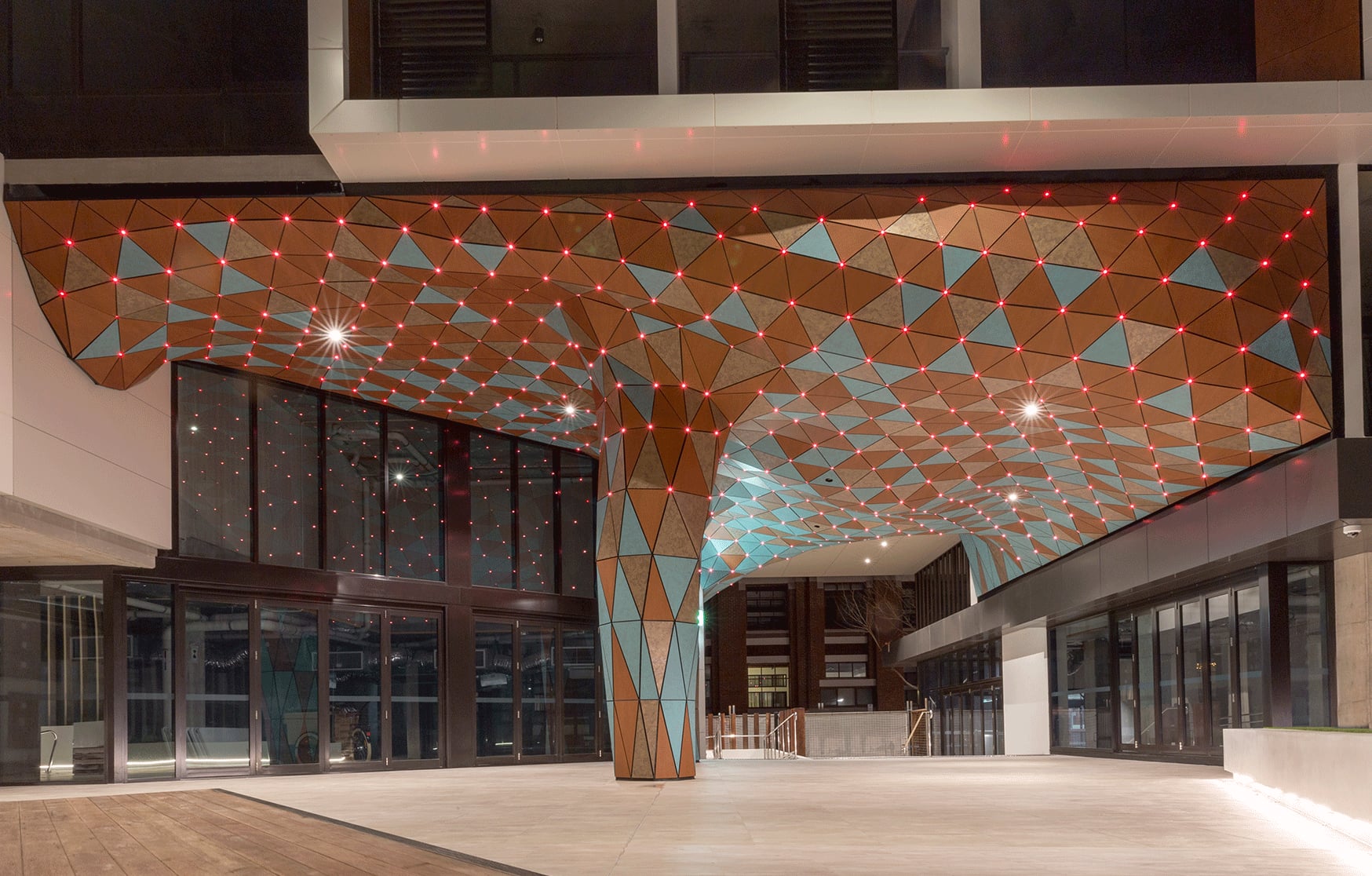
At night the work comes alive. More than 800 individually programmable LED nodes (Philips Color Kinetics iColor MX2) sit at the panel intersections. Wind speed sets the tempo of the lighting transitions; wind direction selects the patterns. Lighting programming was developed with control-systems specialists Light Application.
The triangulated surface wraps the laneway ceiling and two structural columns — architectural in scale, and built into the structure of the building itself.
The process involved simulating the Fremantle Doctor moved through the entrance corridor. The form-finding process involved a physics-based software used to simulate a sail blowing in the wind. The surface mesh was hung from the soffit of the entrance corridor and then the wind simulation was used to generate the unique form.
The artwork is designed to come alive at night, with over 800 individually programmable Philips Color Kinetics iColor MX2 LED light nodes arrayed at each panel intersection. The wind sensor allows the weather to control the ephemeral lighting patterns and colours.
Wind speed corresponds with an increase or decrease in the playback speed of the lighting pattern transitions being displayed. Wind direction controls the selection of lighting patterns displayed. Lighting programming was achieved in collaboration with lighting control systems specialist firm, Light Application.
The geometry of the sculpted surface wraps around the laneway corridor ceiling and two structural columns, in a triangulated grid of faceted planes. The artwork is architectural in scale and fully integrated into the fabric and structure of the building.