2025-2026
Hazelmere, WA
3 Stage Integrated Fence Artwork
Hesperia
WGA
448 lm
Powdercoated Aluminium
$675, 000
Kilmore Group
Three screens along one road, wing, woodland and water, form a gateway that tells the ecological story of place in passing.
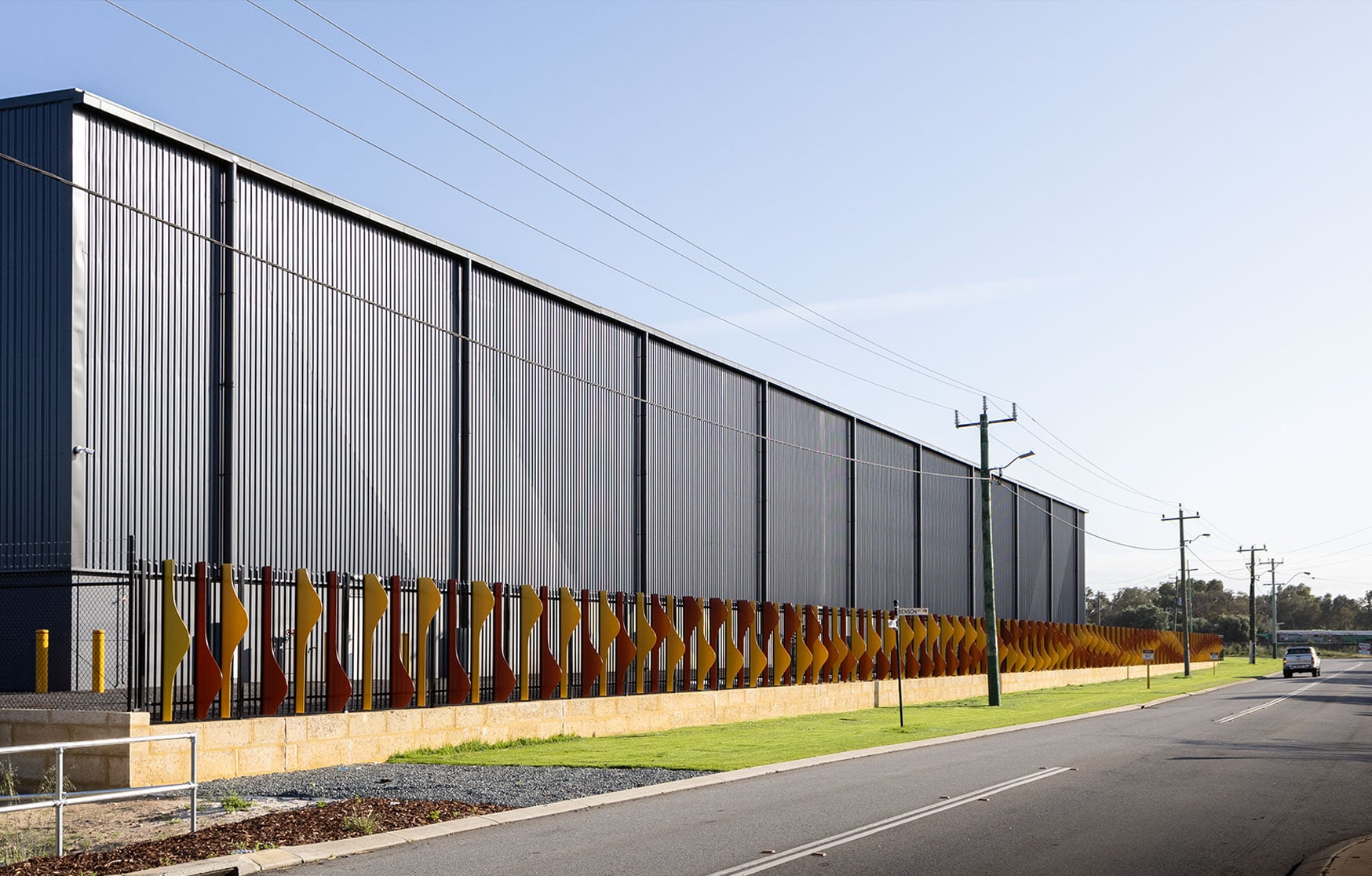
Along Stirling Crescent in Hazelmere, three artworks form a single gateway. Not a gateway in the traditional monumental sense, but a distributed one: a linear corridor of sculptural moments unfolding across three sites, marking the transition between the City of Swan and the City of Kalamunda. Each work stands alone, yet together they trace one narrative through the interconnected living systems of a region recognised internationally as a biodiversity hotspot: first the birds of the air, then the woodlands of the ground, and finally the water that sustains them both.
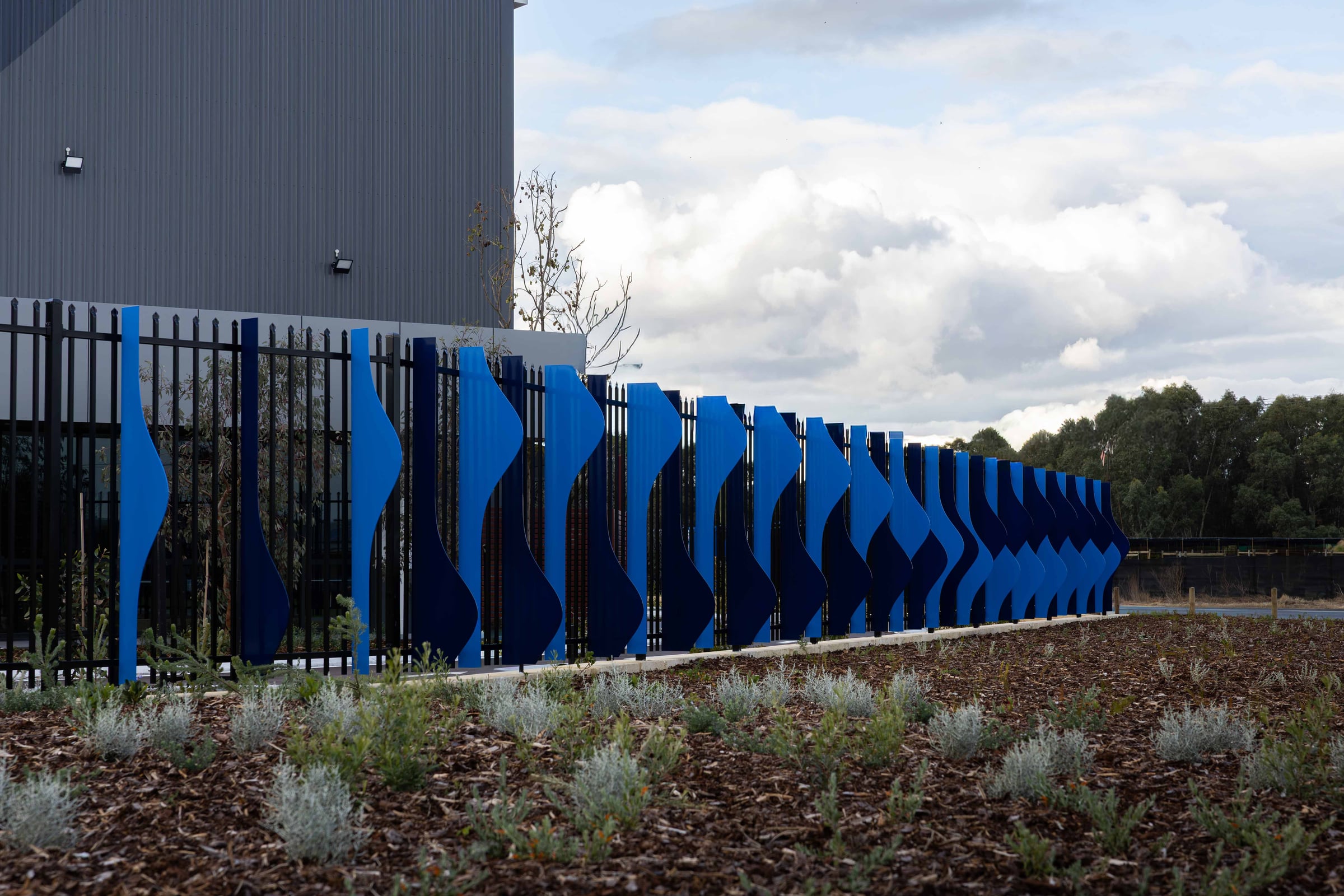
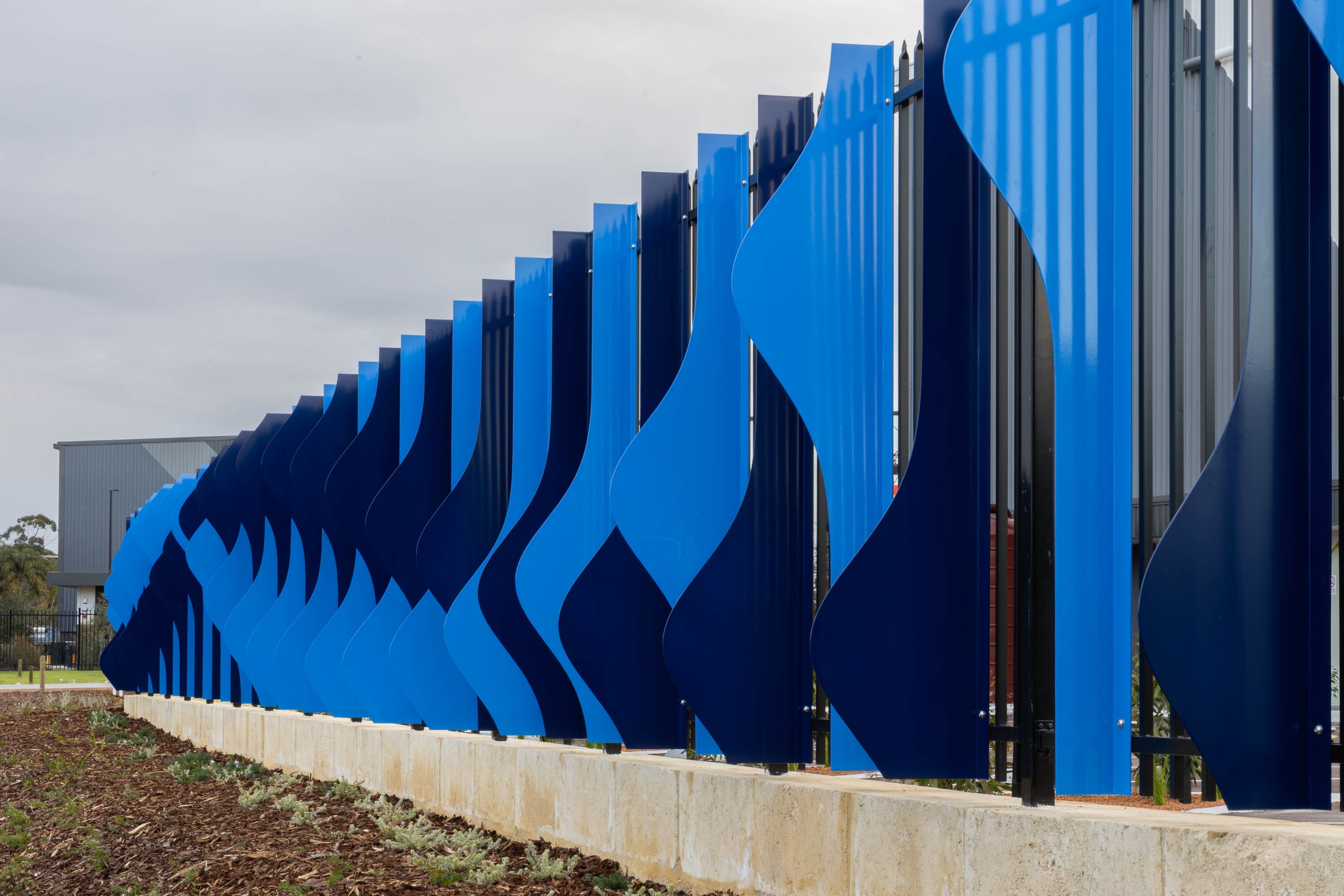
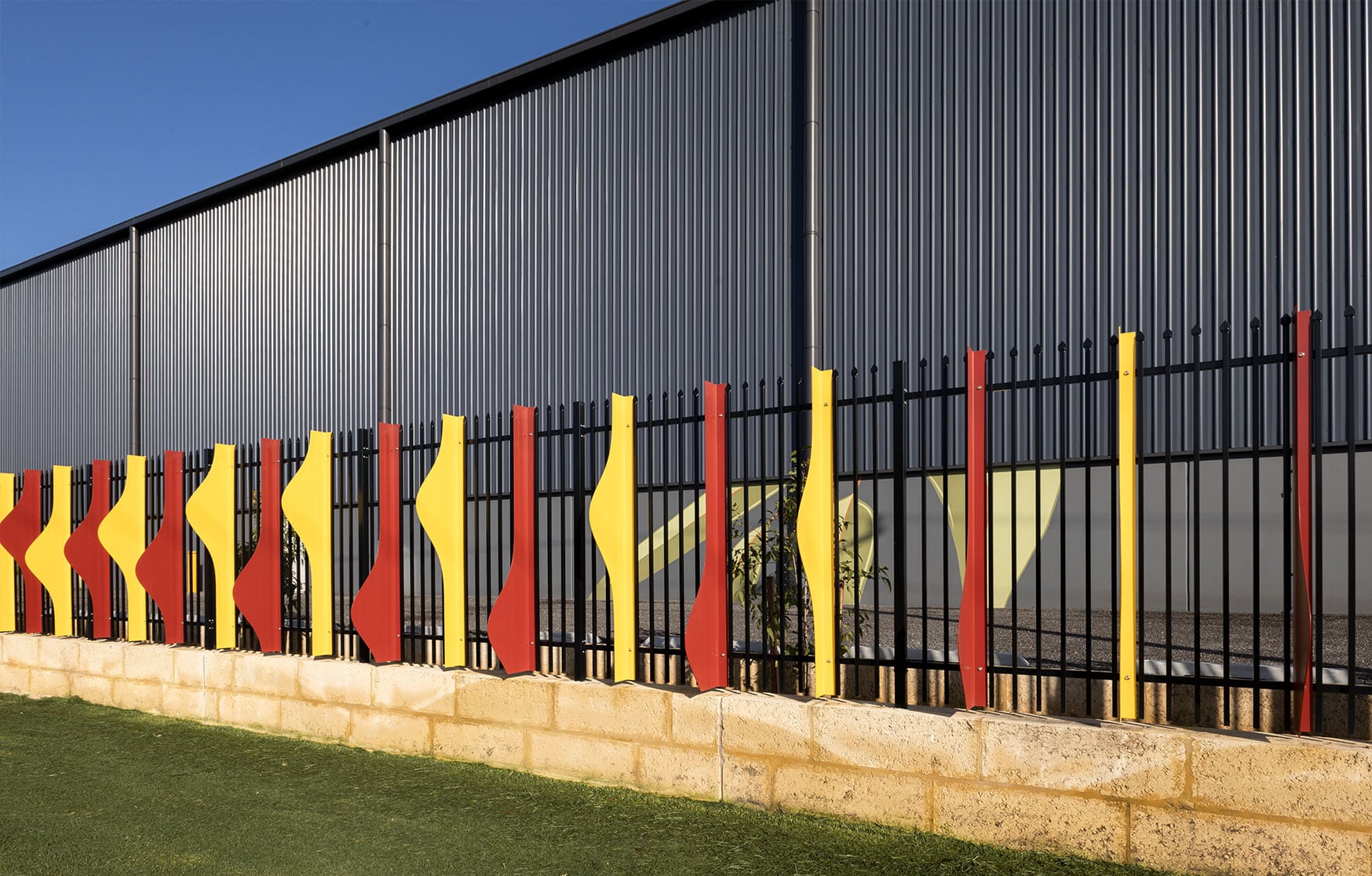
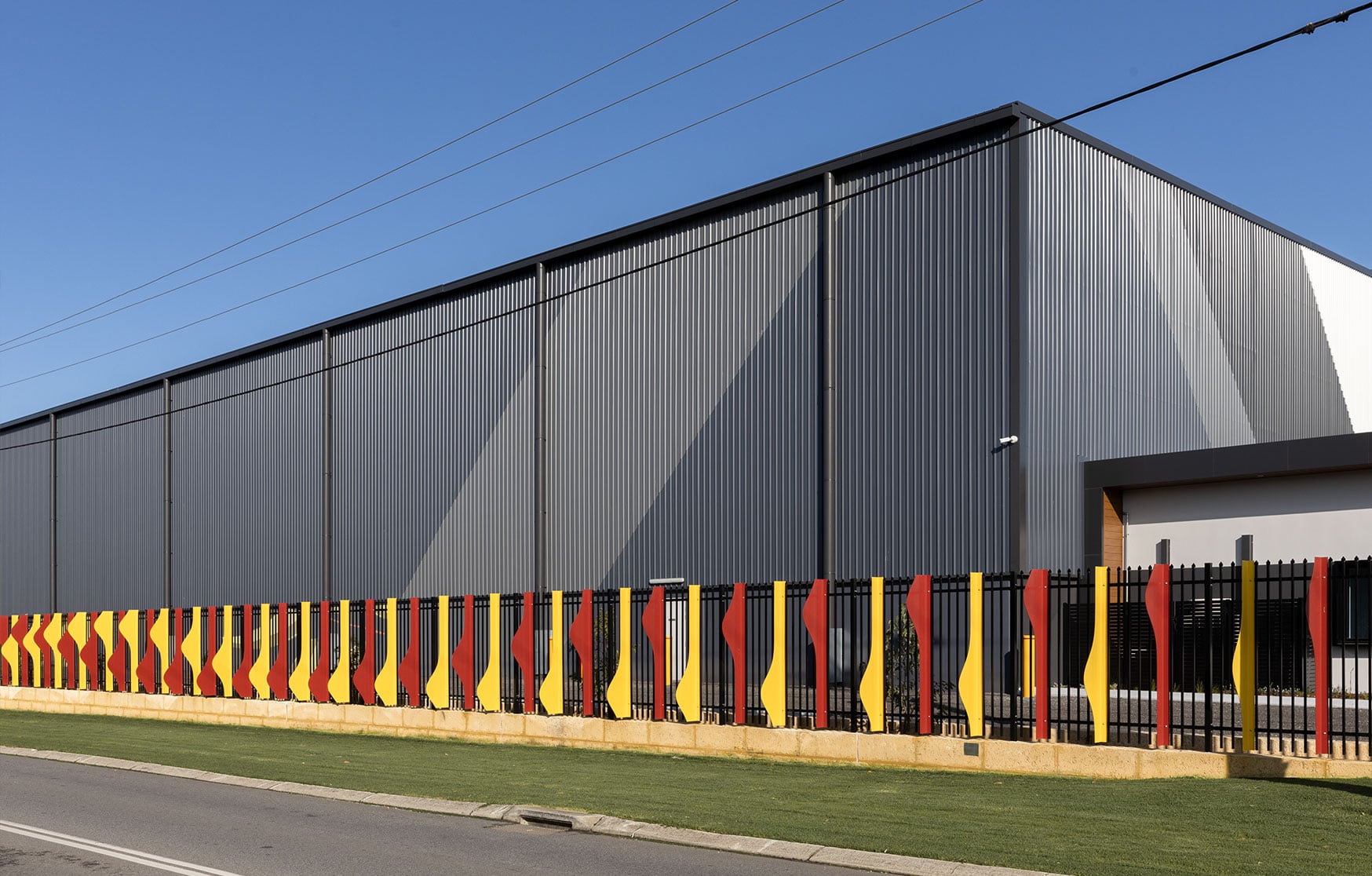
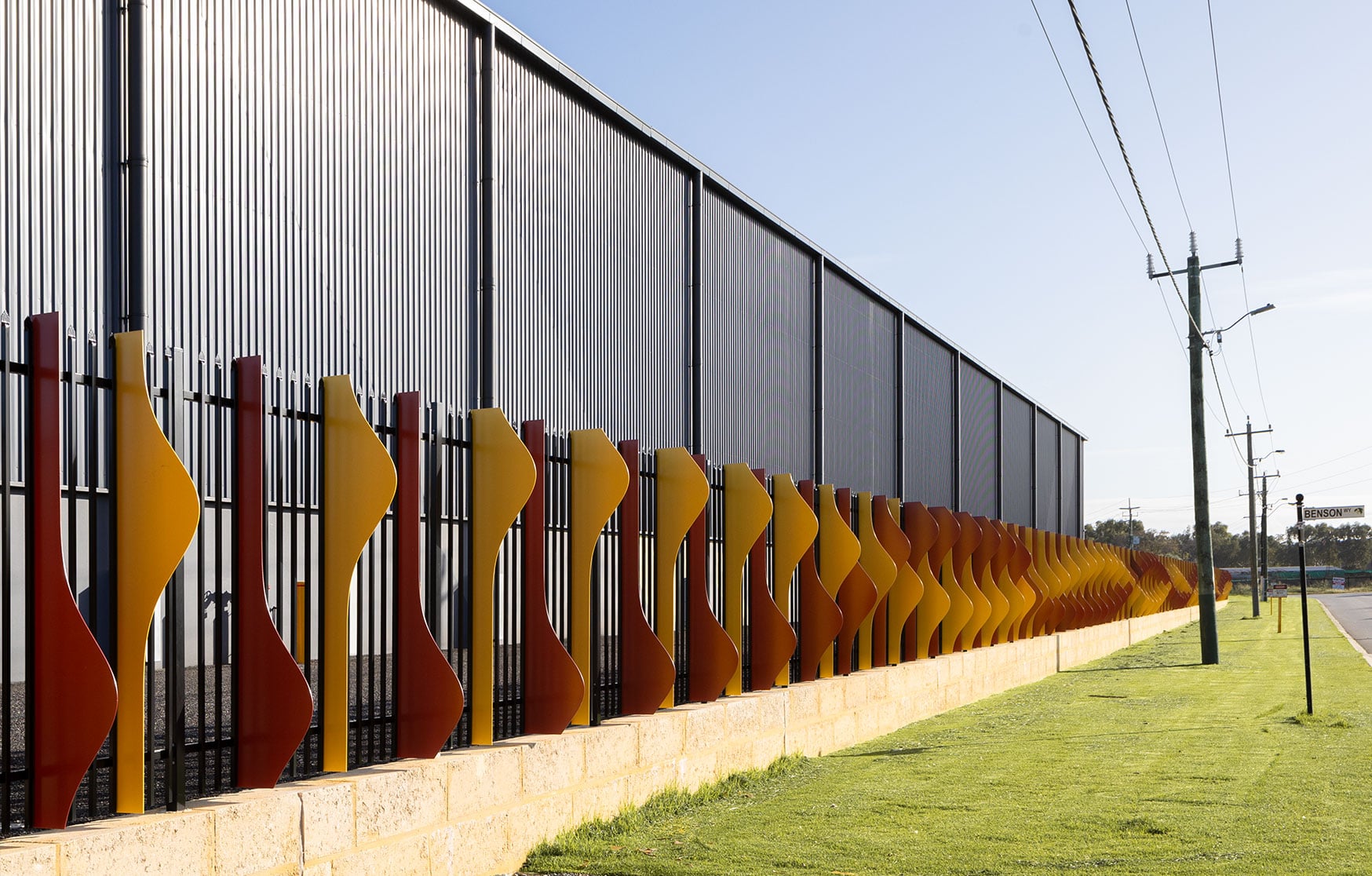
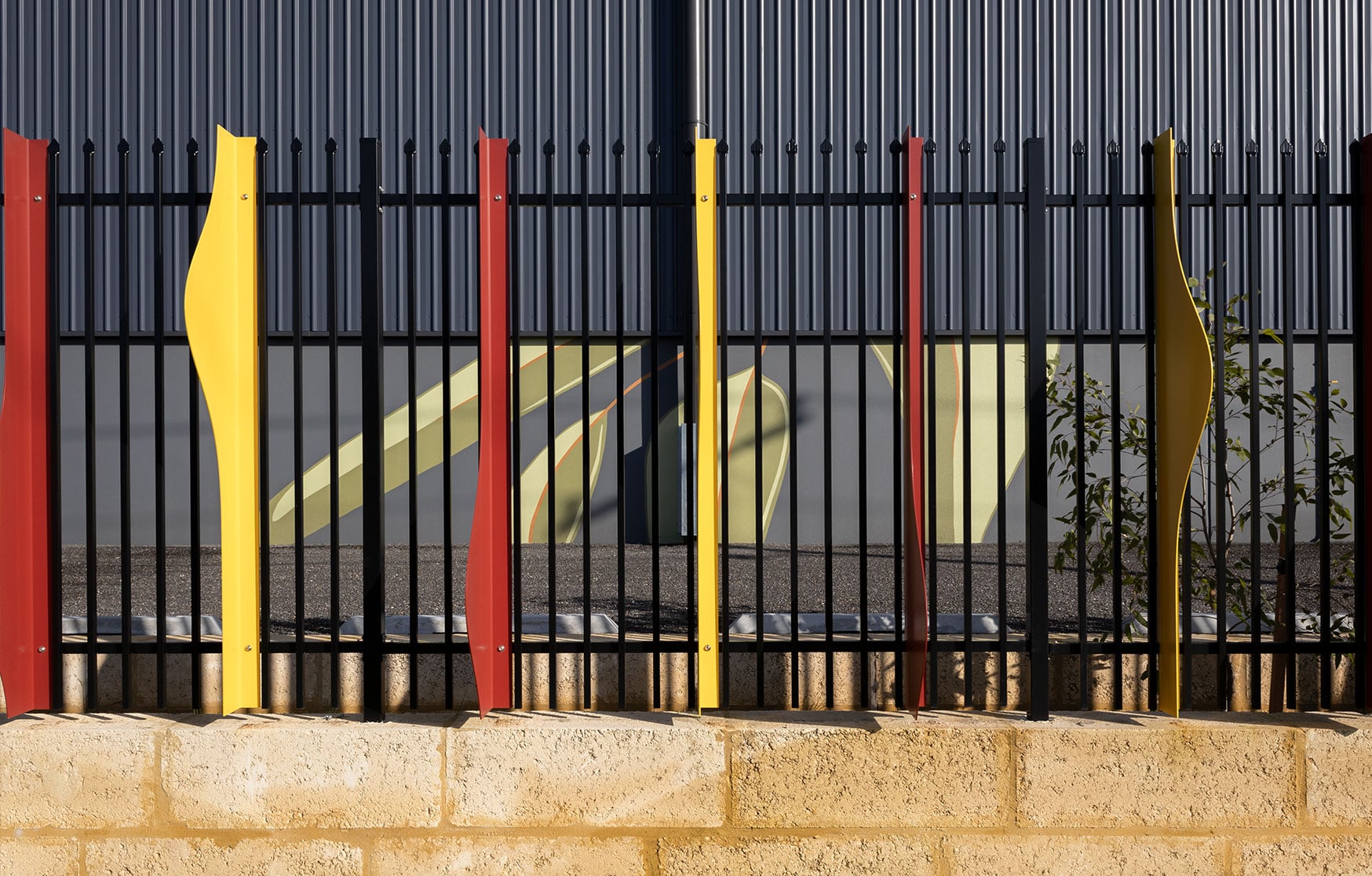
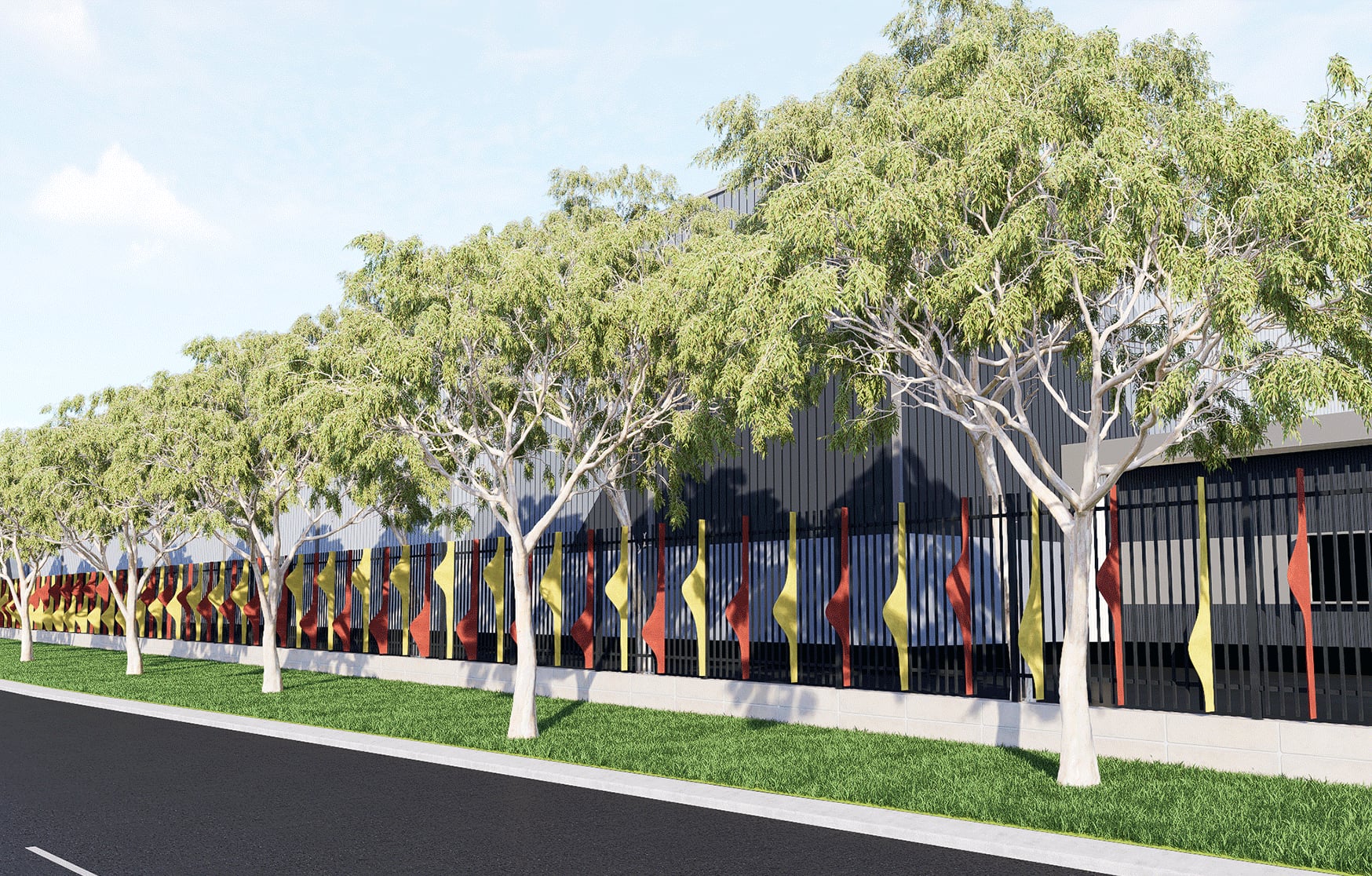
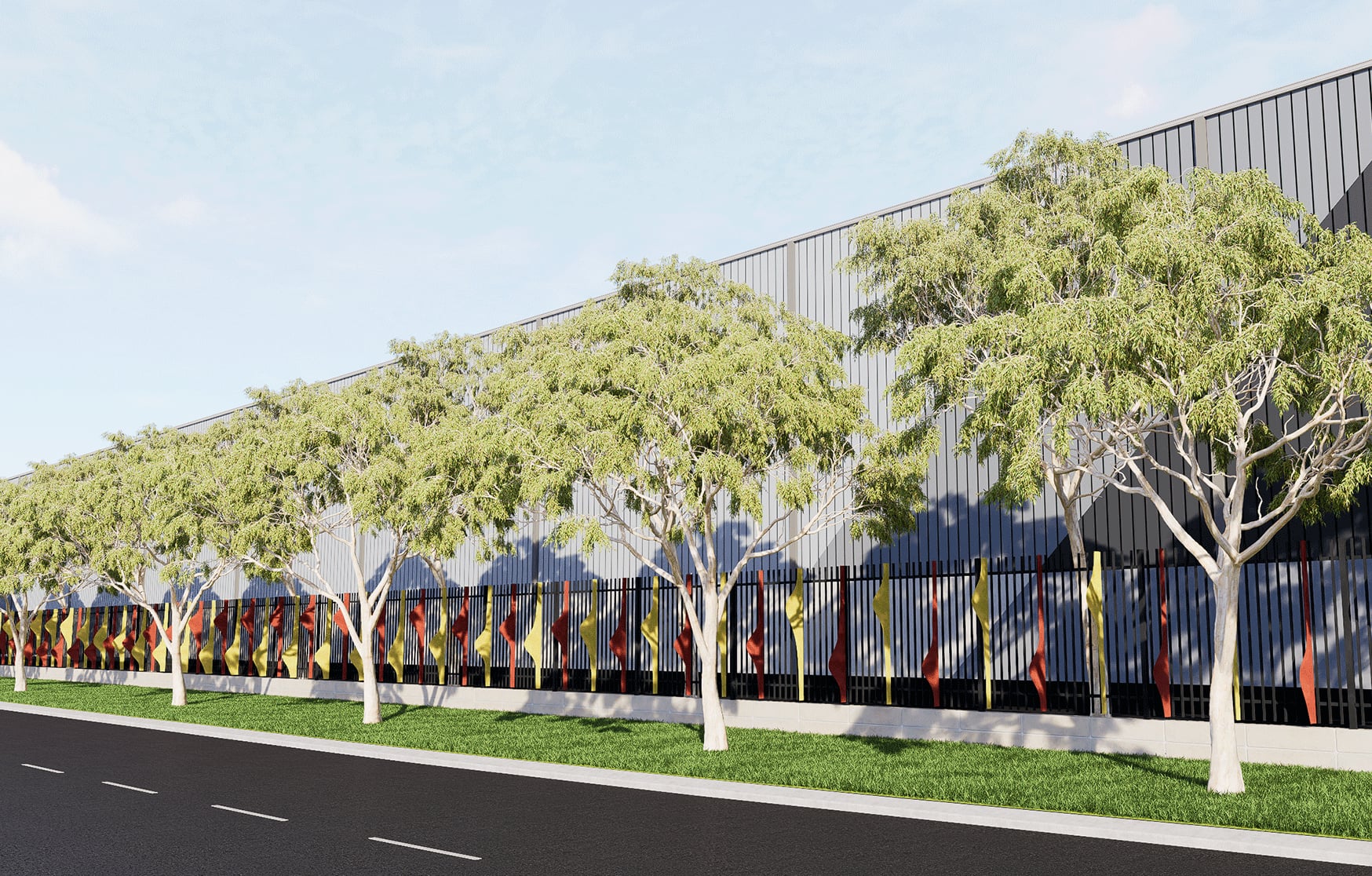
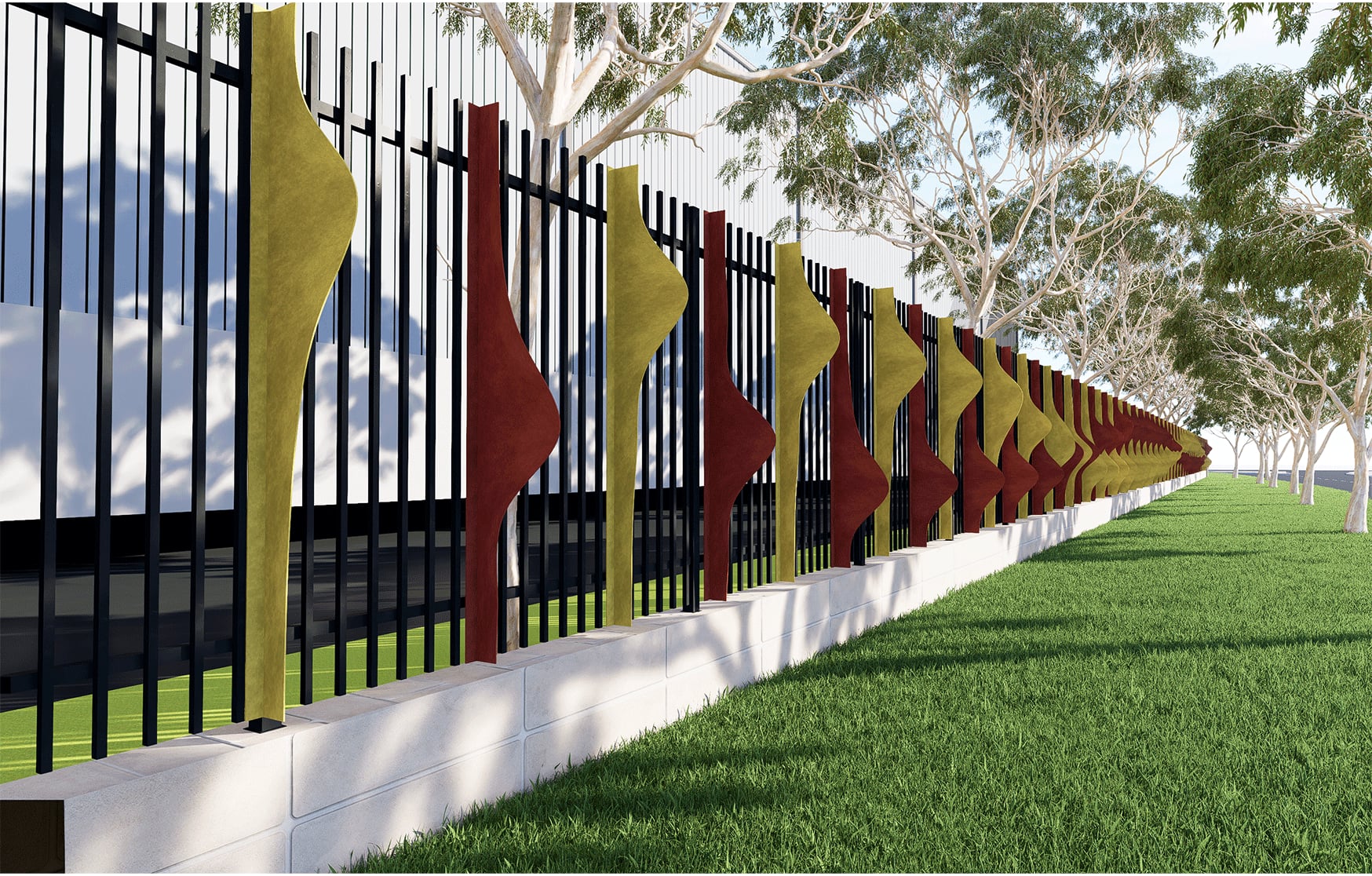
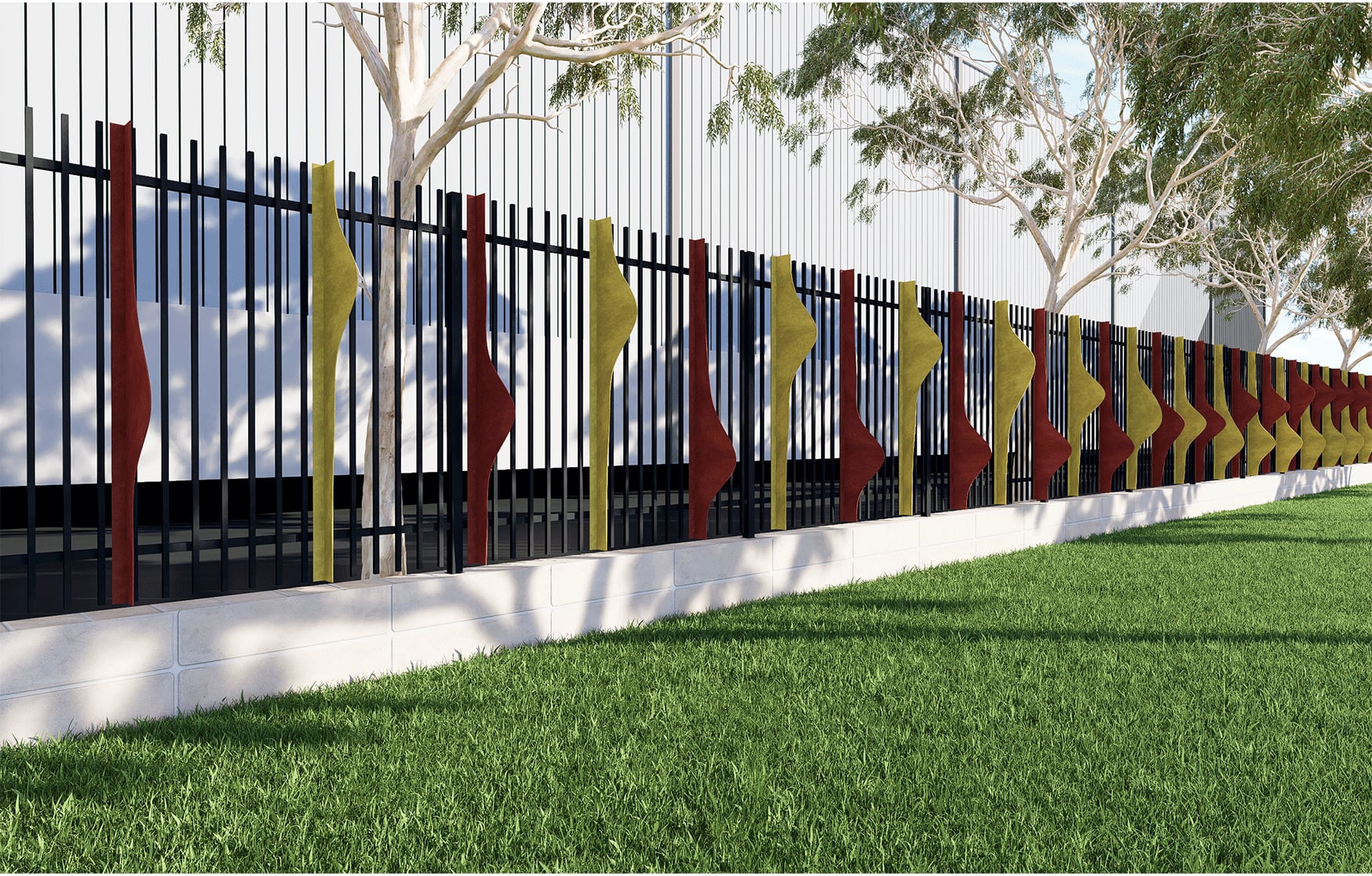
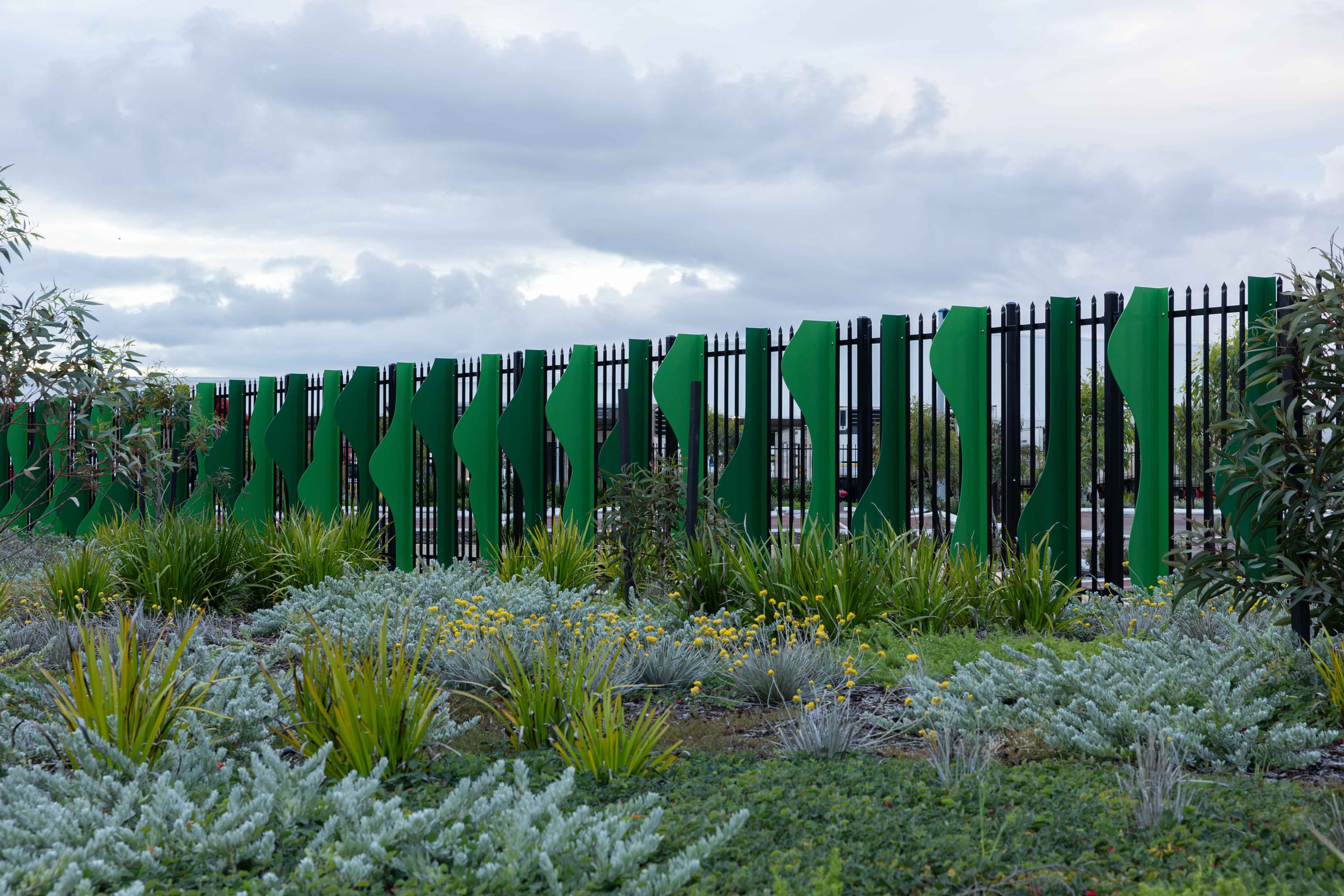
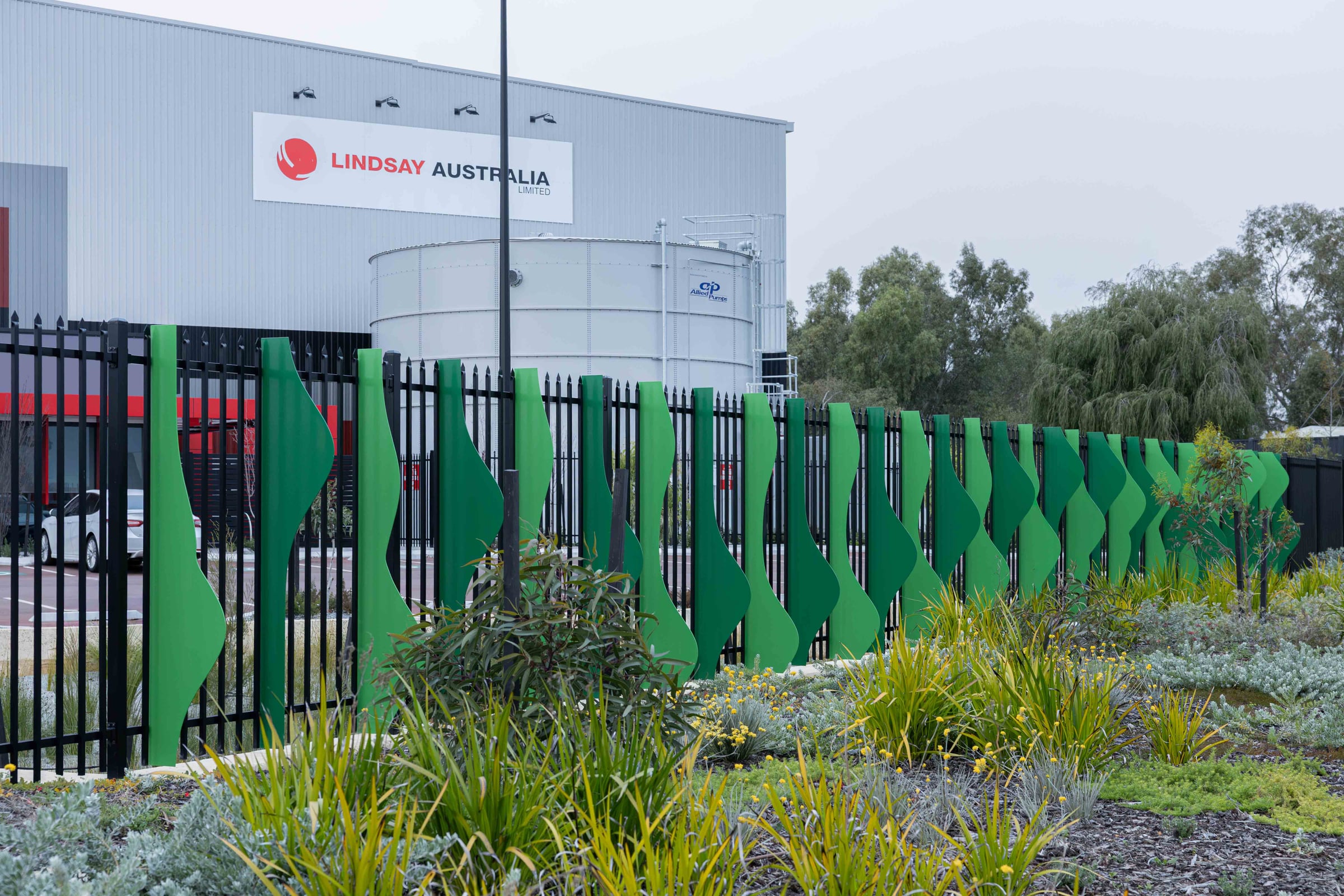
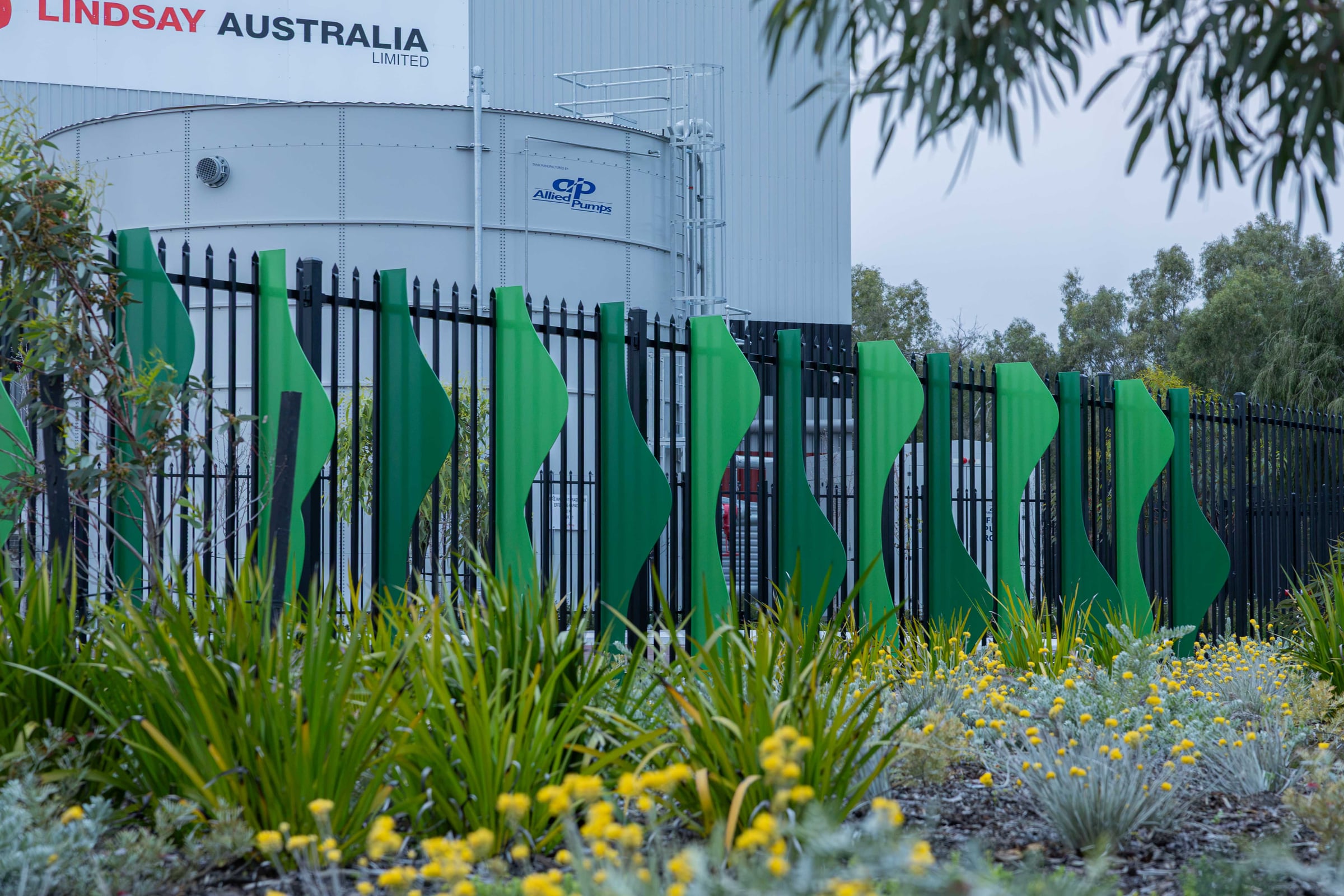
Stirling Crescent is not a place of pedestrian encounter, so the series is composed for motion. It is experienced in passing, through a windscreen, across a moment. As vehicles move along the corridor, the fins of each work appear to shift, with subtle variations in depth, density and translucency creating a visual rhythm that echoes the way light filters through tree canopies: fluttering, diffusing, revealing and concealing. The same choreography of object, viewer and light runs through all three stages, binding them into one work at the scale of the road itself.
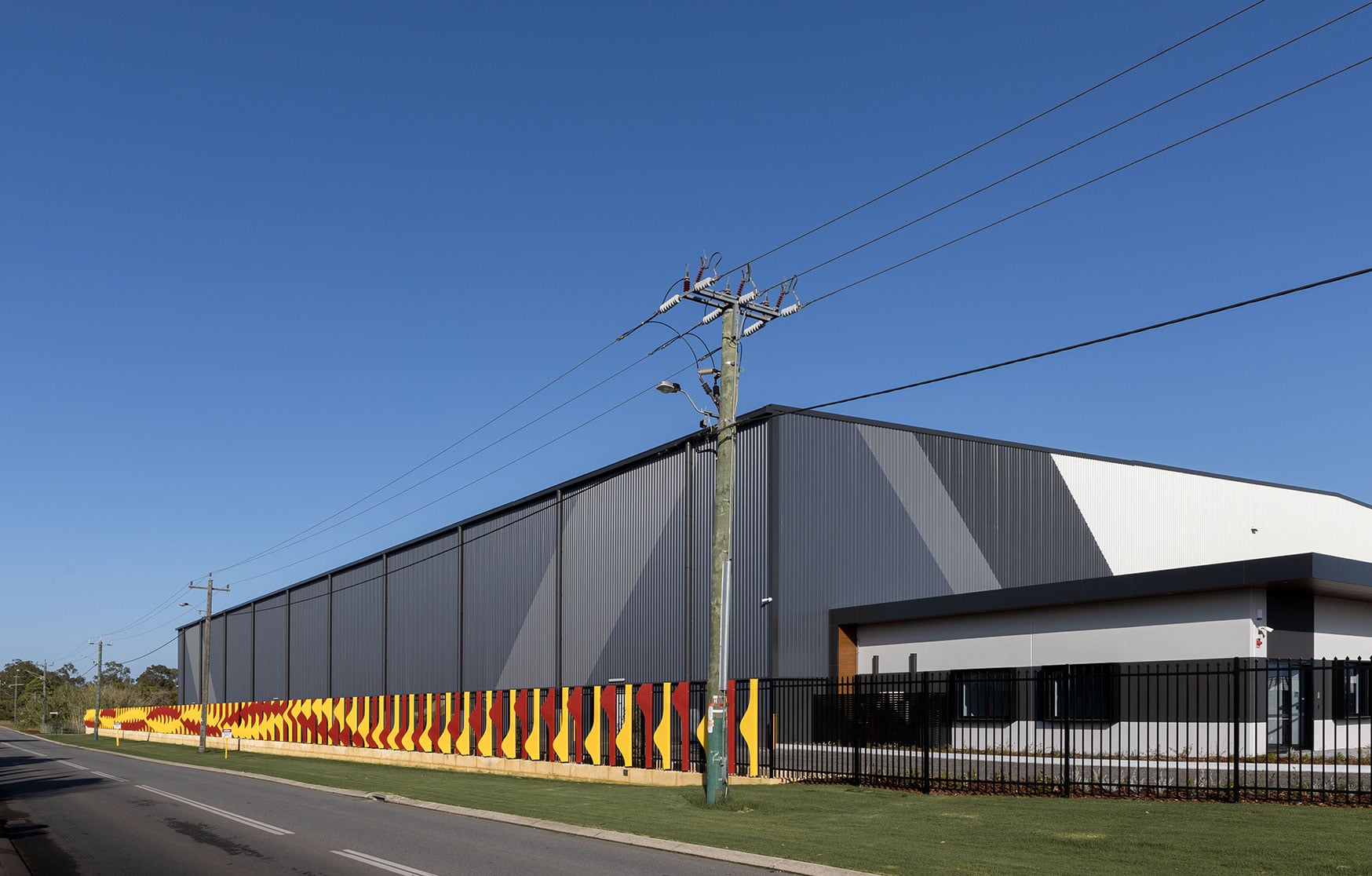
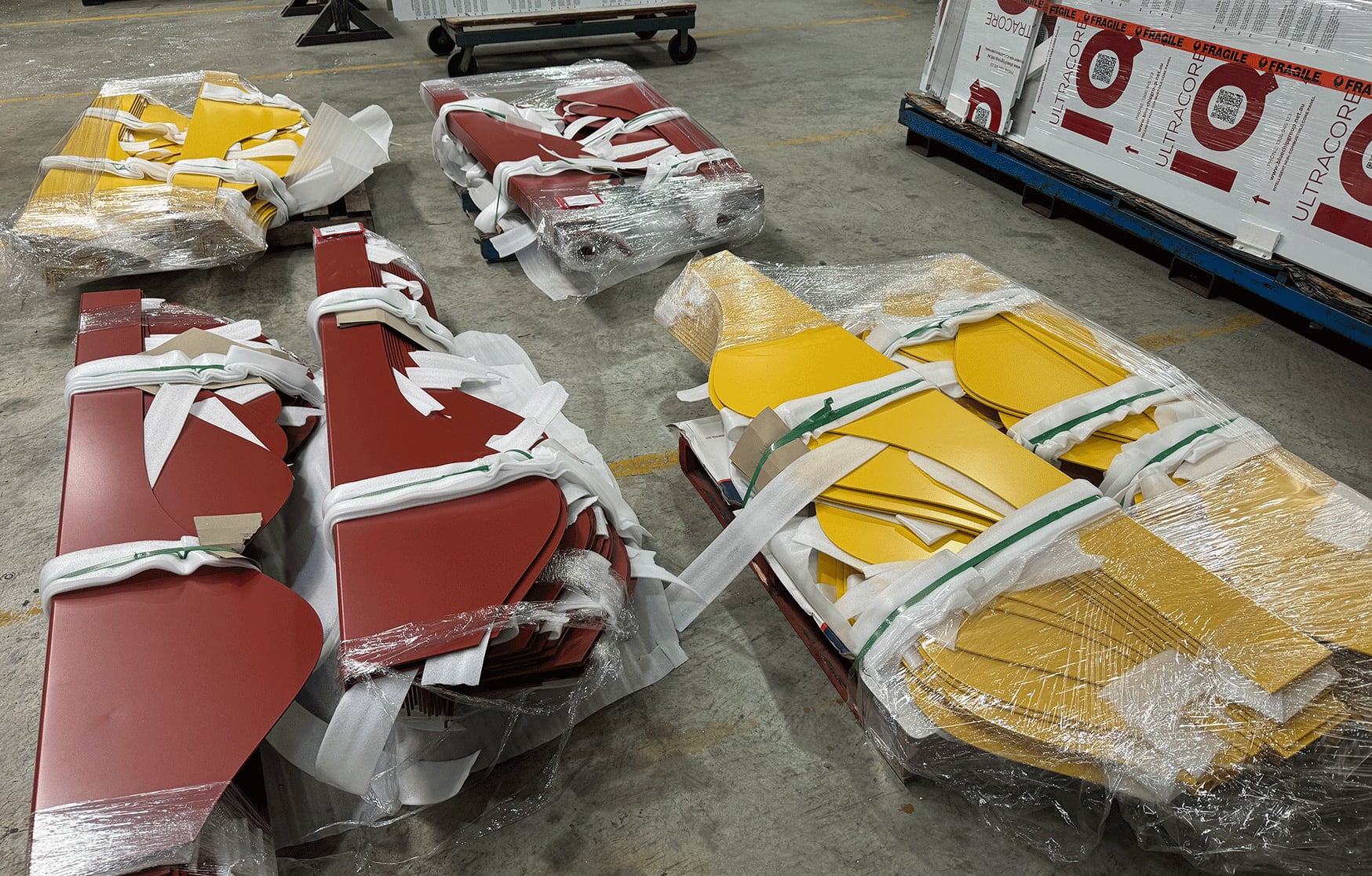
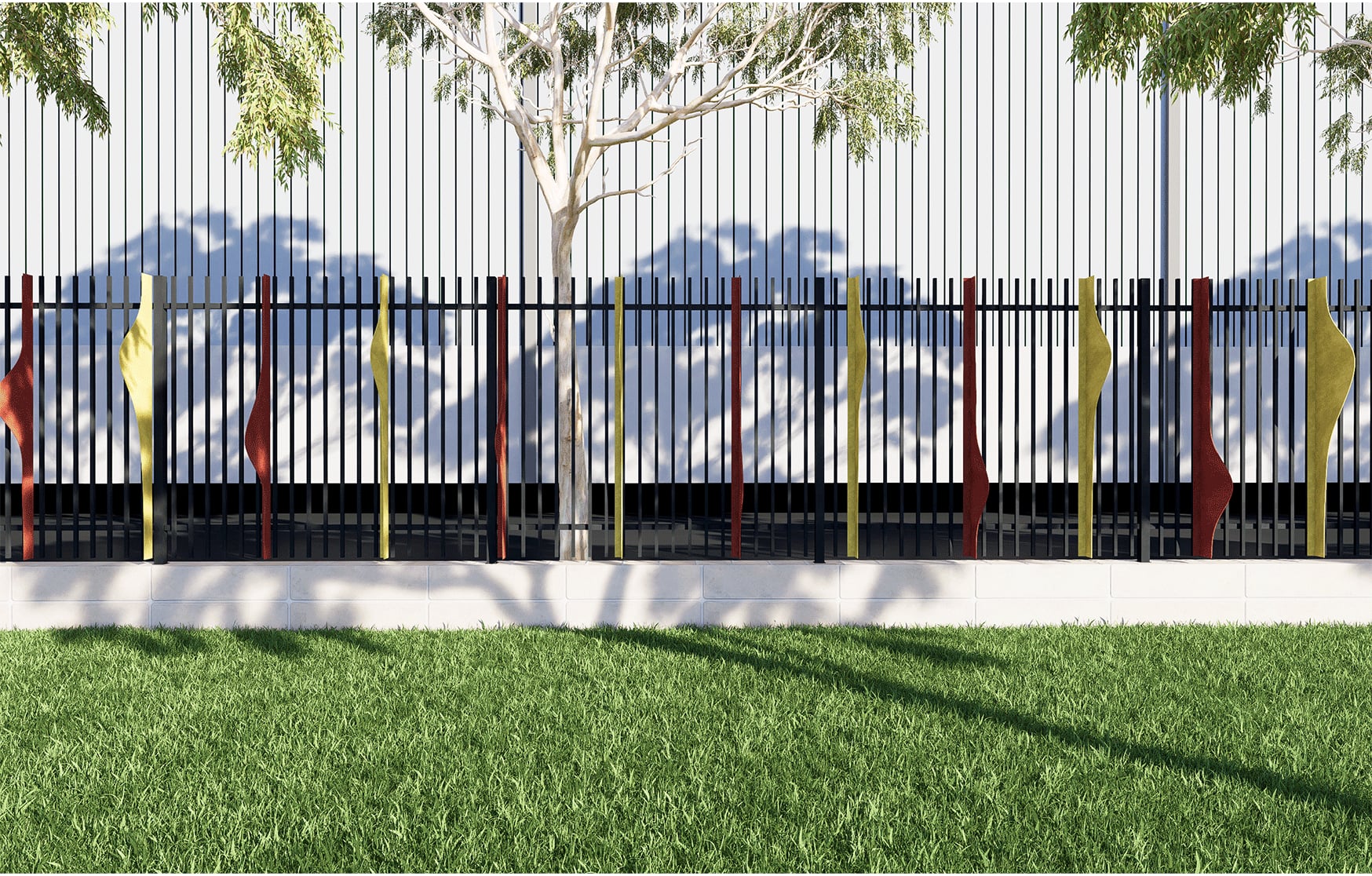
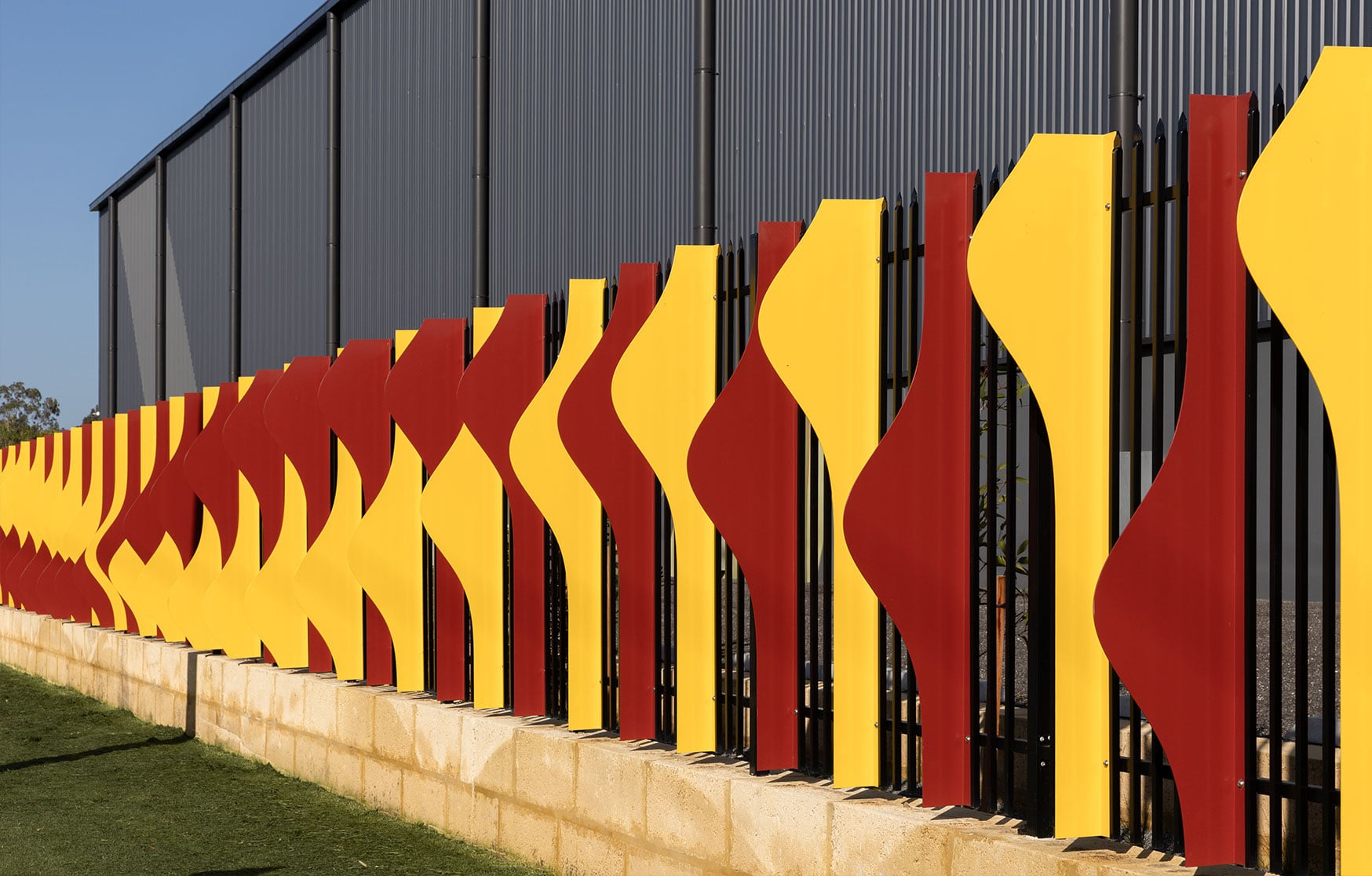
Rippling Redtails opens the sequence at Lot 1499. Drawing on the grace of the Red-tailed Black Cockatoo, its presence in flight, its call and its seasonal migrations, 143 lineal metres of crimson and gold fins undulate along the boundary like the flash of red in a black wing overhead. The colours pay tribute to the cockatoo's striking plumage and to the banksia flowers it feeds among, and the form carries the fluid motion of a bird in flight down the full length of the site.
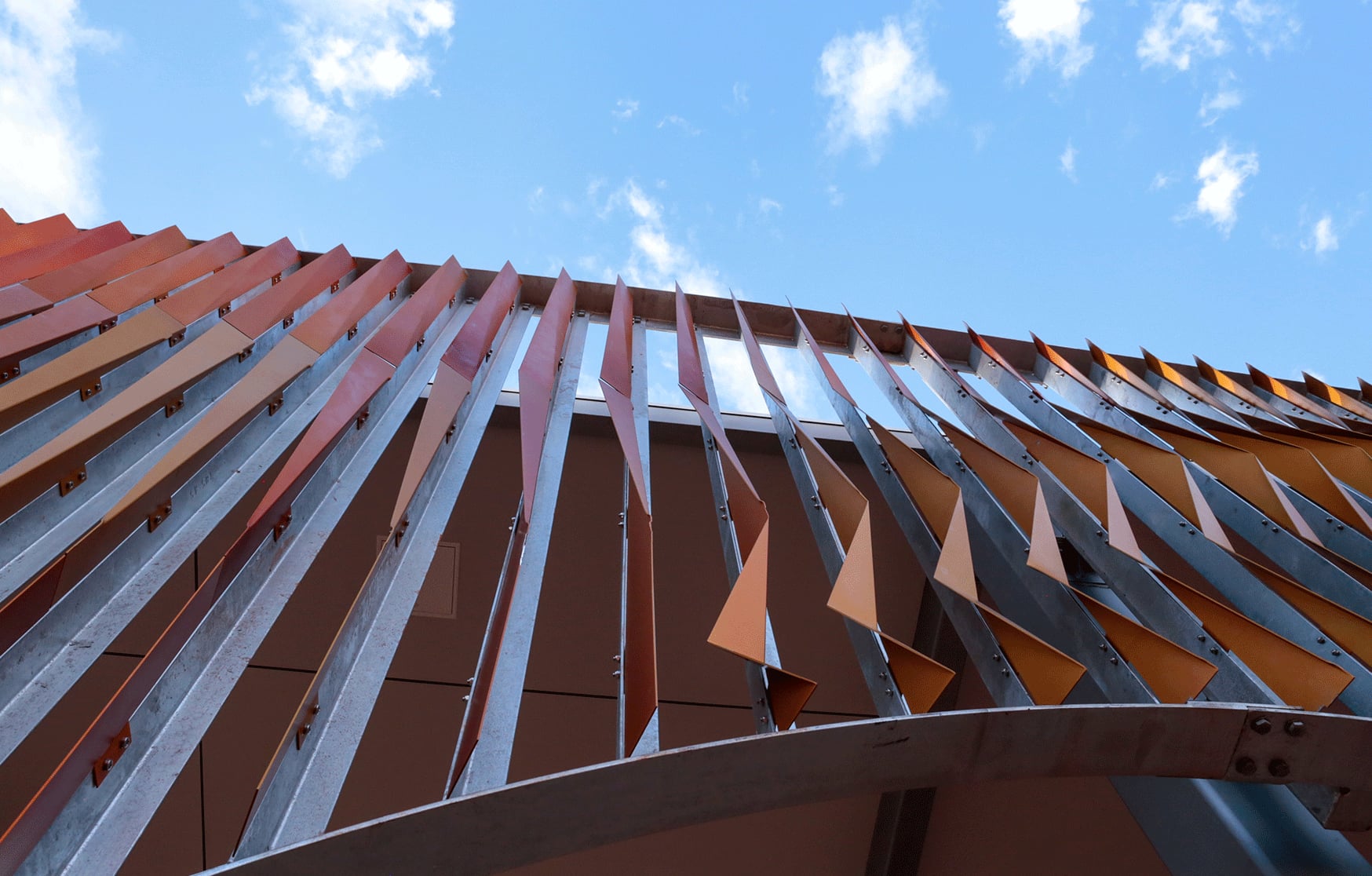
Stage two draws the eye downward, into the ground and through the understorey, to the Jarrah and Marri woodlands that once spanned much of this area. Fins in deep and light greens reference branches, leaf clusters and woodland structures, fragmented, multiplied and abstracted to capture not the image of nature but its movement: leaves blowing in the wind, creasing into ripples and waves as they blow back and forth.
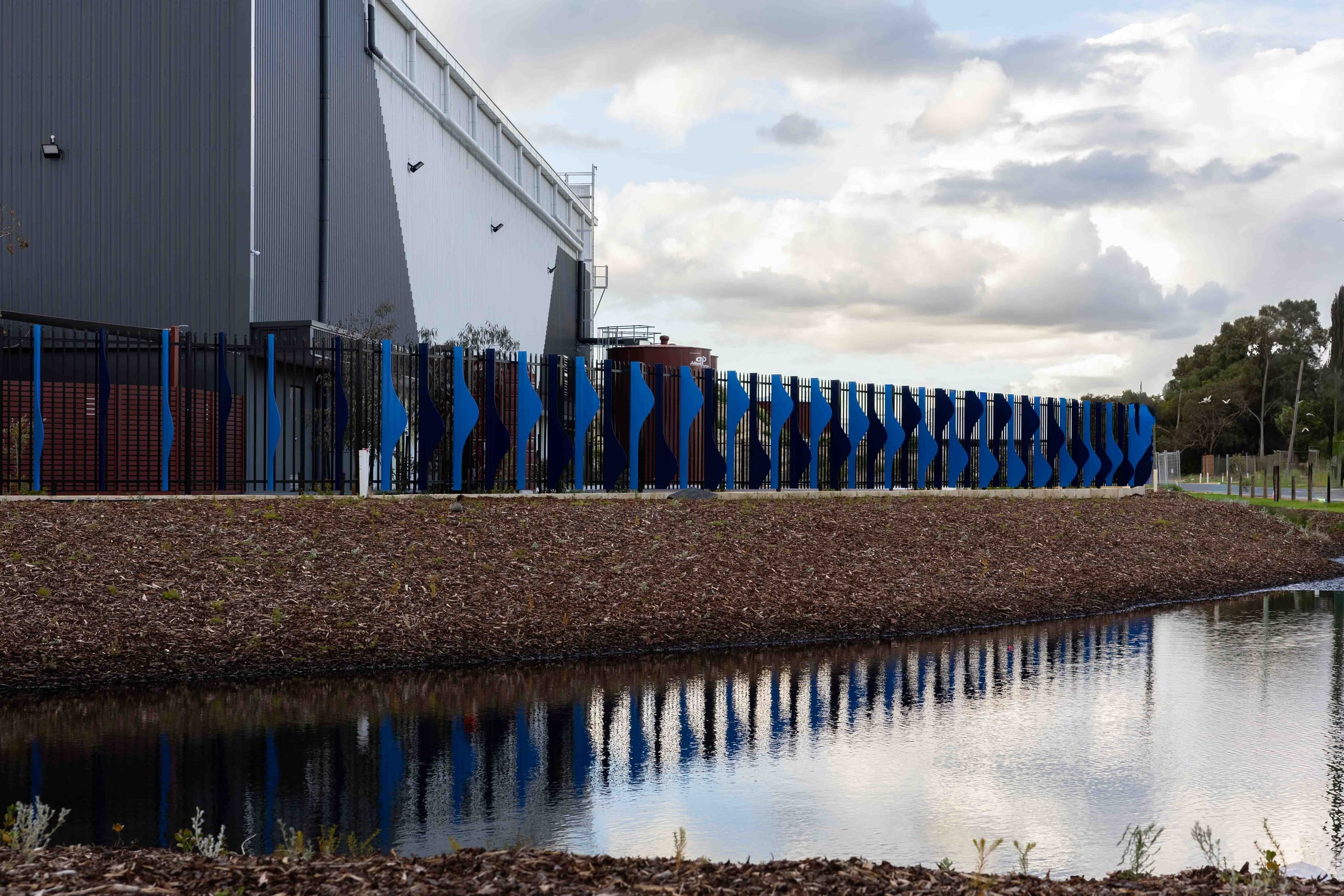
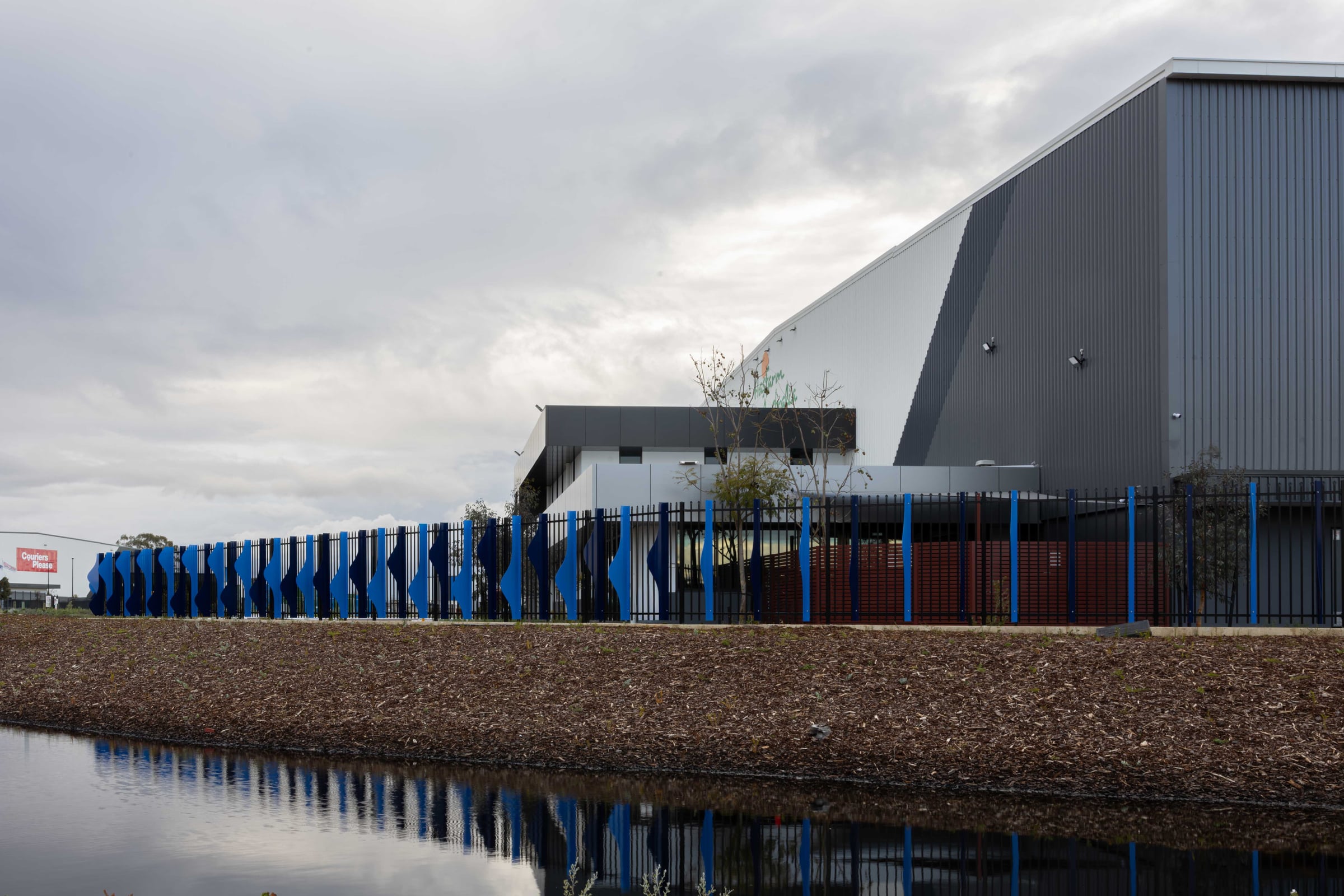
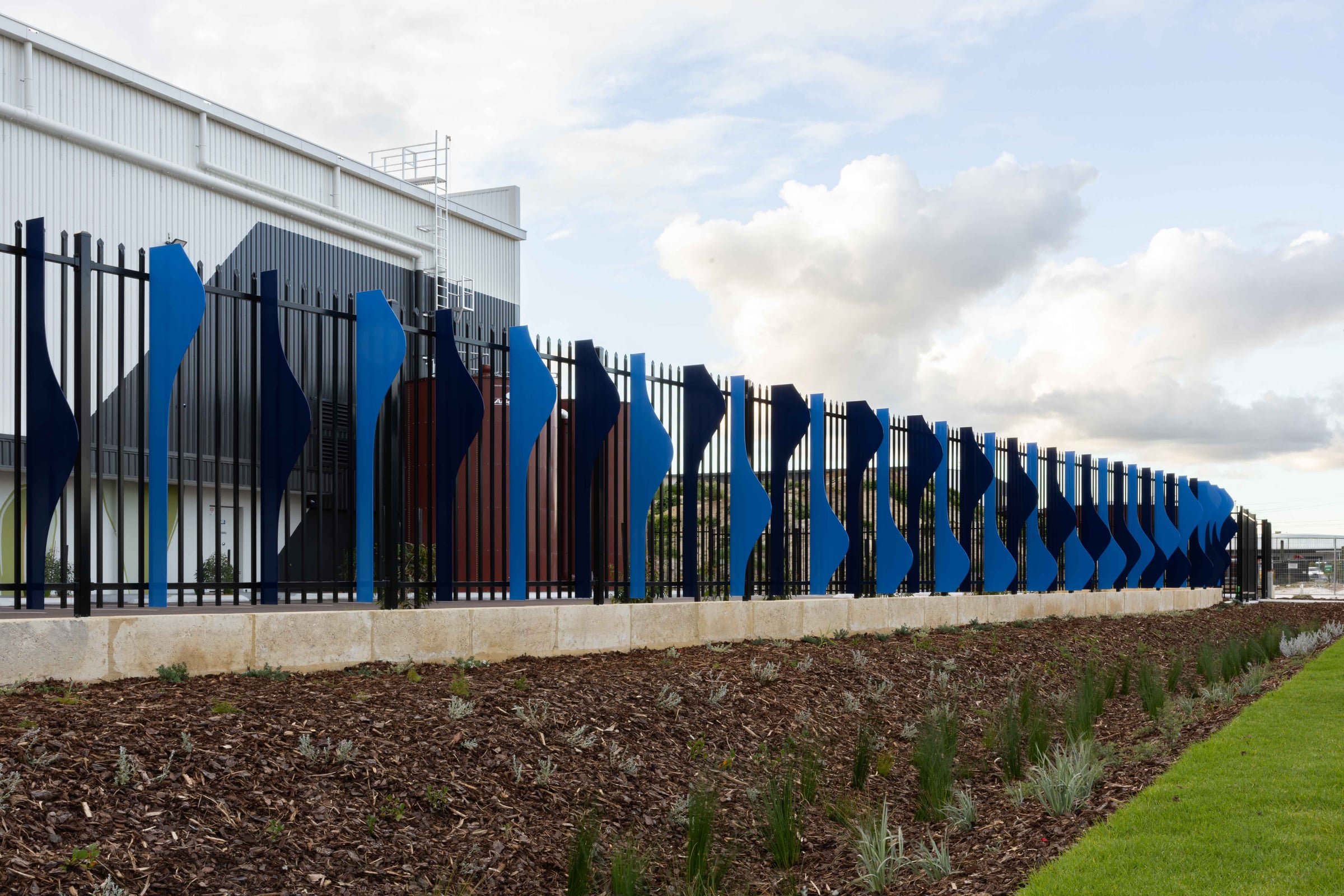
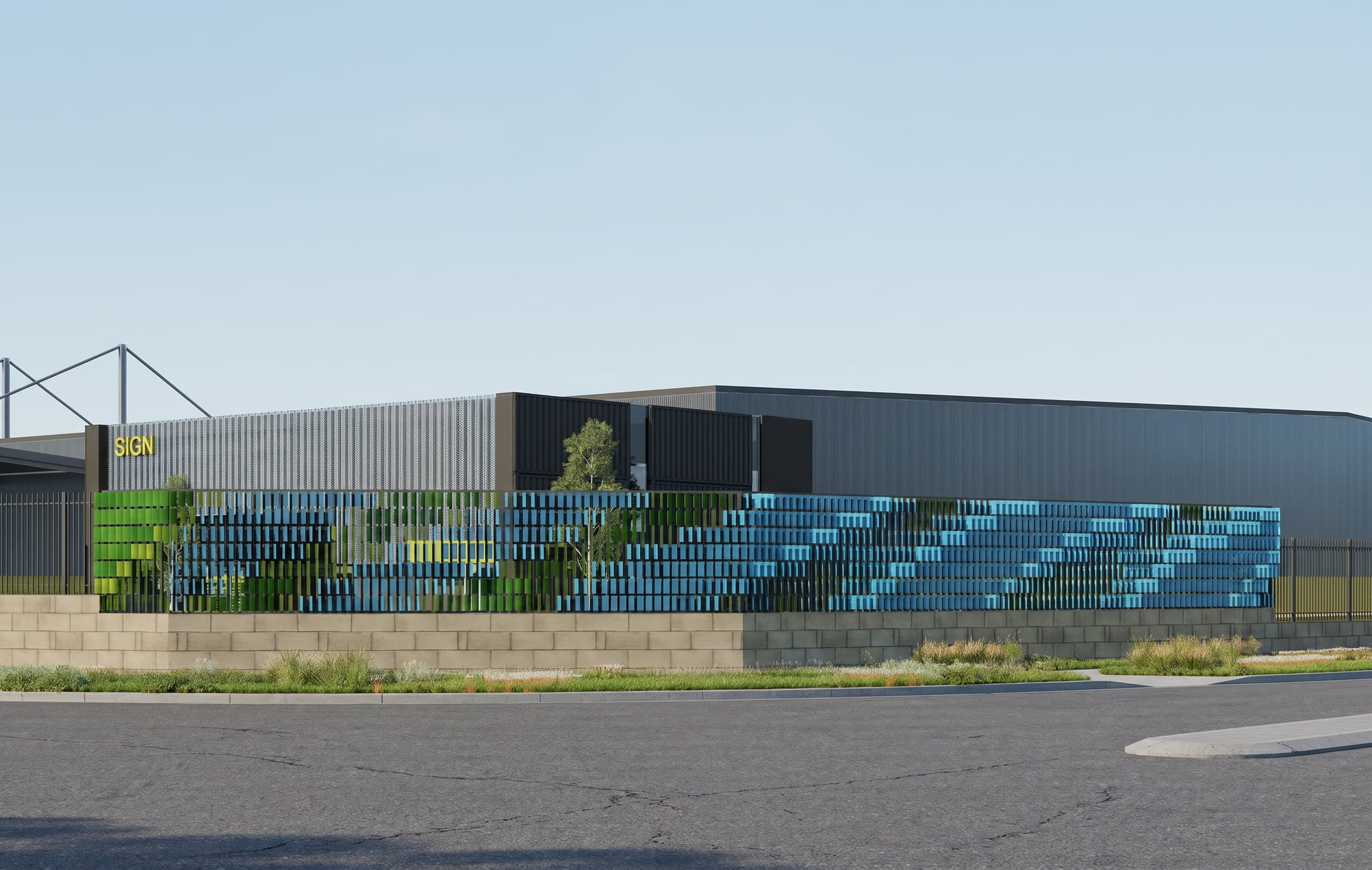
Stage three completes the narrative by turning to water: the wetlands, creeks and hydrological systems that form the vital yet often invisible lifeblood of the region's ecosystems. Rendered in deep through to light blues drawn from water flowing over the rock formations, rapids and falls of the nearby hills, this final work is the connective element of the series, grounding the avian and botanical stages in the element that sustains them both.
The three stages, avian, botanical and aquatic, form a progression through the systems that shape this place. Rather than making grand gestures, they offer moments of pause and recognition within an industrial landscape, foregrounding the ecological richness that persists, often unseen, beneath and beyond the built environment. The series seeks not to instruct but to heighten awareness: a quiet act of noticing, repeated three times along one road, and an invitation to reflect on the living systems that continue to shape the character of place.