2023
Cygnia Cove, Waterford
Integrated Brick Artwork
Daniel Giuffre, Rick Vermey
Linic Property Group
MJA Architects
130 sqm
6500 bricks, 2 different brick types
$120,000
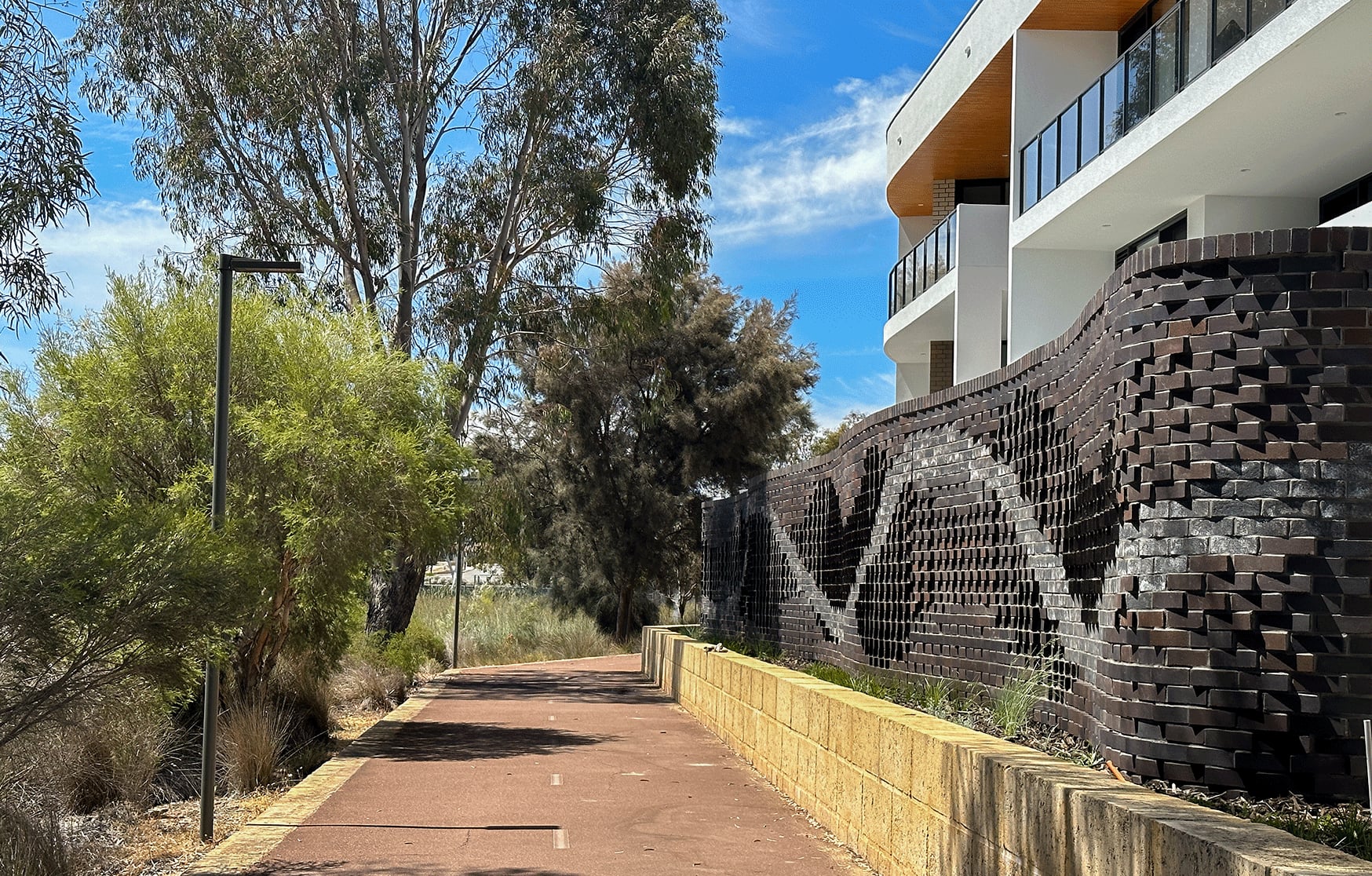
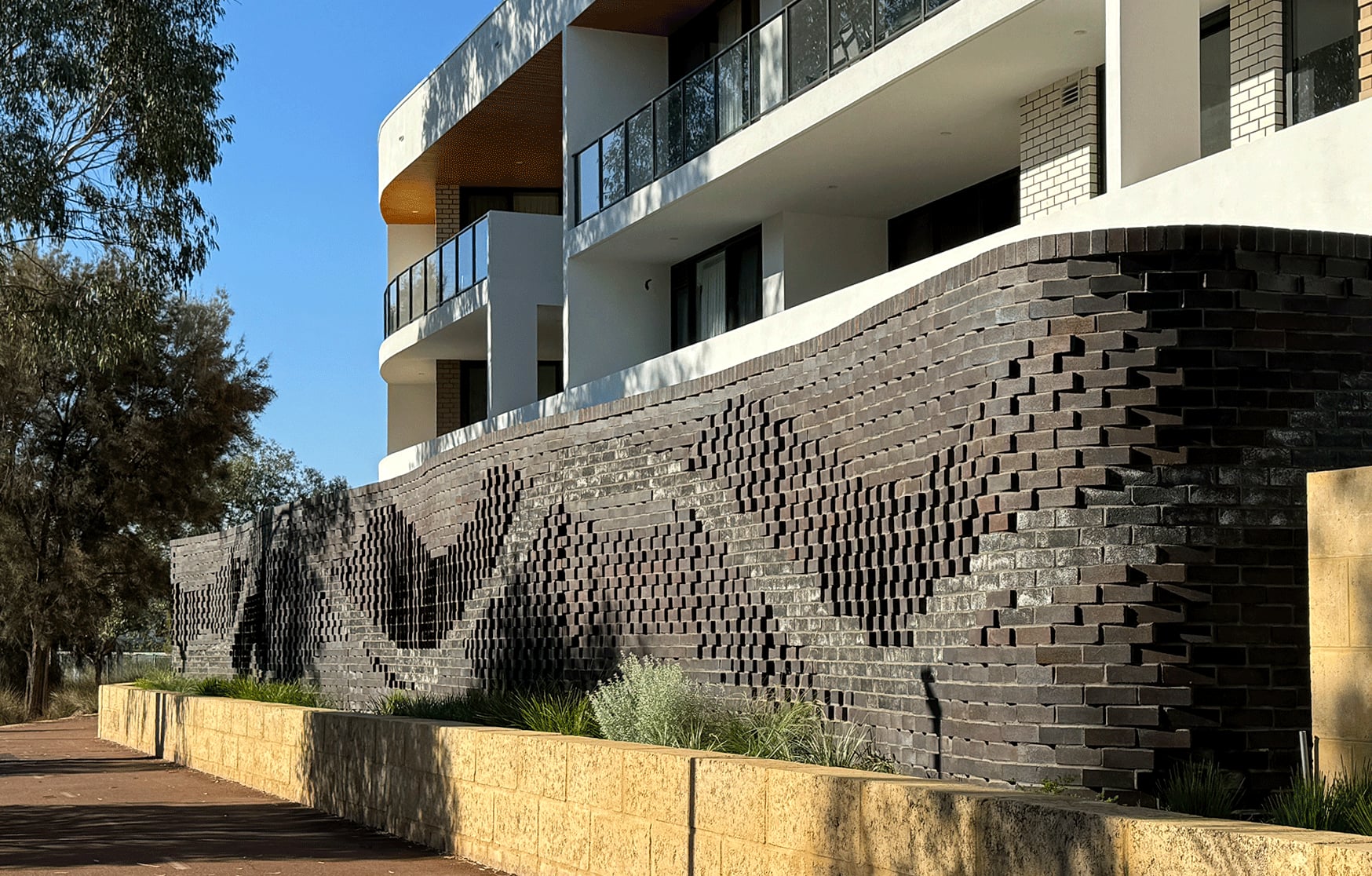
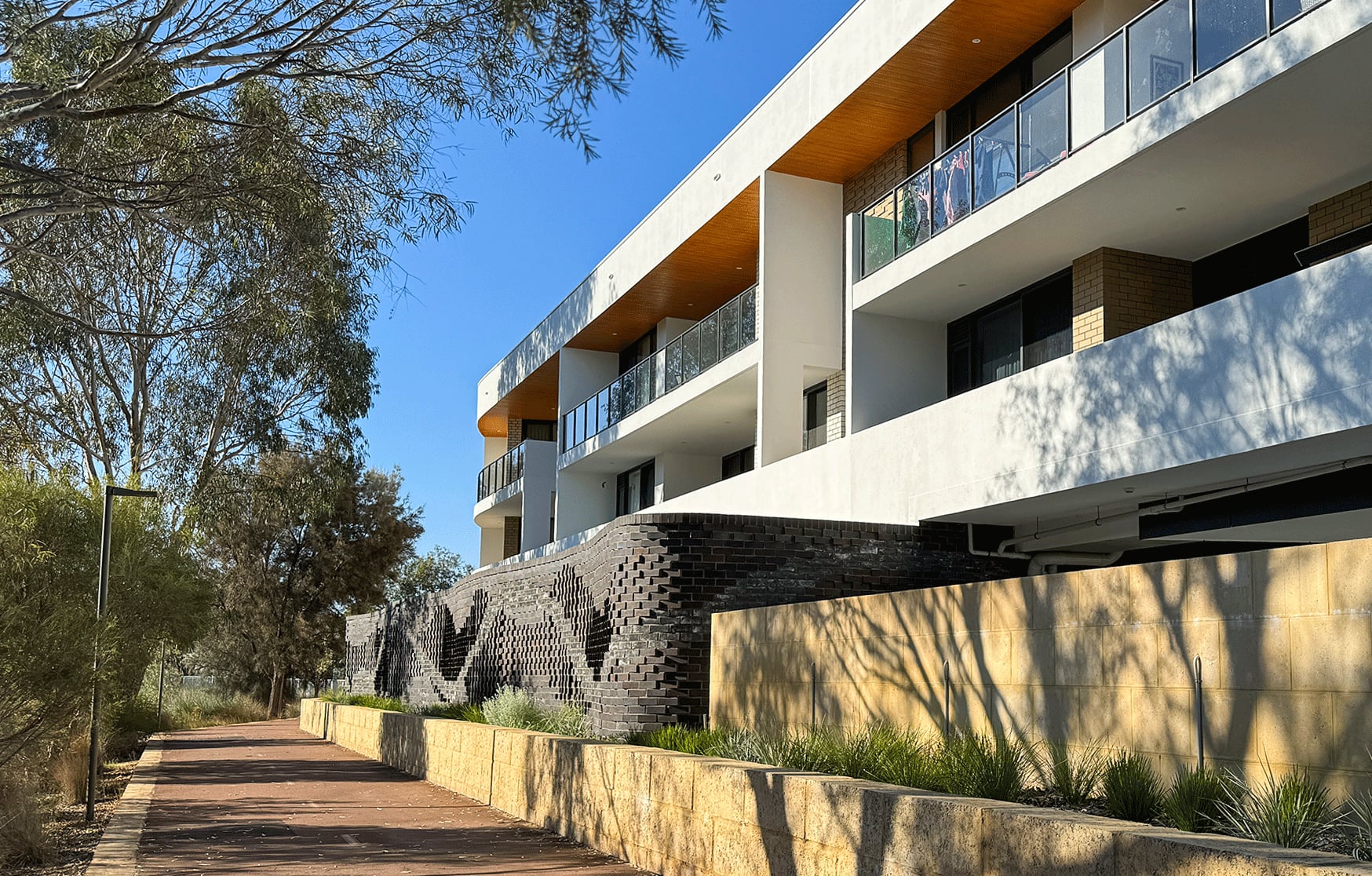
Six and a half thousand custom bricks chart the rise and fall of the wetland, the wingbeats of swans and the wakes of rowers, in a wall that moves with the light.
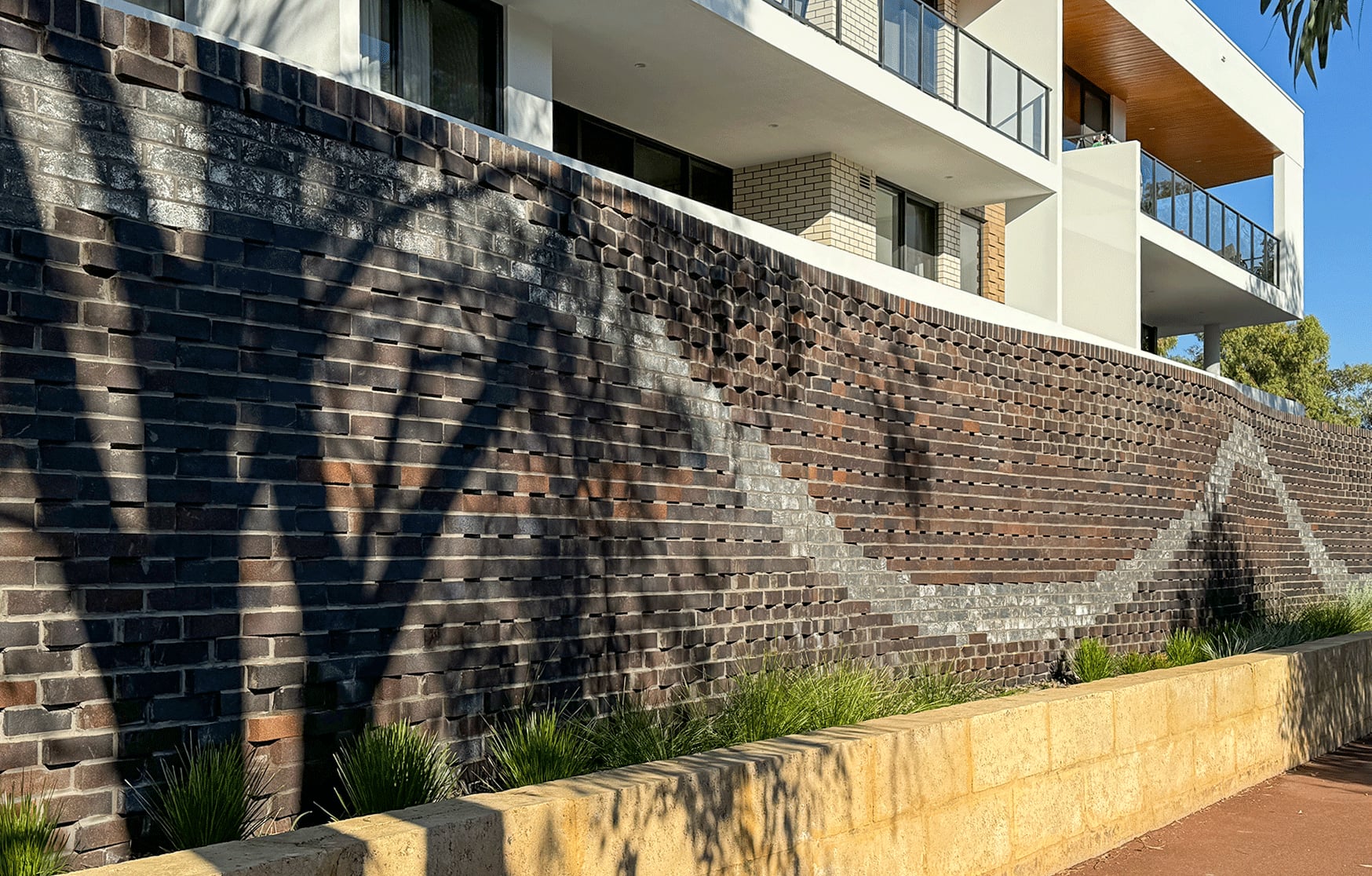
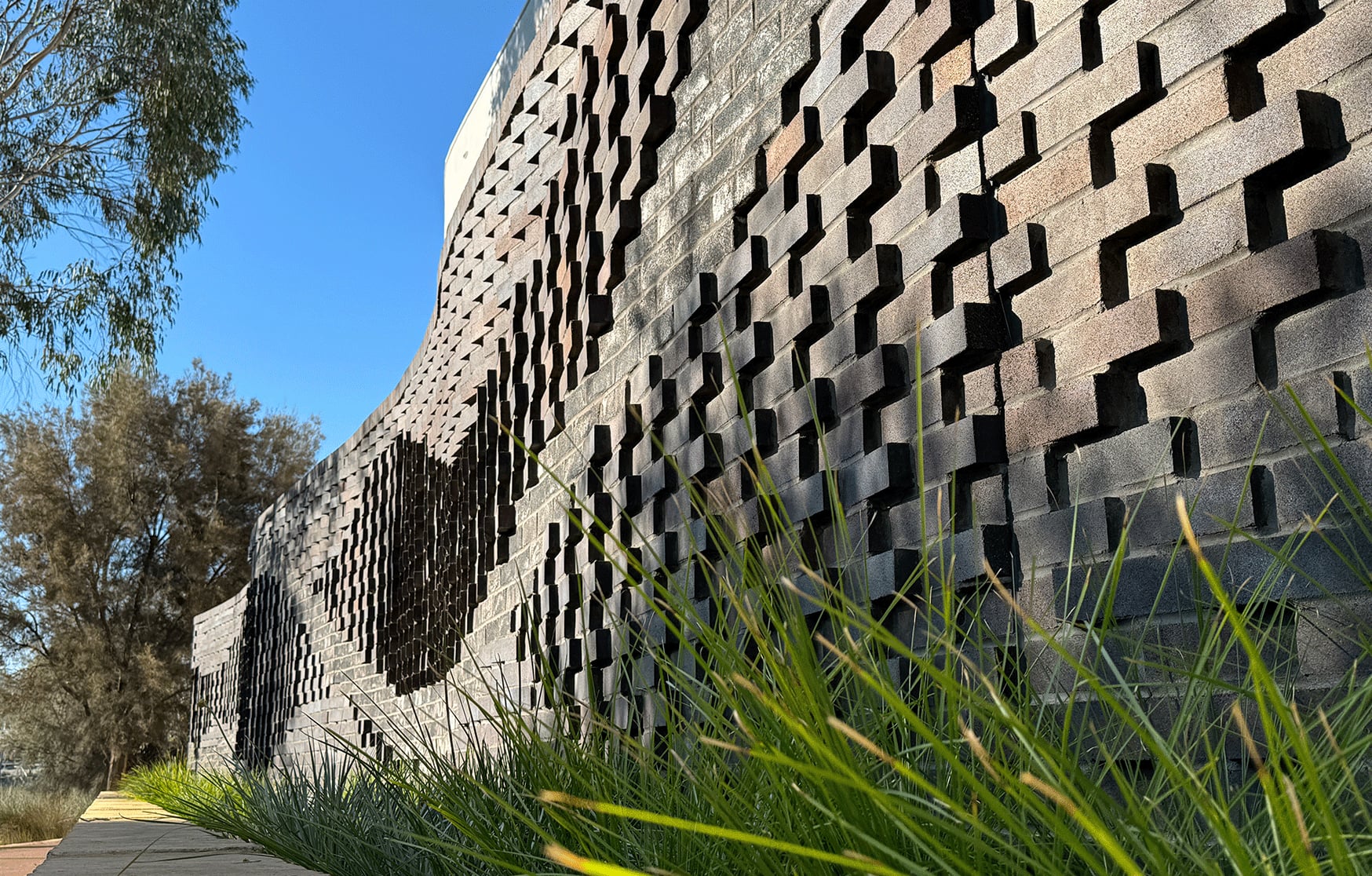
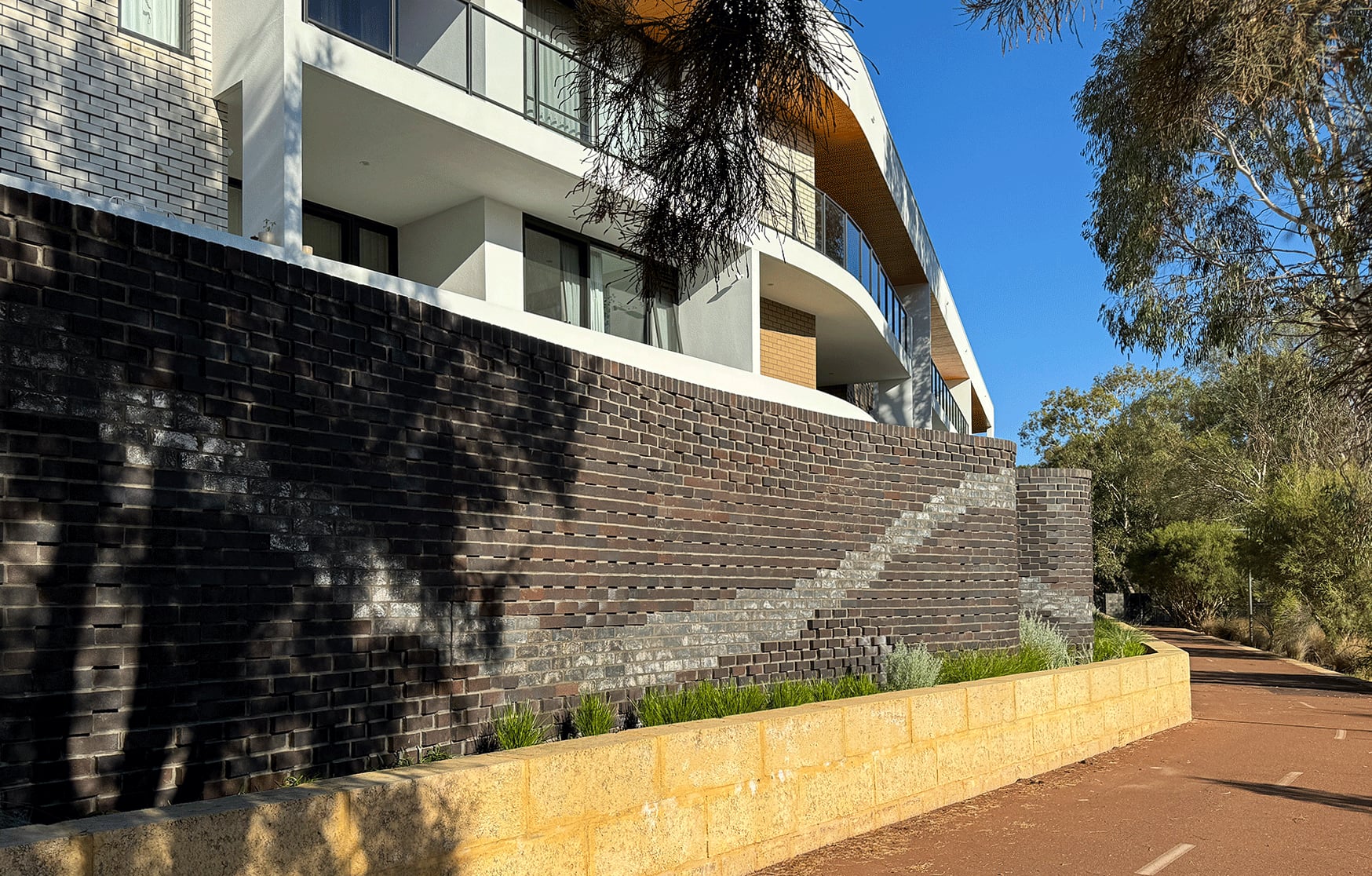
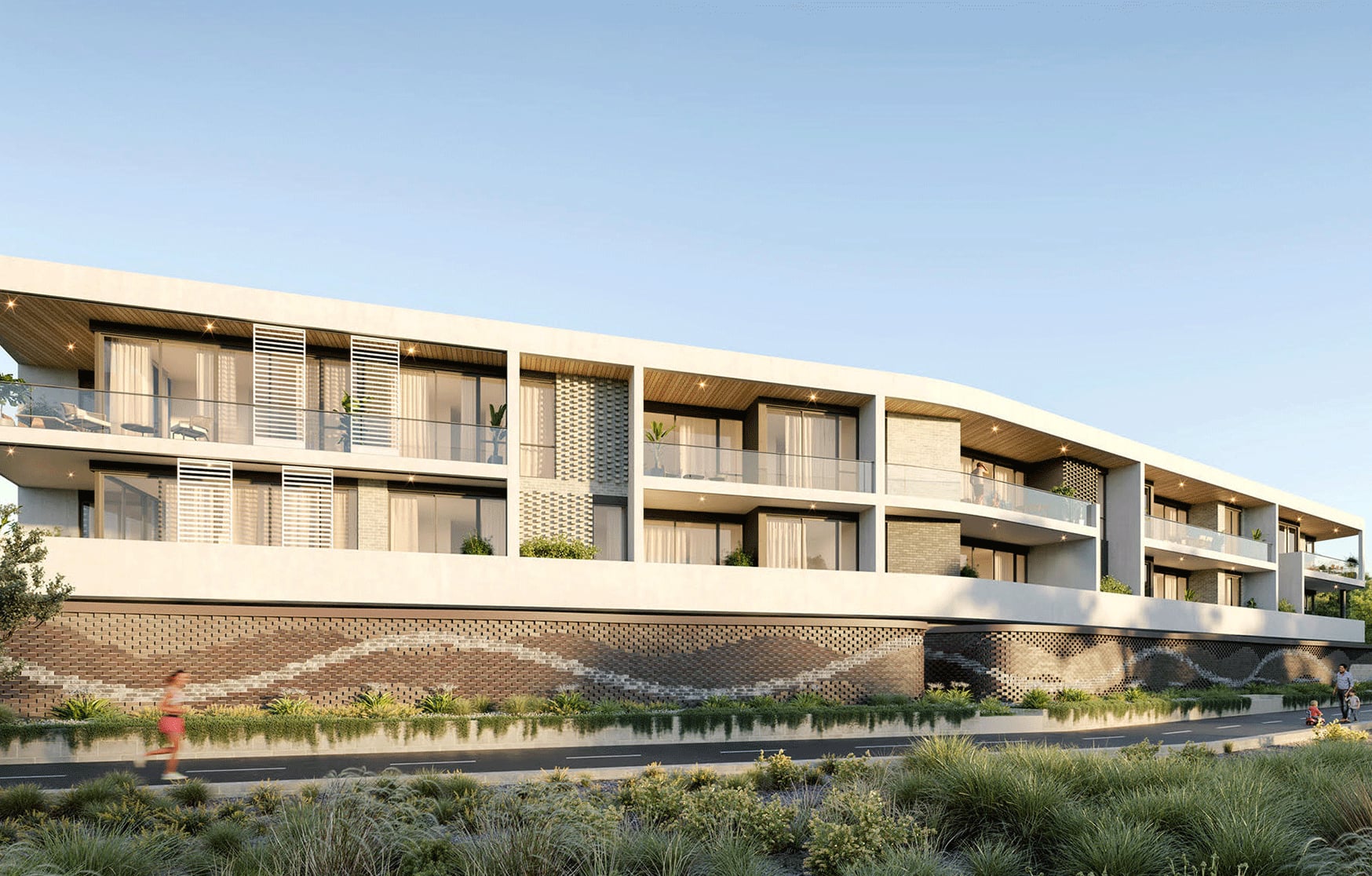
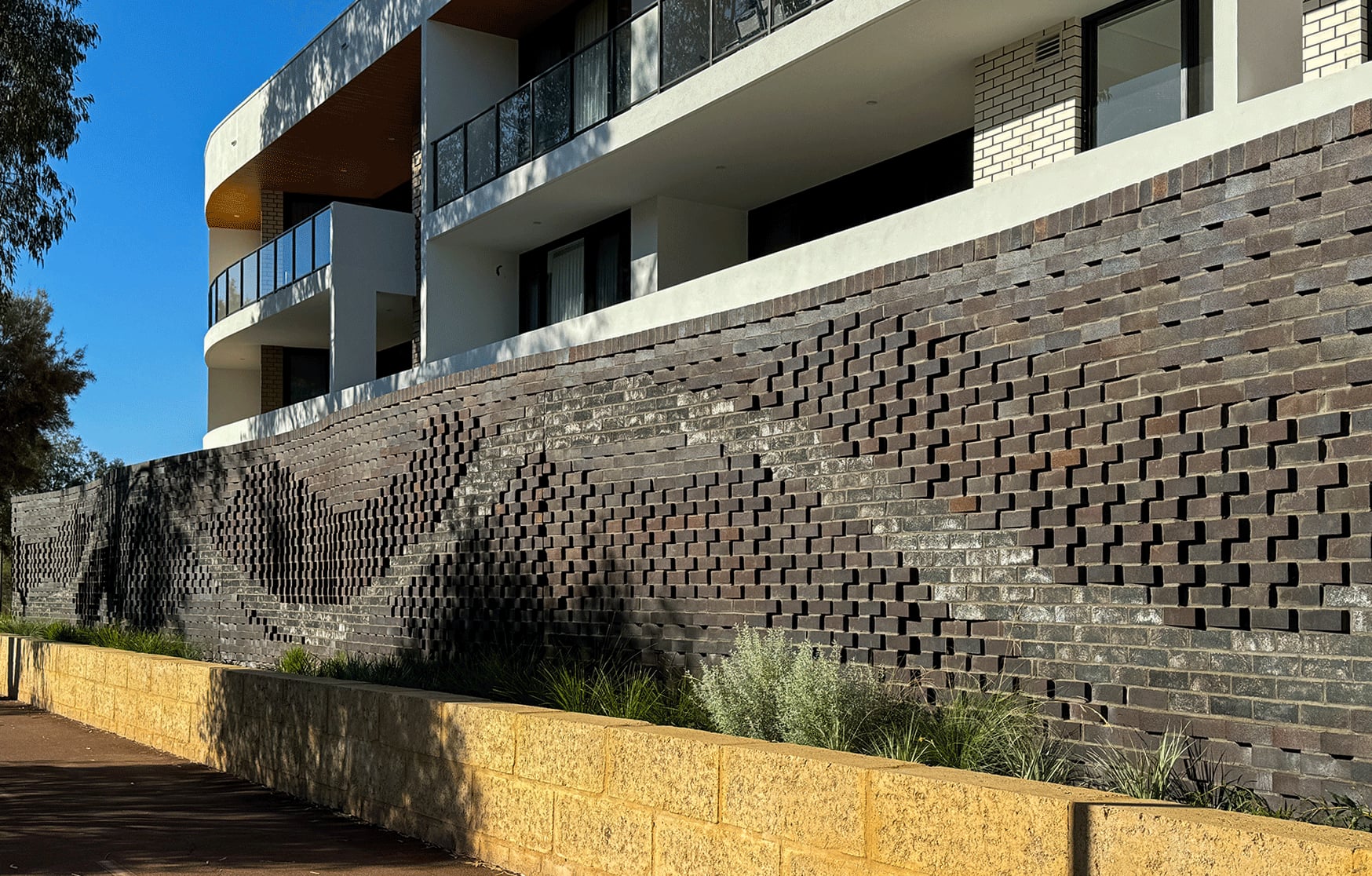
Waterford runs the length of the parkland pathway at Cygnia Cove, a wall of custom brickwork tracing the property's north-western boundary, its rotated face planes articulating a rhythmic, undulating motion along a short journey. True to its name, it is a wall that behaves like water: 130 square metres of brick recording the rhythms of the wetland and river beside it.
The concept arose directly from the site. On first visit, the adjacent wetland immediately suggested the idea of mapping the surface of a water body, of charting its seasonal and tidal rise and fall as linear rhythms of motion over time. Following the small watercourse down to its mouth at the Canning River, that shifting of water depths became even more apparent, where narrowing navigation channels are marked among periodically submerged, silting sandbanks. This is a landscape in constant, slow motion, and the artwork set out to hold its trace.
The river offered more rhythms the longer the artists watched. Pelicans and waterfowl work this sheltered stretch of the Canning, among them the Black Swan, Cygnus atratus, Maali in Nyoongar, whose lifting and landing traces fluid, mappable curves through the air at the tips of its wings. Nearby, rowing crews train on the river surface, their arcing passage leaving interweaving sine curves rippling outward in their wake. Water, wings and oars: the wall gathers these motions into a single notation, written in brick.
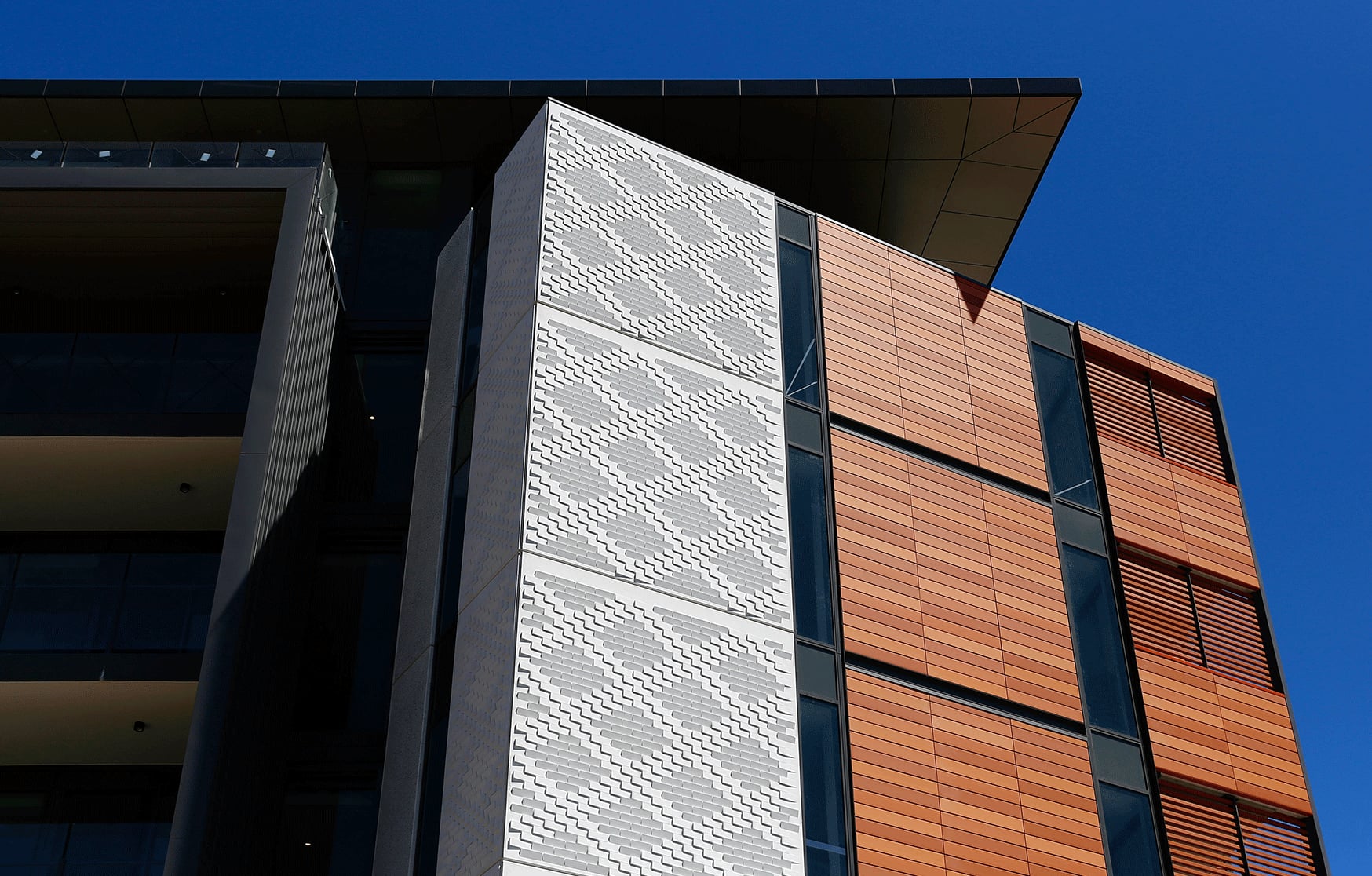
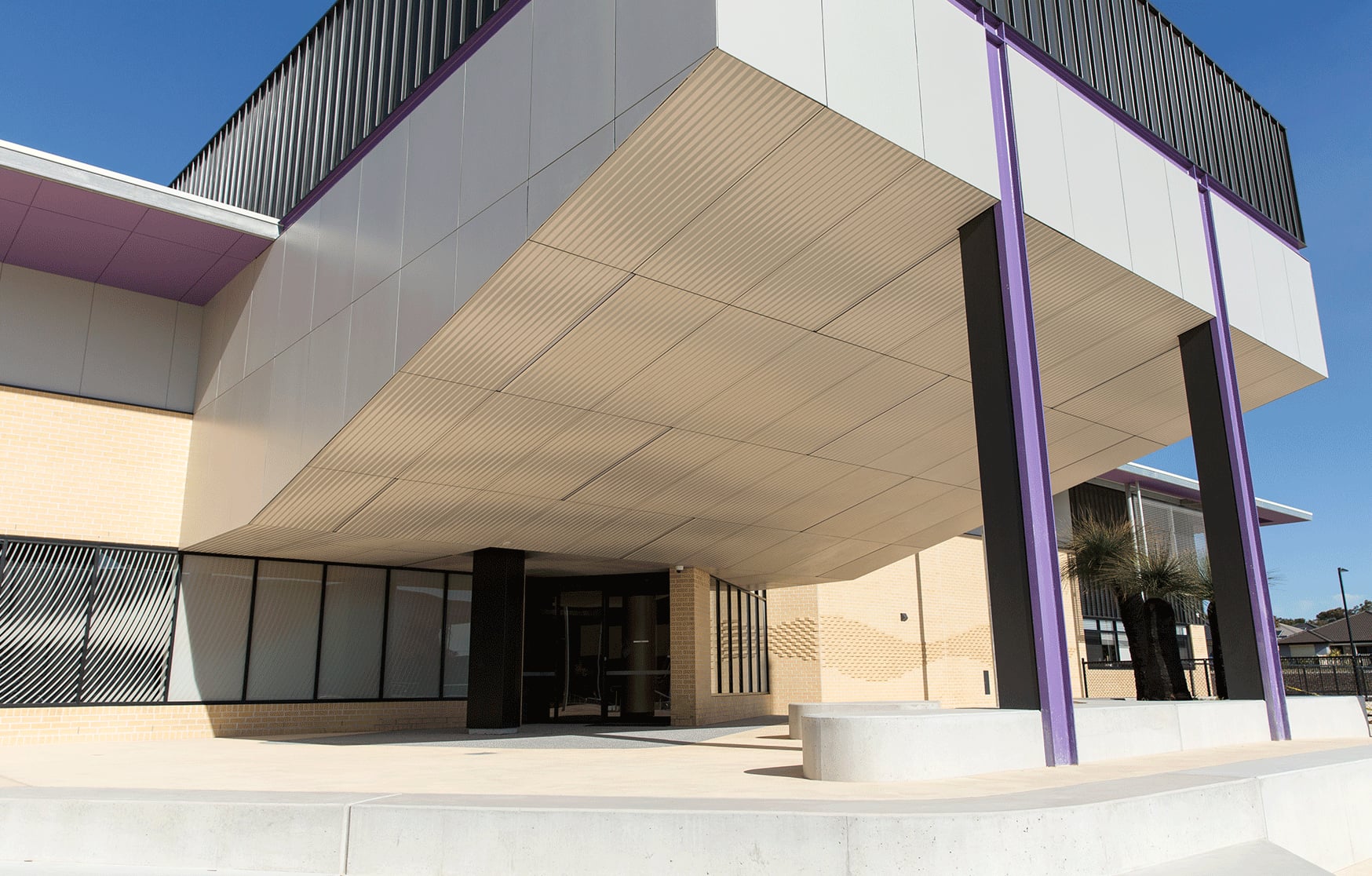
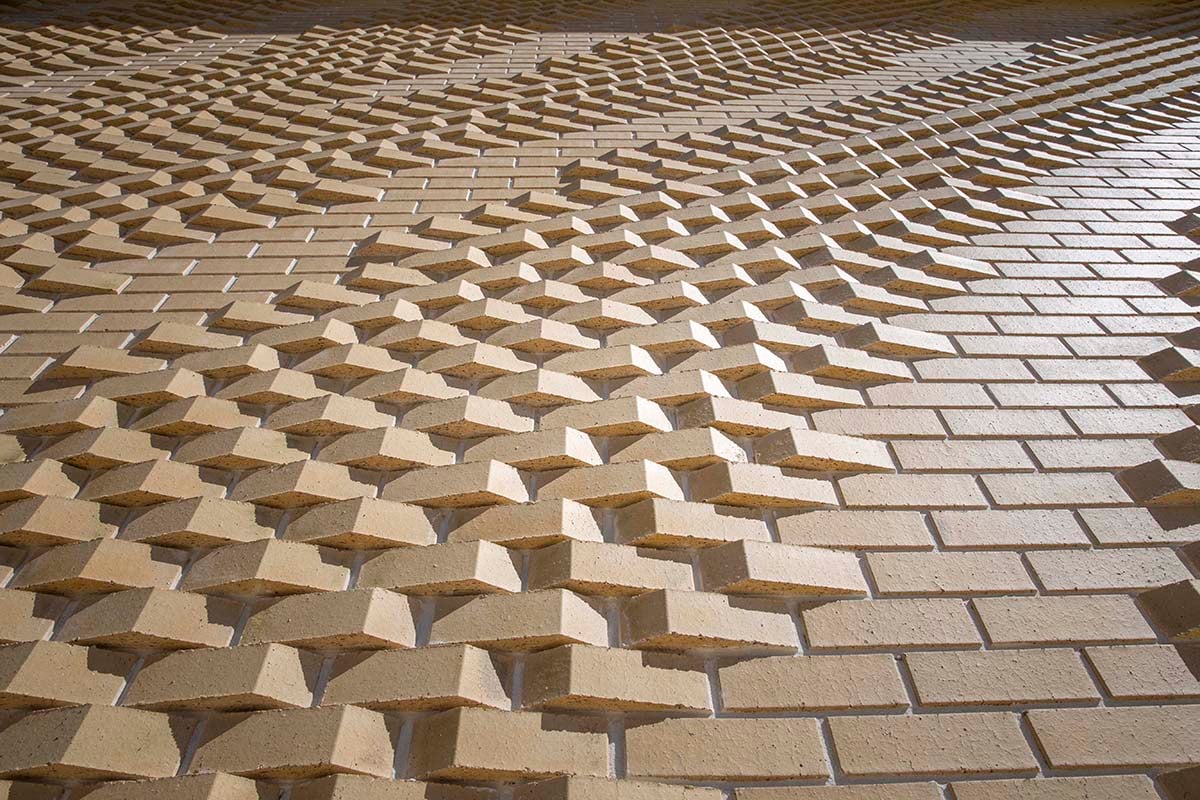
The 6,500 bricks are custom shaped to the artists' design, developed in partnership with a local Western Australian brick manufacturer and made possible by computational design tools carried through from first sketch to construction documentation, enabling the building of something previously unachievable. Laid in situ, the rotated faces catch the sun differently across the day, so light and shadow move continually across the textured surface the way light moves across water. The approach extends a patternation language the artists first developed at Yanchep Secondary College, here refined to the scale of a walk.
There is a quiet rightness in the material. Brick begins as clay, a sediment laid down by water, here fired and stacked to record the water that made it. For those who pass daily along the pathway, the wall gives the wetland's invisible rhythms a permanent, touchable form, different at every hour, familiar over years.