In progress
East Fremantle, WA
Integrated brick artwork
H-U (Human Urban)
2 Walls - 13m h x 5m
Bricks with Custom rotations
$130, 000
Two walls, one coastline, two moments in time: arrive past the harbour that was made, leave past the shore that simply was.
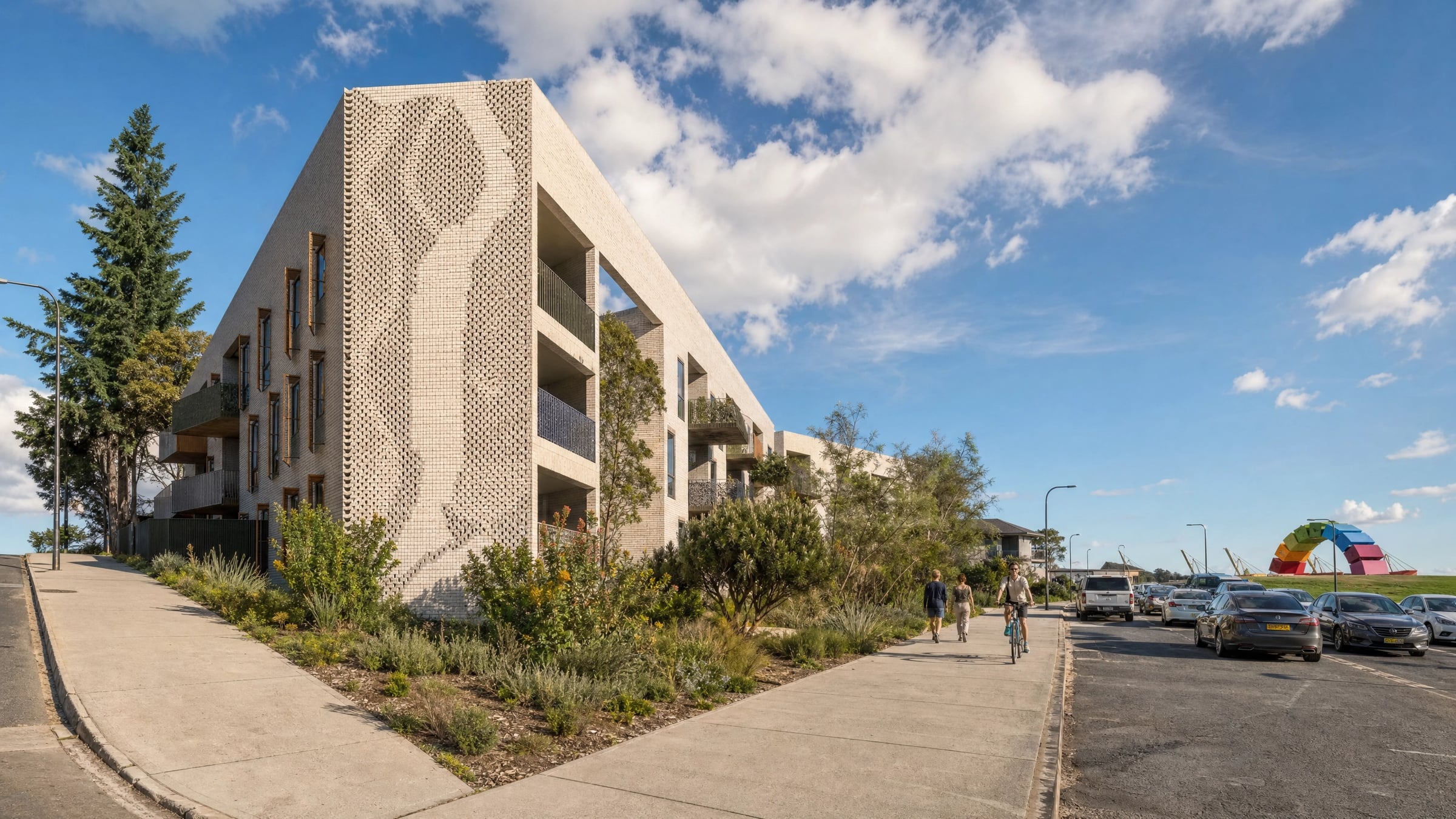
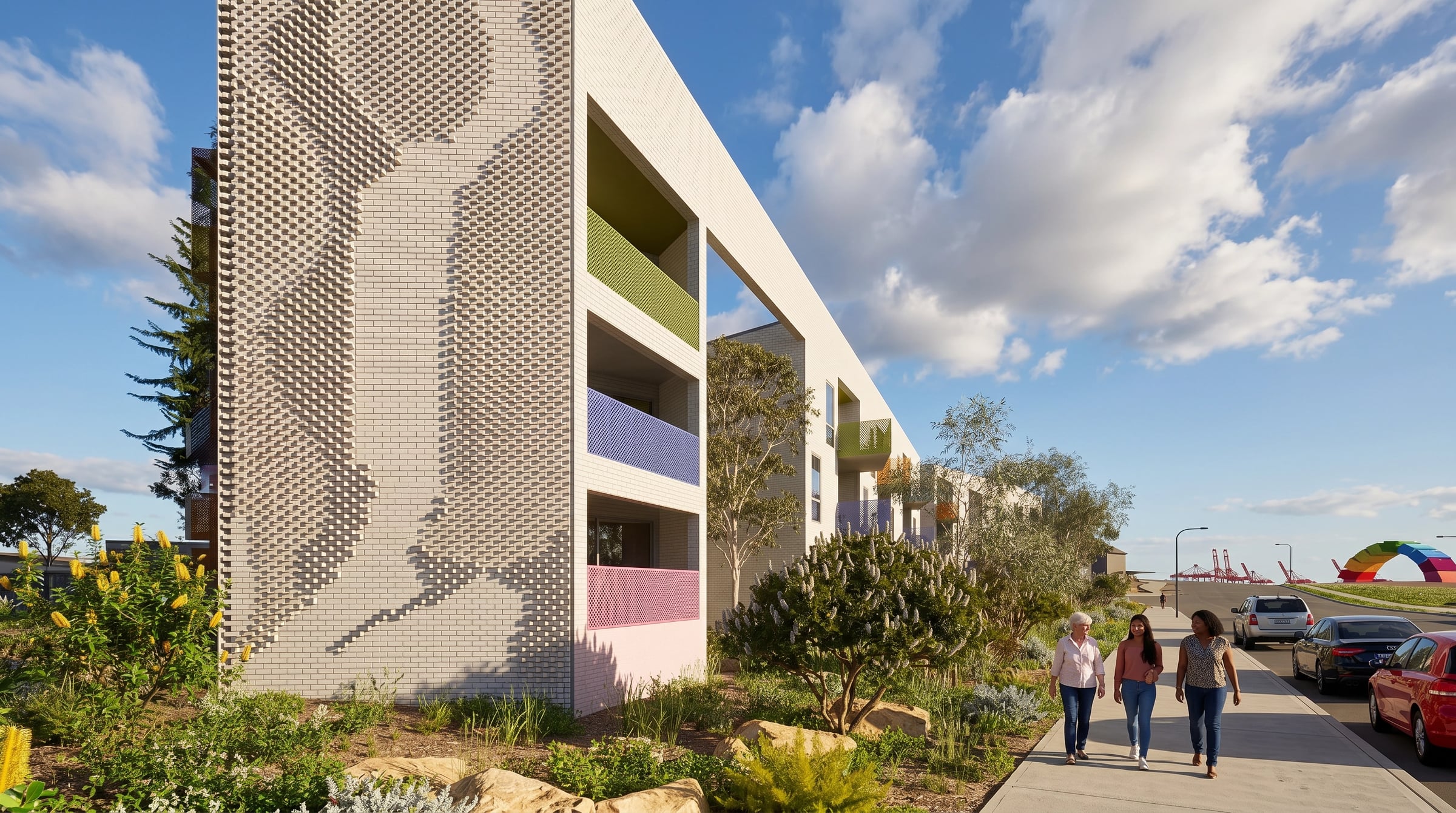
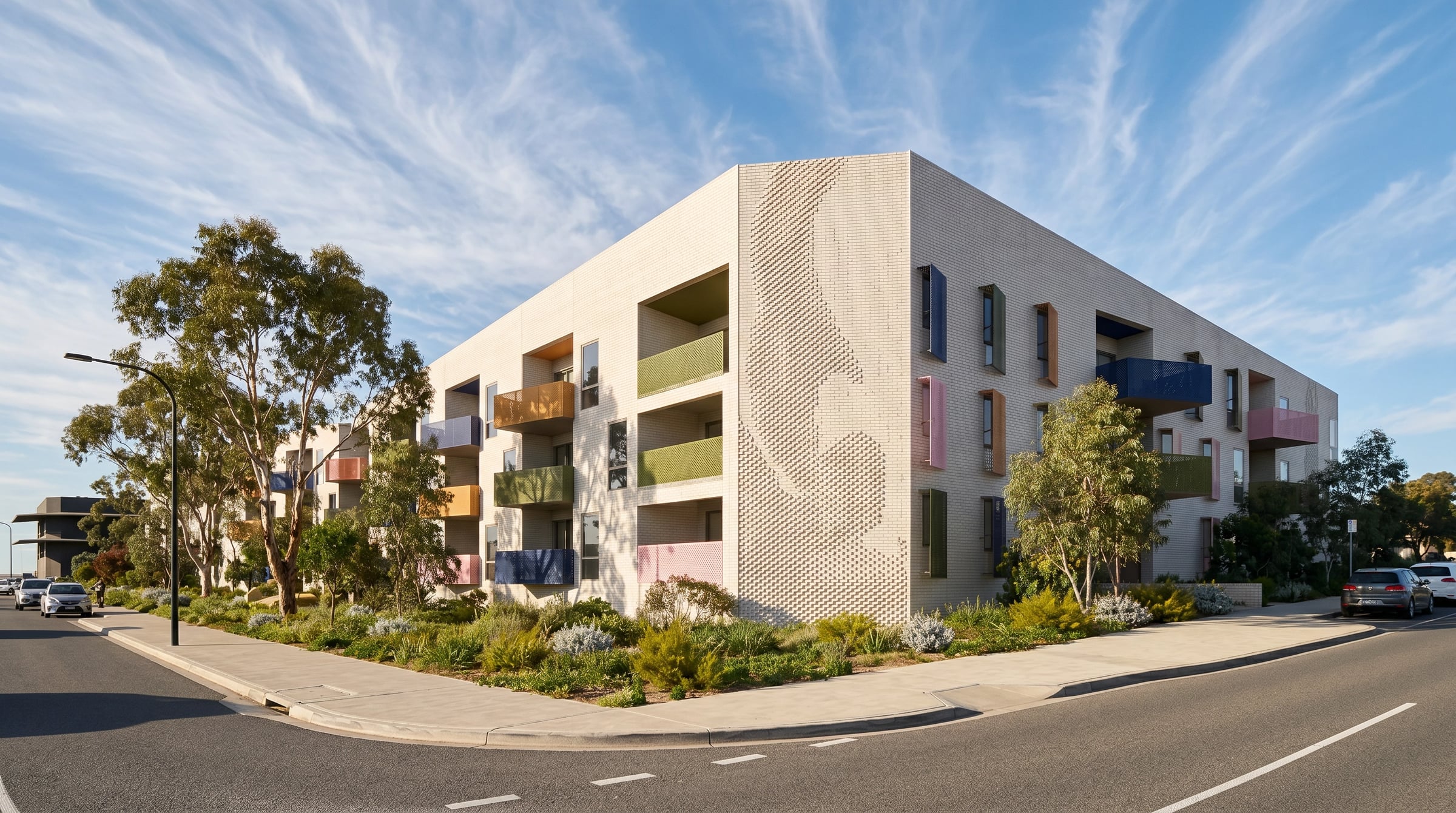
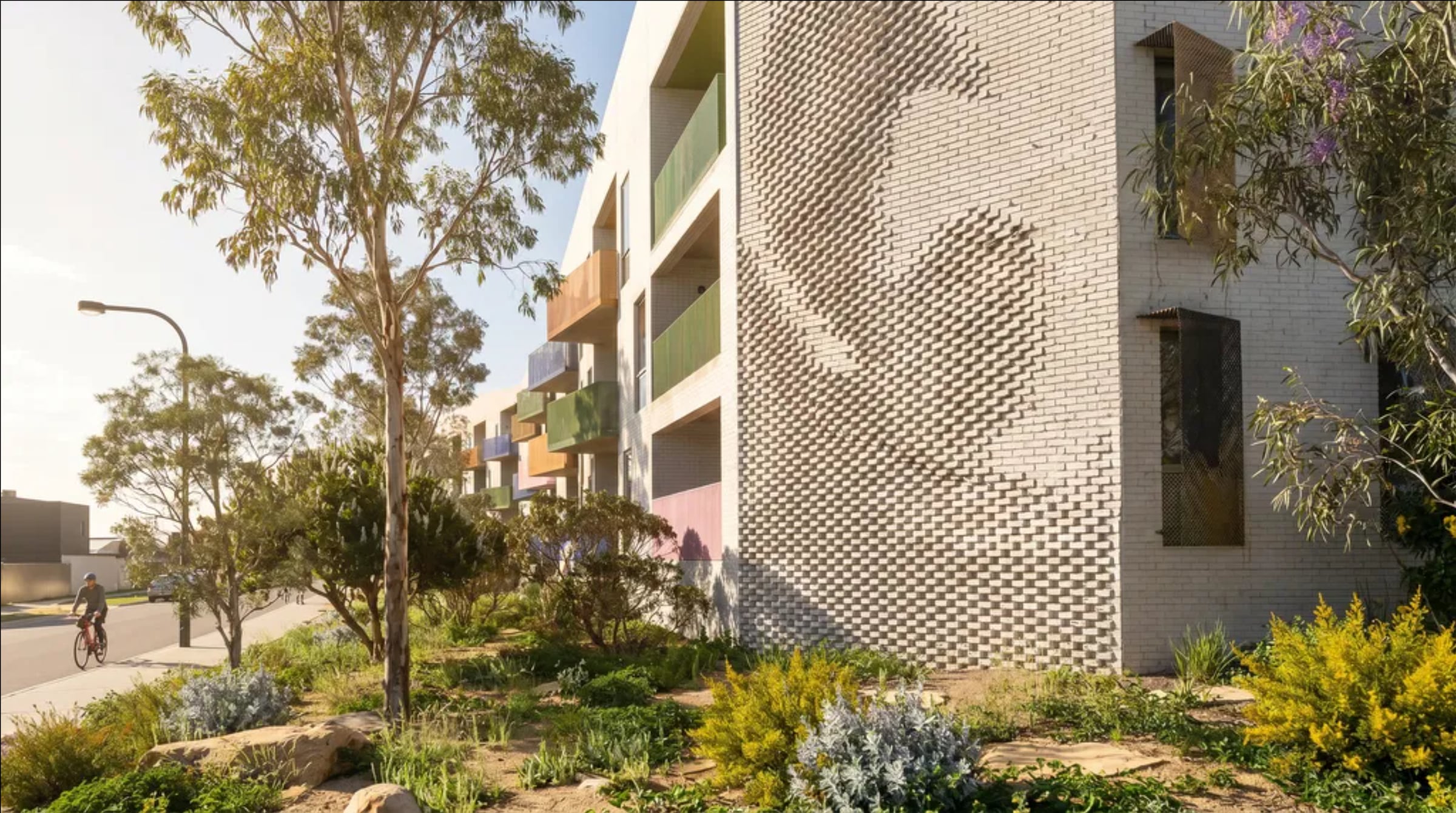
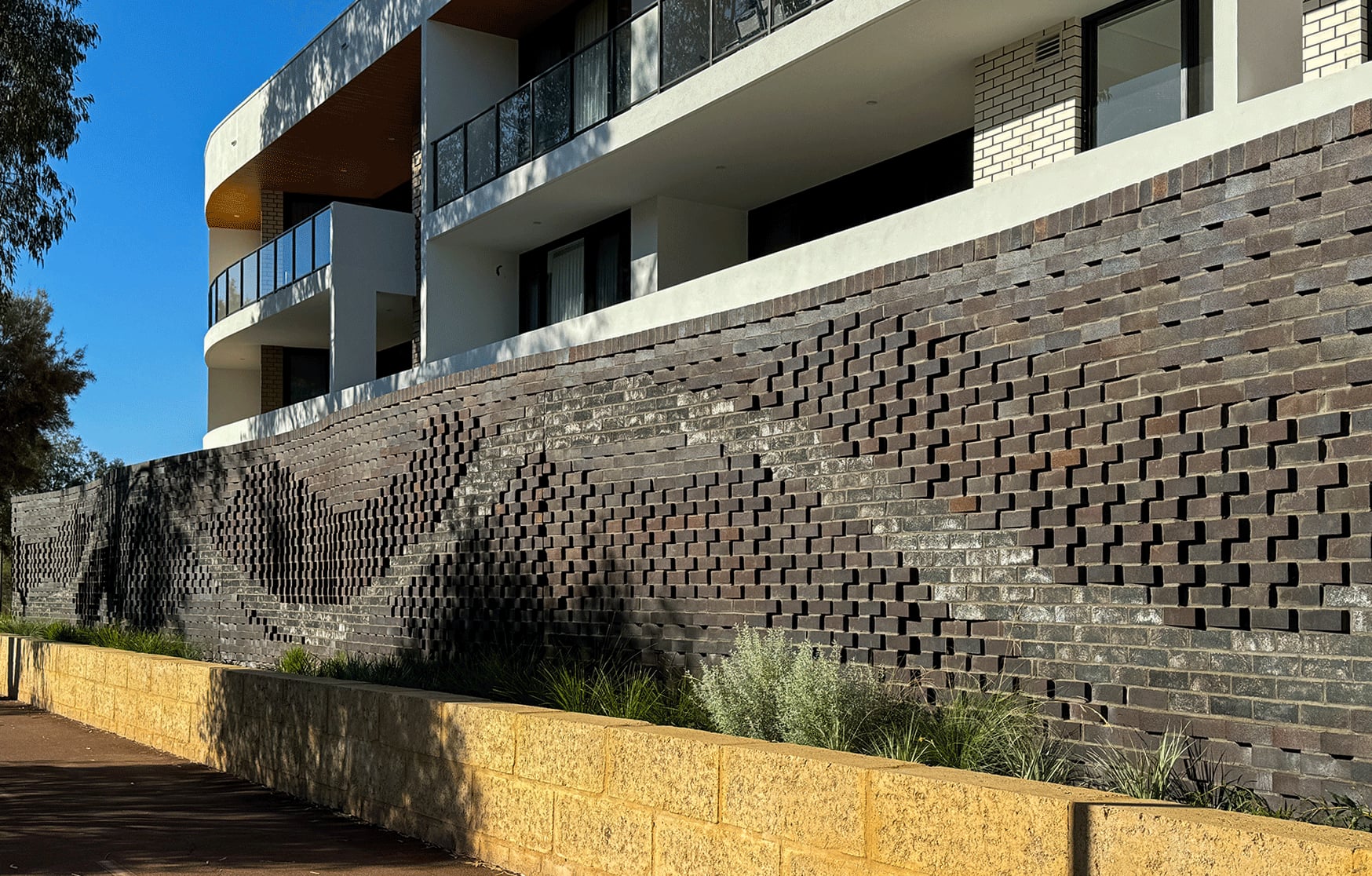
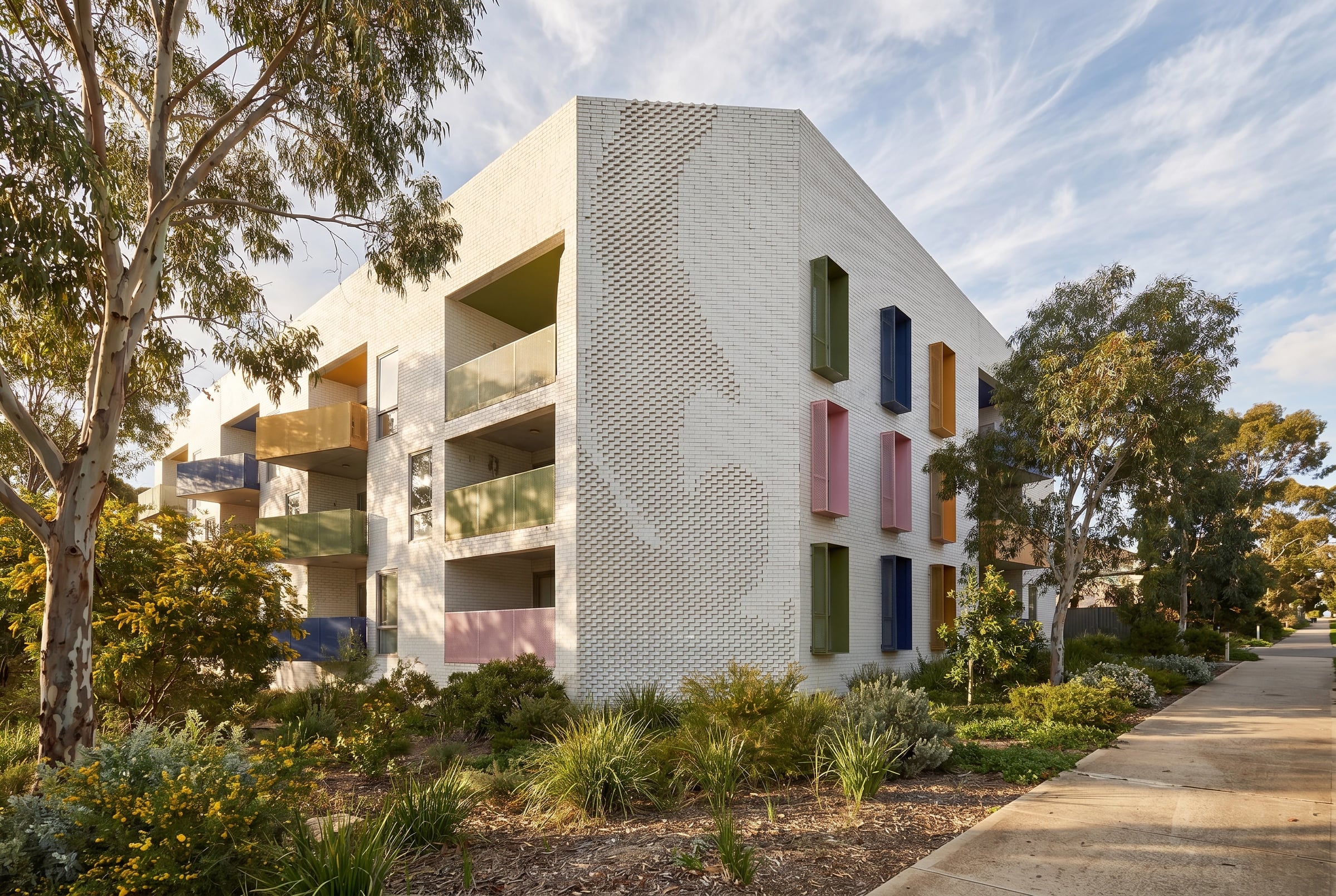
Parallel Shores is one artwork split across two corners of the same building. On a social housing development where Canning Highway meets East Street, one of the main roads into and out of Fremantle, two brick walls rise thirteen metres, each carrying a map of the same place, the Fremantle coastline, drawn at two different moments in time. One wall reads the landscape before colonisation. The other reads it after. They are separated by the length of the building and united by the act of passing between them.
Before the harbour was cut, the coastline breathed. Water moved where it wished, curving along limestone shelves, pooling in shallow estuaries, retreating and returning with the patience of tides. Then the land was made to move: blasted, dredged, straightened and stacked, roads drawn like rulers across country that had only ever curved. Working from historical maps held by the State Library of Western Australia, the two walls hold these two coastlines side by side, or rather, corner by corner.
The road decides which story you are told. Heading west into Fremantle, toward the port, the town centre and the engineered shoreline, the viewer meets the post-colonial wall: the rotated bricks map the roads, the rail, the harbour walls, the grid of streets, so that the commuter is driving into the very thing the wall depicts. Heading east, leaving town, the pre-colonial wall offers a parting image: the natural coastline, the water given movement, the land at rest, unhurried, unbroken and whole. To arrive is to meet what was made. To leave is to remember what was. A commuter who passes these walls each morning and evening will absorb the story without ever consciously reading it, a subtle turning in the peripheral vision, a change in texture that registers somewhere beneath thought.
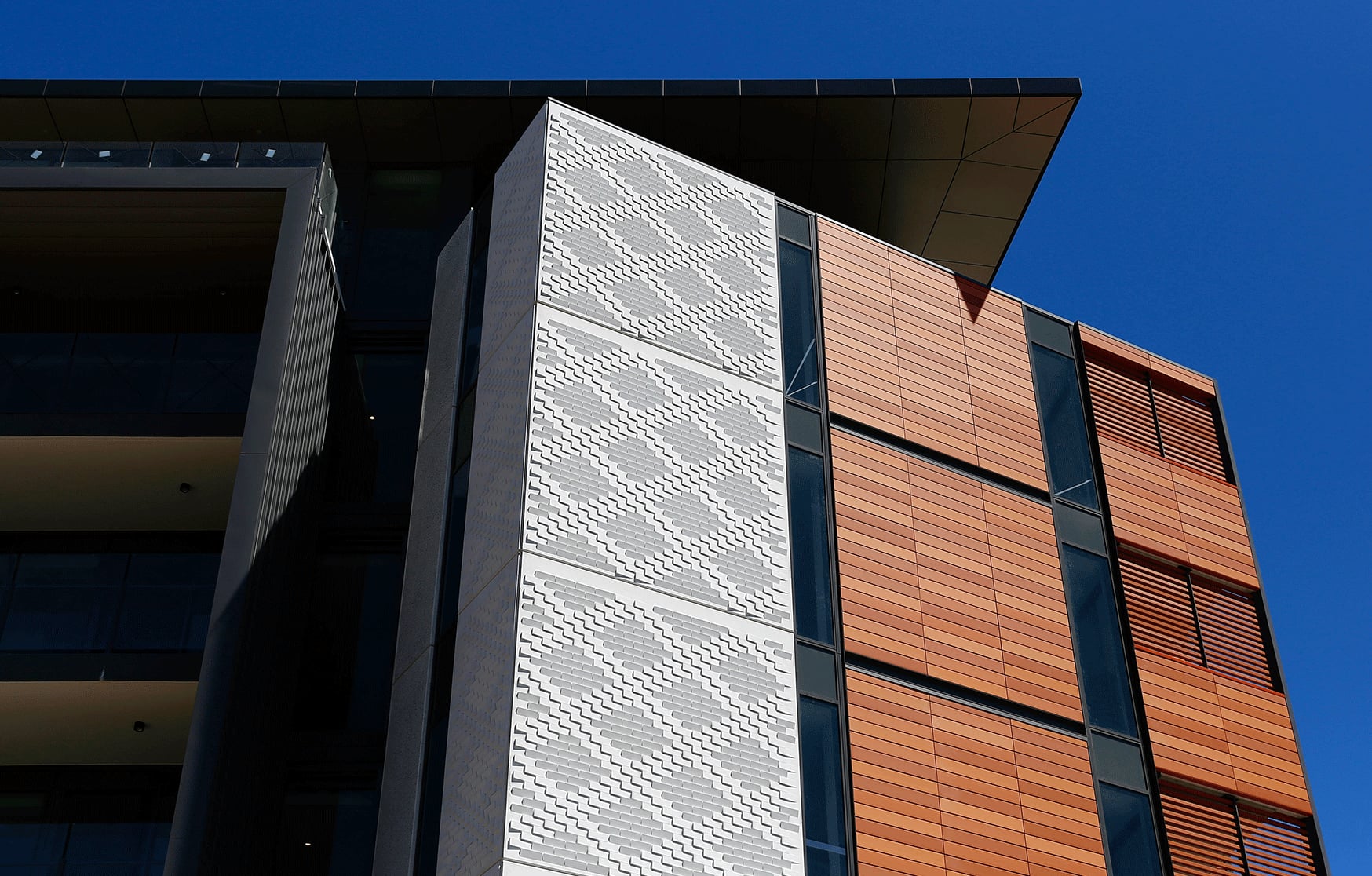
The medium could not be simpler or more disciplined. Both walls are ordinary stretcher bond brickwork, and the artwork adds nothing to them but rotation. A parametric model translates each historical map into the turning of individual bricks: where the design calls for emphasis, bricks rotate out of the wall plane to catch depth, shadow and movement; where it calls for silence, they lie flat in standard bond. The same wall, the same brick, the same bond, only the turning changes, and the two maps redraw themselves in shadow through every hour of the day. The method refines a brick language developed across Waterford, Loftus Street and Fine China: image driven rotation, resolved into coursing plans a bricklayer can read.
The concept reaches past one coastline. Natural systems curve, meander and adapt; imposed systems straighten, fill and insist. The artwork does not moralise about this. It simply reveals, placing two truths on opposite corners of one building and letting the difference be felt in light, in shadow, in the quiet turning of a single brick. That the building between them is social housing gives the work its final resonance: between what was and what was made, a place for people to make home.