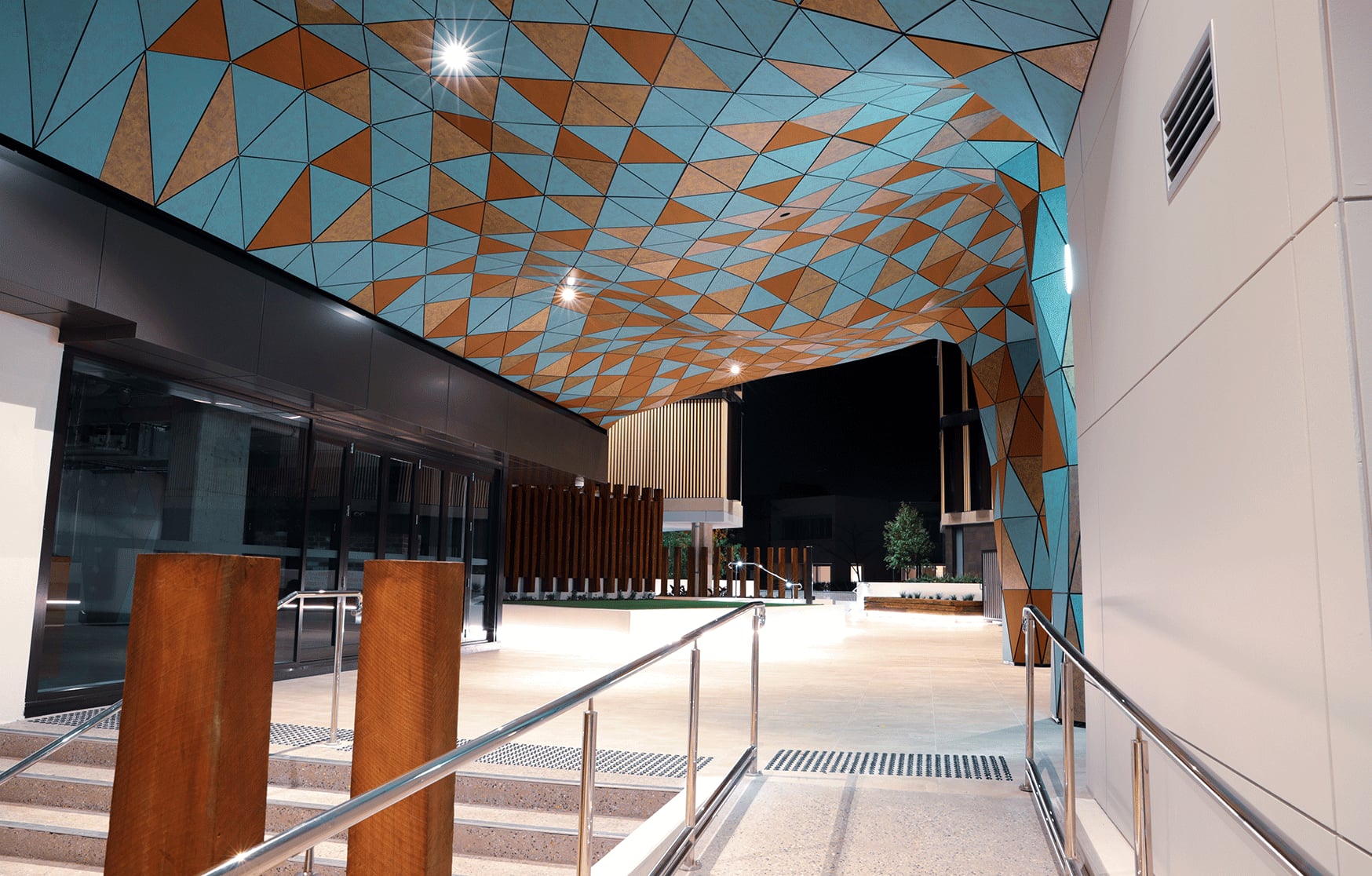
Every summer afternoon, a sea breeze arrives in Fremantle so reliably that locals gave it a name: the Fremantle Doctor. It cools the port city, fills its sails and shapes its character. Anemoi, the artwork wrapping the entry of the LIV Apartments in Fremantle, gives that wind a body.
Form found, not drawn
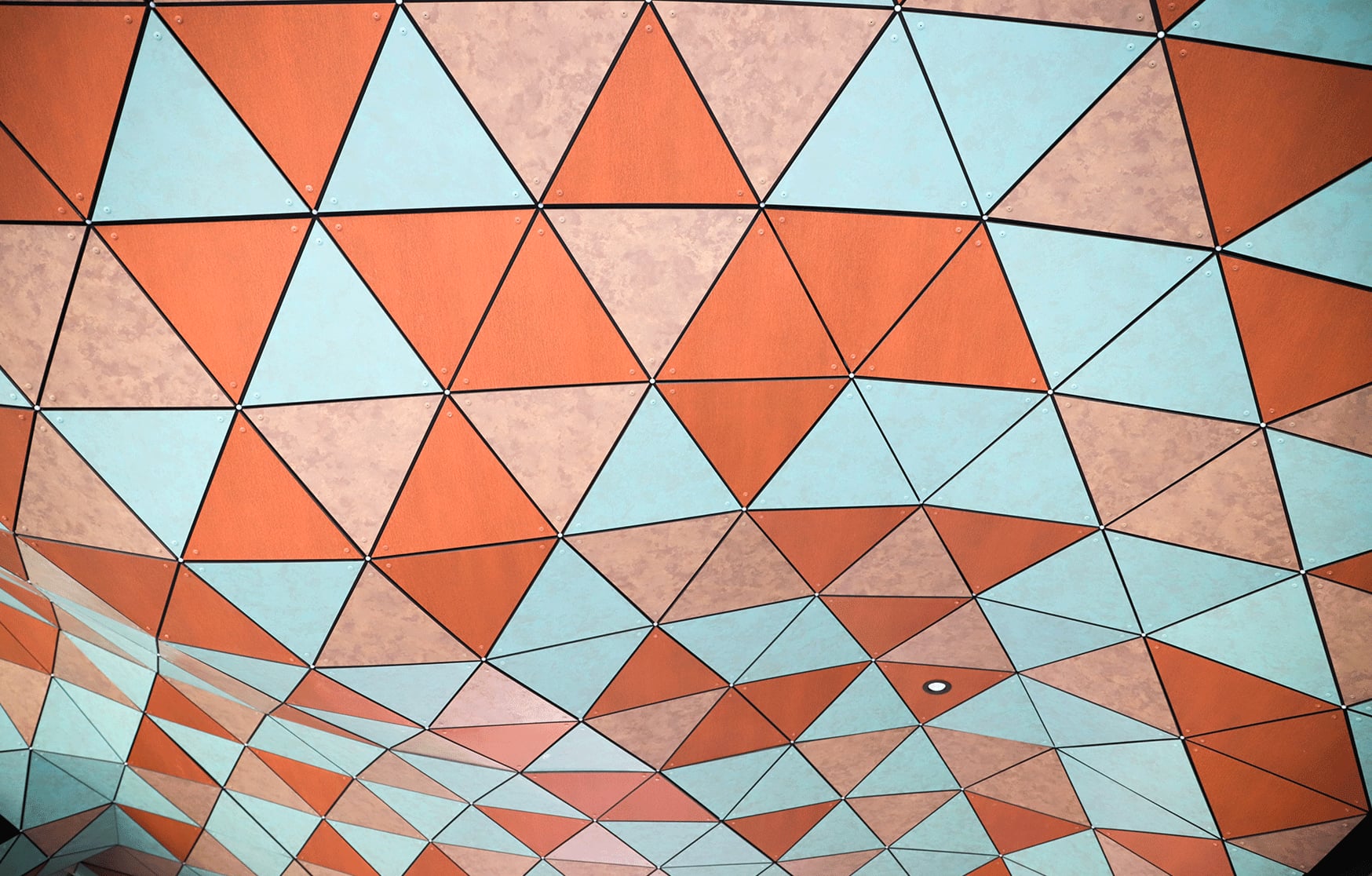
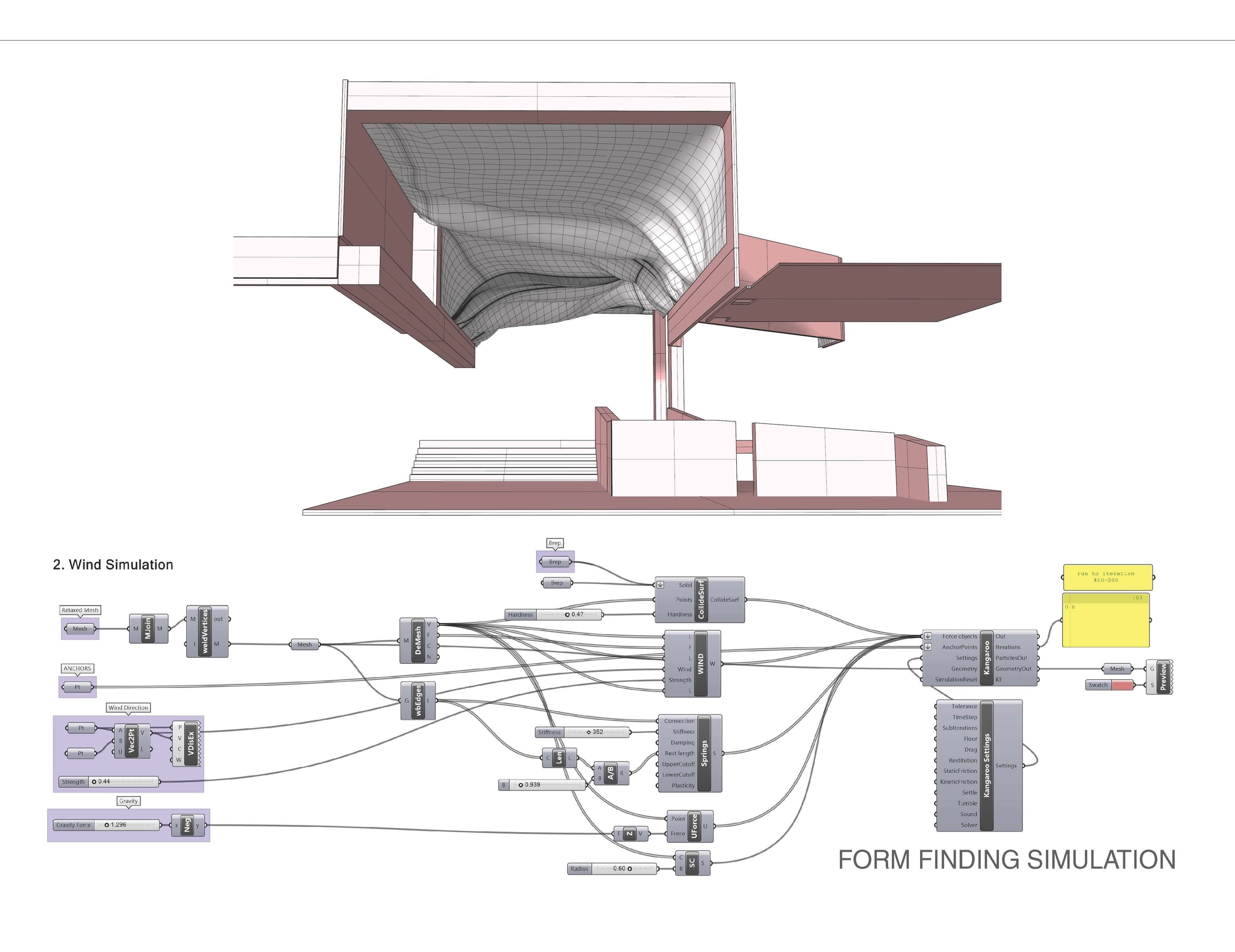
The shape of Anemoi was not sketched. It was found by simulation. A digital sail was hung from the soffit of the entry corridor inside the model, and a modelled Fremantle Doctor was blown through the space. The fabric lifted, twisted and settled, and the geometry it landed in became the artwork: one continuous triangulated surface that wraps the laneway ceiling and two structural columns.
The process ran in four steps. A mesh was fitted to the artwork zone, including the bare columns. It was then relaxed with Kangaroo, a physics engine that runs inside Grasshopper, so the surface hung the way fabric would. Wind was applied to that relaxed mesh, with the material properties of a sail, from the south west. Finally, a single frame was chosen from the hundreds the simulation produced, and a triangulation pattern was laid across it.
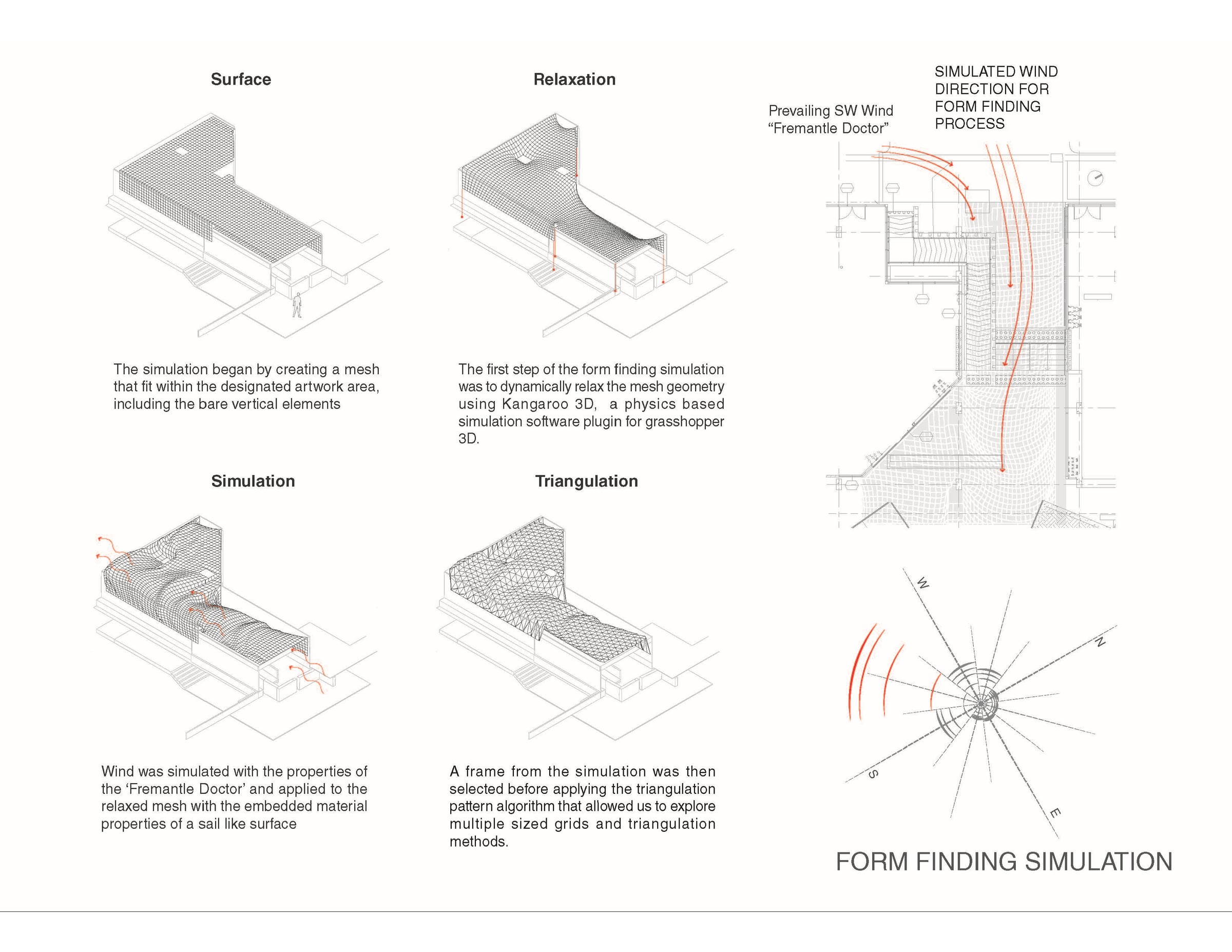
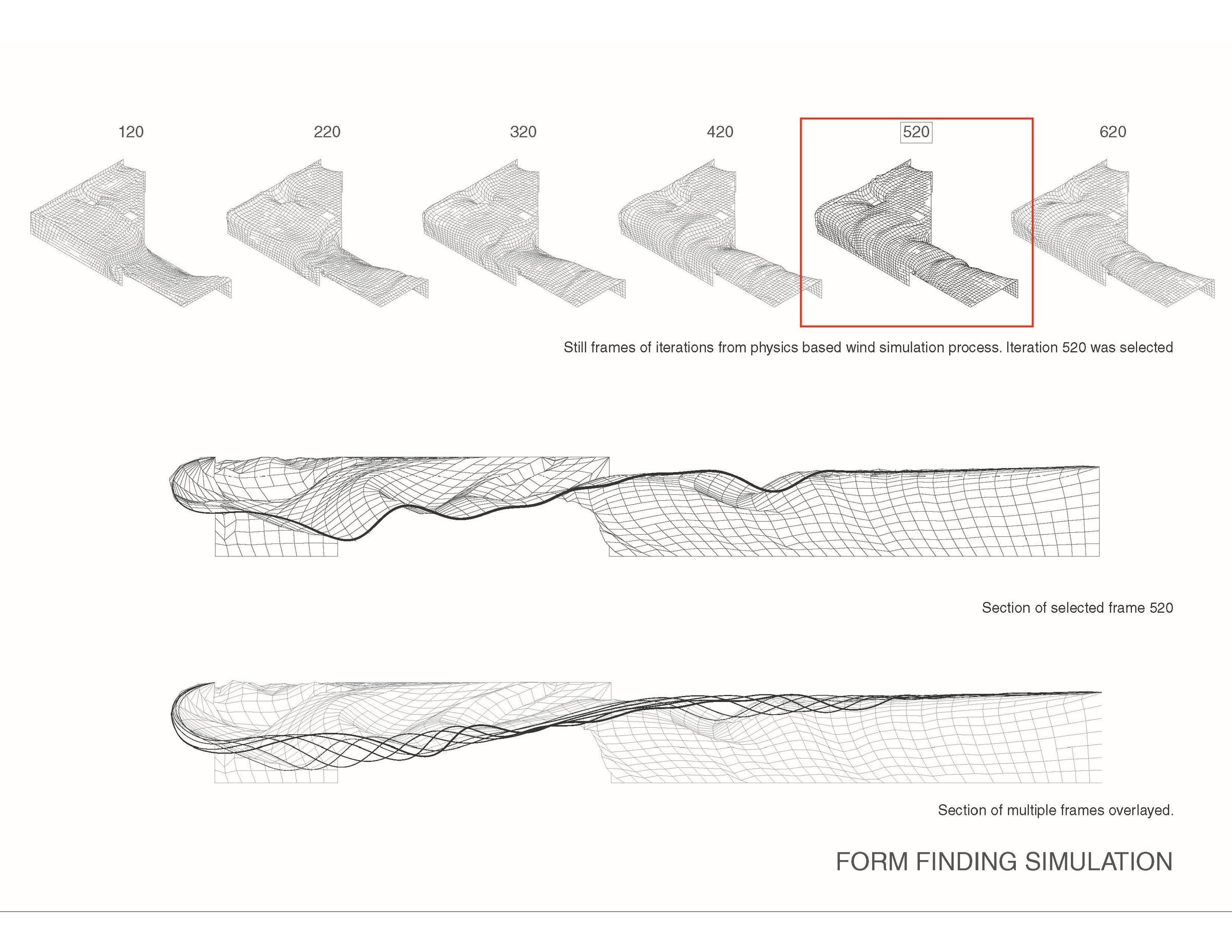
This matters beyond the anecdote. When the wind authors the form, the result carries a logic no hand drawn curve quite matches. The surface reads as caught motion because it is caught motion, a gust held still at the moment it filled the sail.
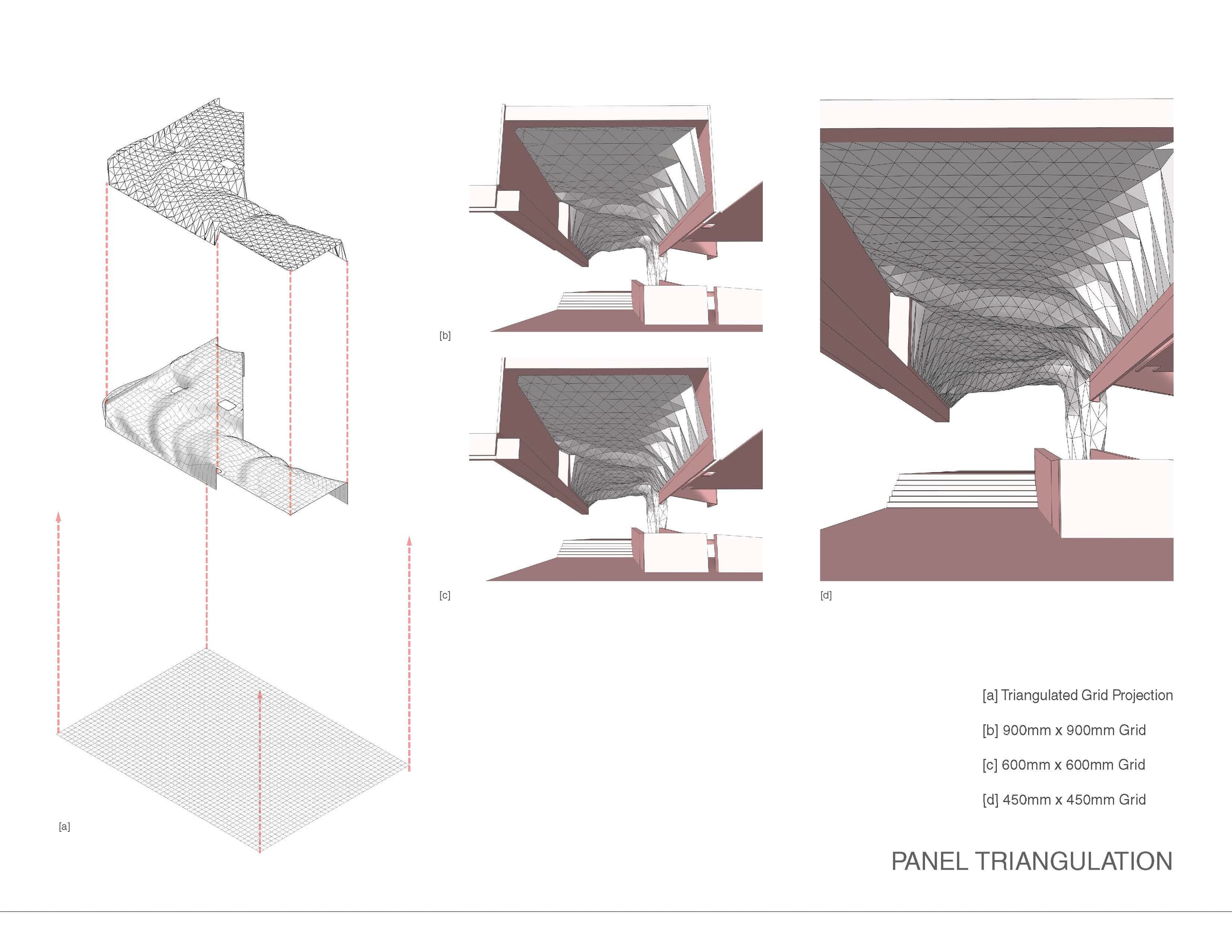
The triangulation was tested at three grid sizes before the panel size was fixed. A coarse grid read as a tent; a fine one dissolved into noise. The chosen grid is fine enough to follow the curves of the sail and coarse enough that each facet still catches its own light.
The imagery folded into the surface belongs to maritime Fremantle: weather maps, bathymetric contours, wind filled sails, drifting nets, billowing flags and pennants, abstracted into a single form.
The weather runs the lights
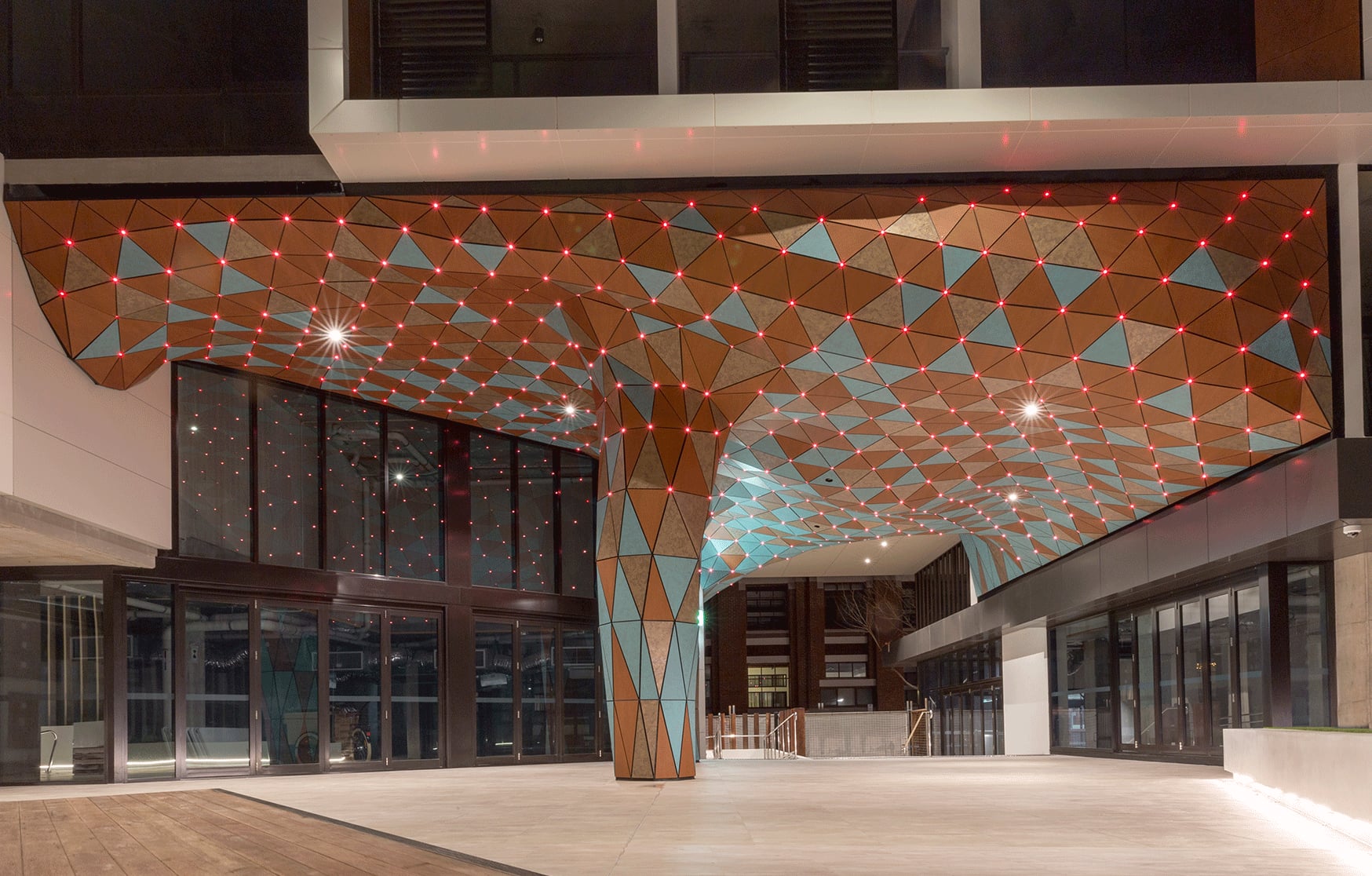
By day, Anemoi is a sculptural canopy. At night it becomes an instrument. More than 800 individually programmable LED nodes sit at the panel intersections, and a rooftop anemometer drives them in real time. Wind speed sets the tempo of the lighting transitions. Wind direction selects the patterns.
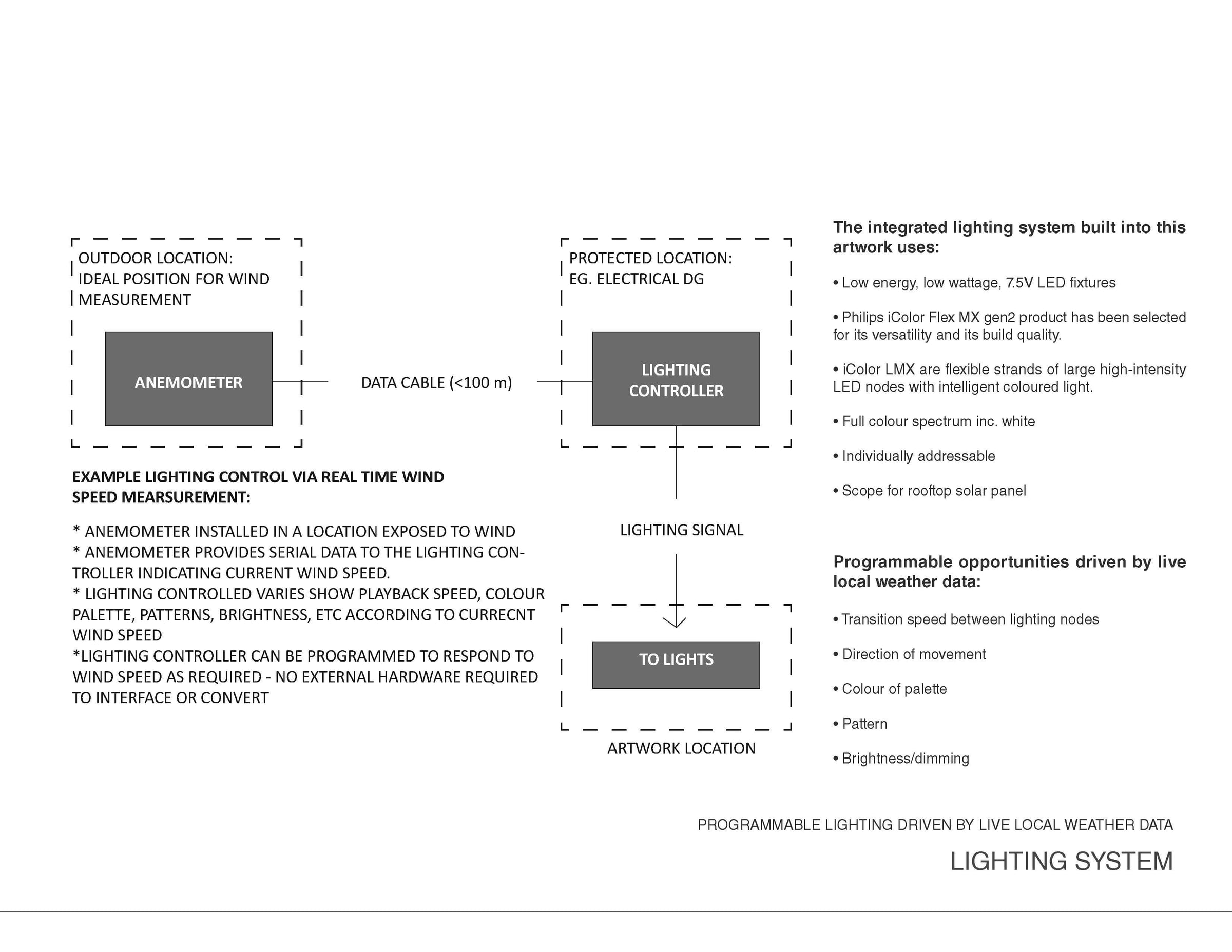
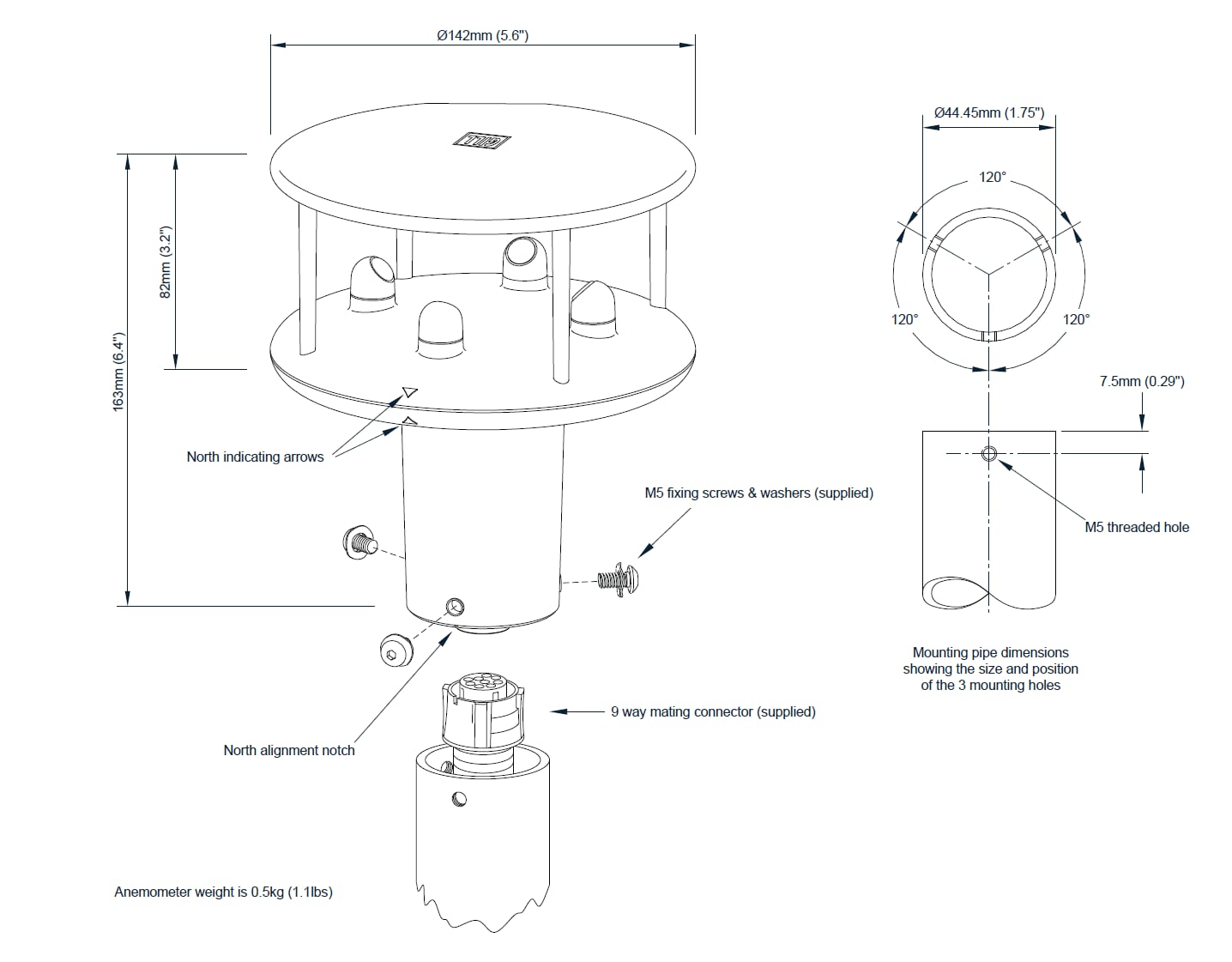
The sensor is an ultrasonic anemometer, a small instrument with no moving parts that reads wind speed and direction from the time sound takes to cross between four transducers. It sits on the roof where the wind is clean, and sends its readings down a data cable to the controller in the electrical room.
Nobody programs tonight's show. The weather does. On a still evening the work breathes slowly; when the Doctor comes through, it quickens. The lighting behaviour was developed with control systems specialists Light Application, and the result is a work that never repeats, because Fremantle's weather never does.
Built into a live construction site
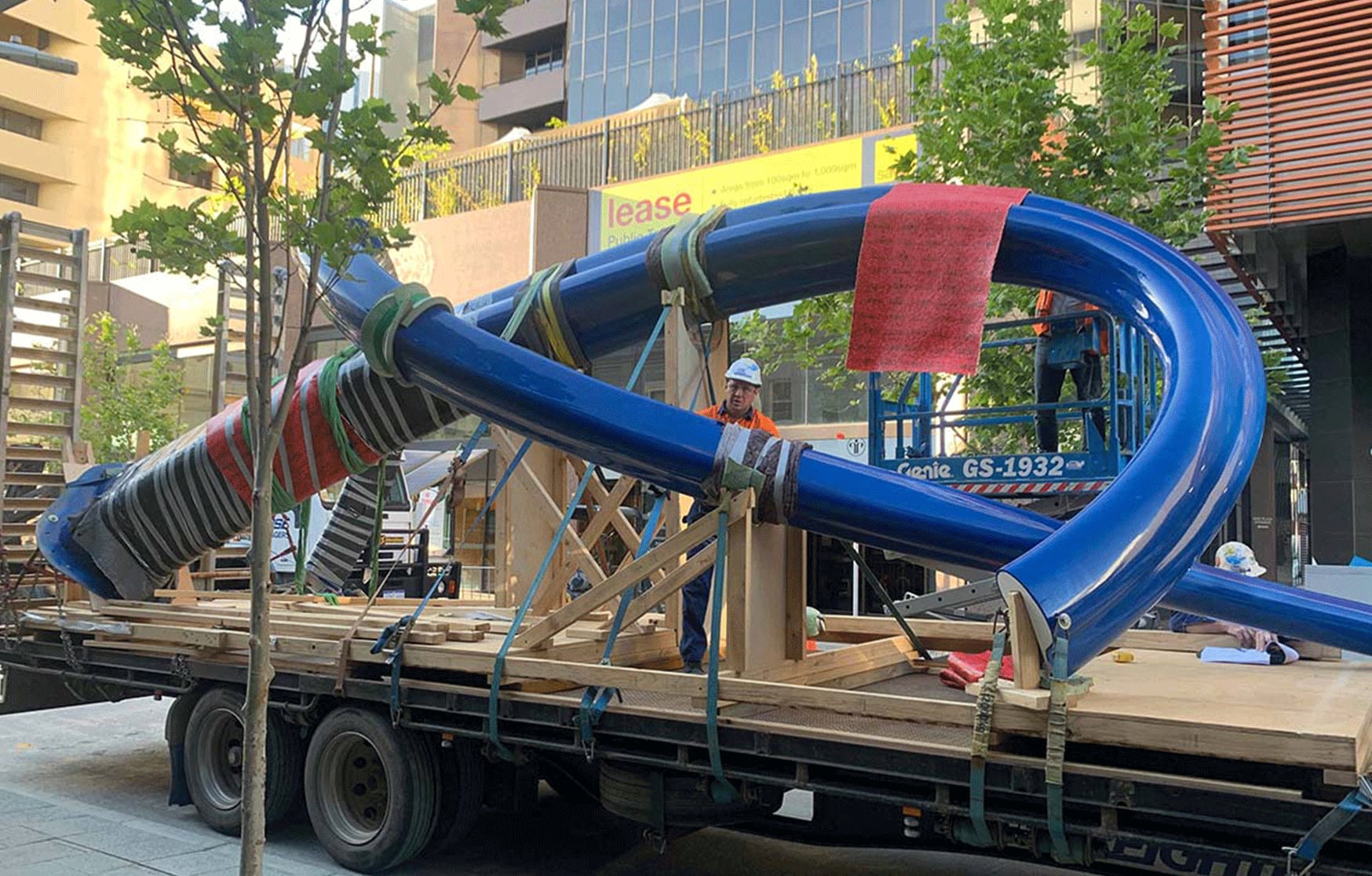
Anemoi is fully integrated into the fabric of the building, which meant delivering an artwork inside someone else's construction program. The as-built structure was point cloud scanned so the geometry would fit the real corridor rather than the drawn one, and the slab was scanned to locate the post tensioning strands so the sub-structure could anchor safely. The parametric model, built in Rhino and Grasshopper, let the shop drawings update as the building changed around them.
That collaboration, with architects Hassell, the contractors, fabricators Denmac and lighting specialists Light Application, is the unglamorous half of the story, and the half that makes the poetic half possible.
Why this approach matters
Most public artworks depict something. A smaller number reveal something: a force that was always present at the site but never visible. Anemoi belongs to the second kind. The Fremantle Doctor has shaped this coast for as long as people have lived on it. Now, on any evening, you can stand in a laneway and watch it think.
Anemoi was commissioned by Defence Housing Australia under the Percent for Art Scheme and completed in 2019. Artwork by Daniel Giuffre and Rick Vermey. It was shortlisted in the CODAworx Awards top 100. See the full project, or get in touch about a site with a force of its own.