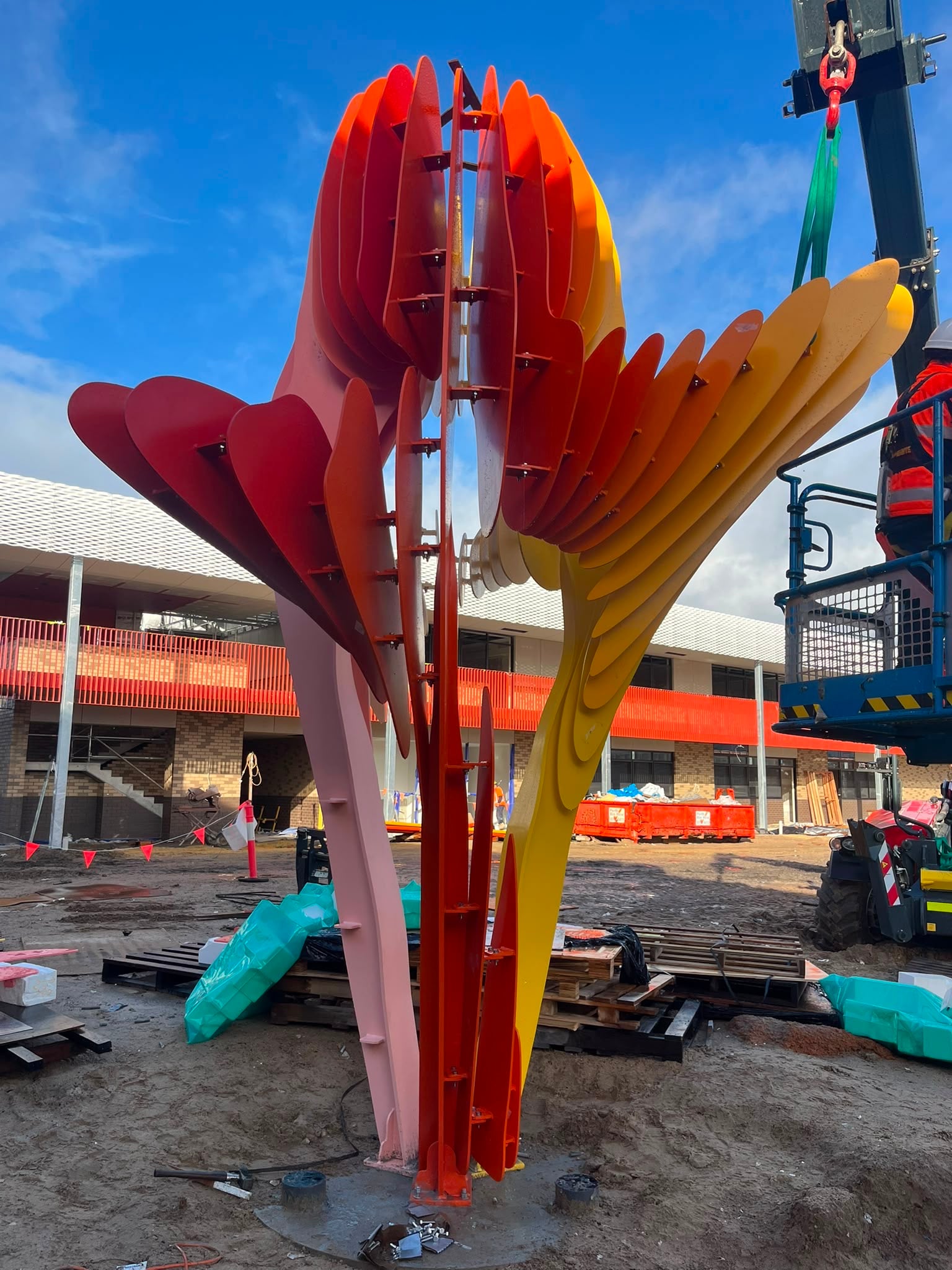
A gallery closes at five. A public artwork is on duty around the clock, and the site it stands in becomes a different place after dark: different users, different mood, different light. The works that hold a place best are designed for both shifts, a day work and a night work that are two registers of one idea.
Not a sculpture with a floodlight
The common failure is treating lighting as documentation: build the object, then point light at it so it stays visible. The result is the same artwork, dimmer surroundings. The more interesting move is to let the night reveal something the day cannot.
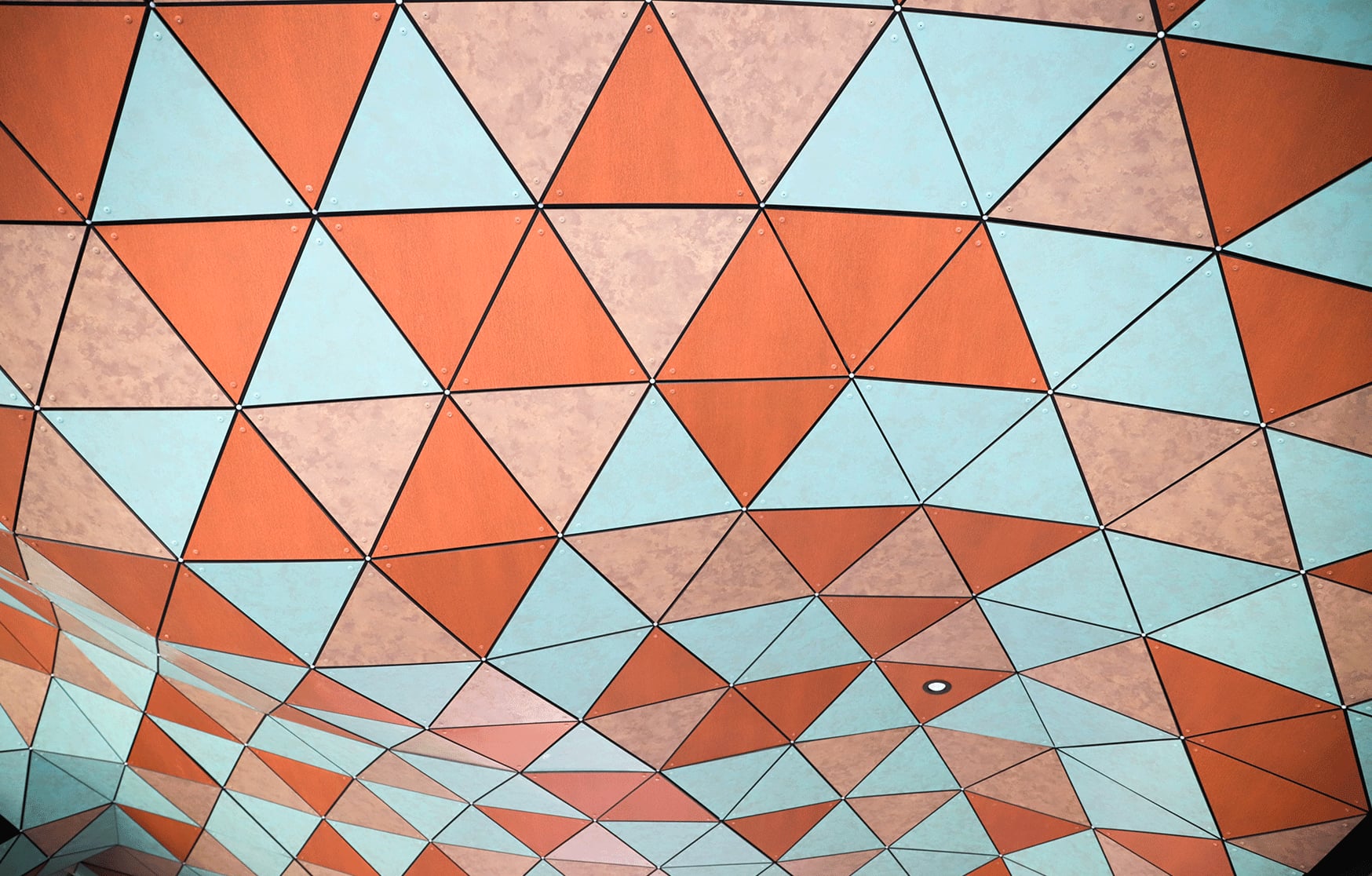
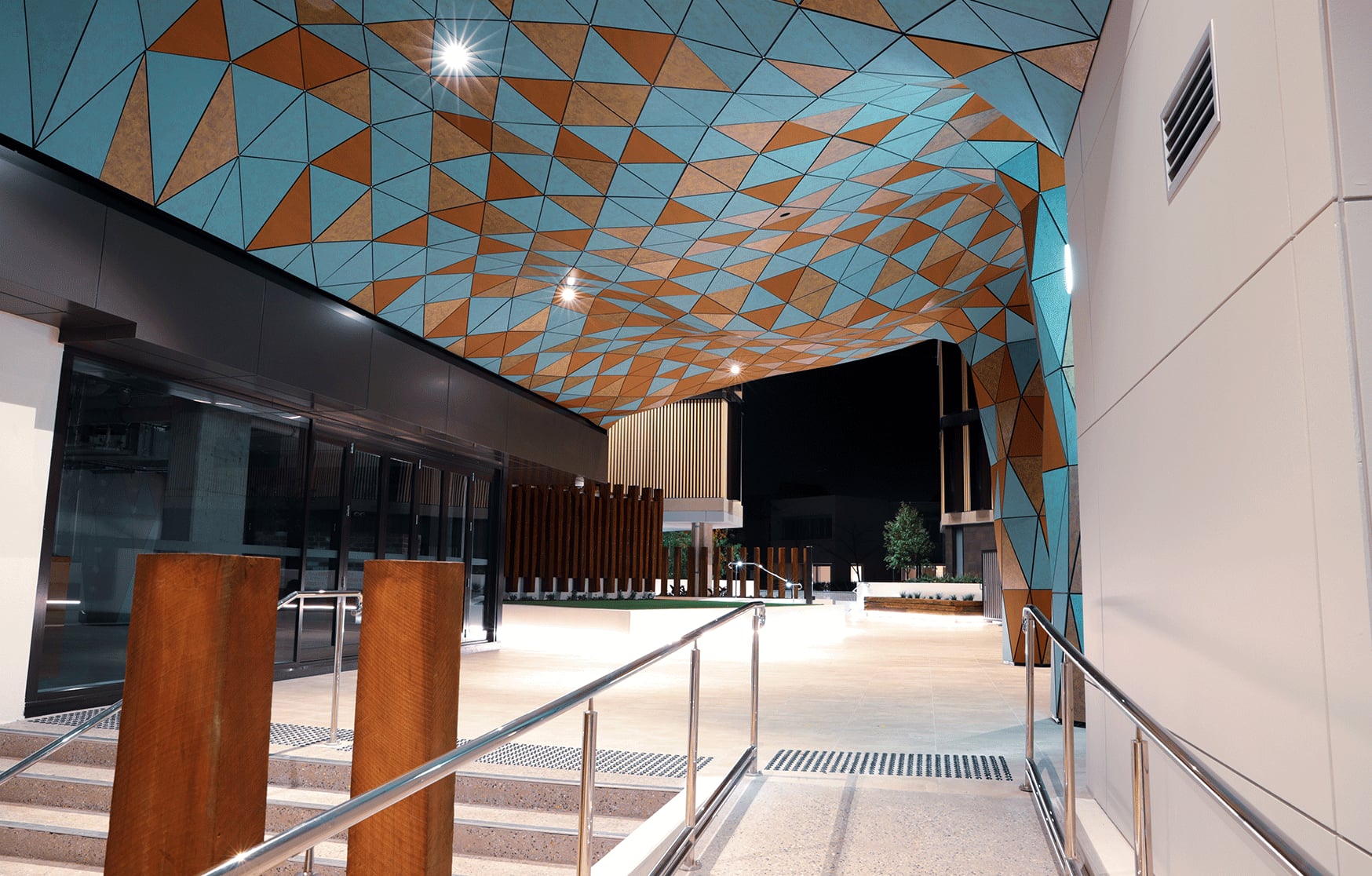
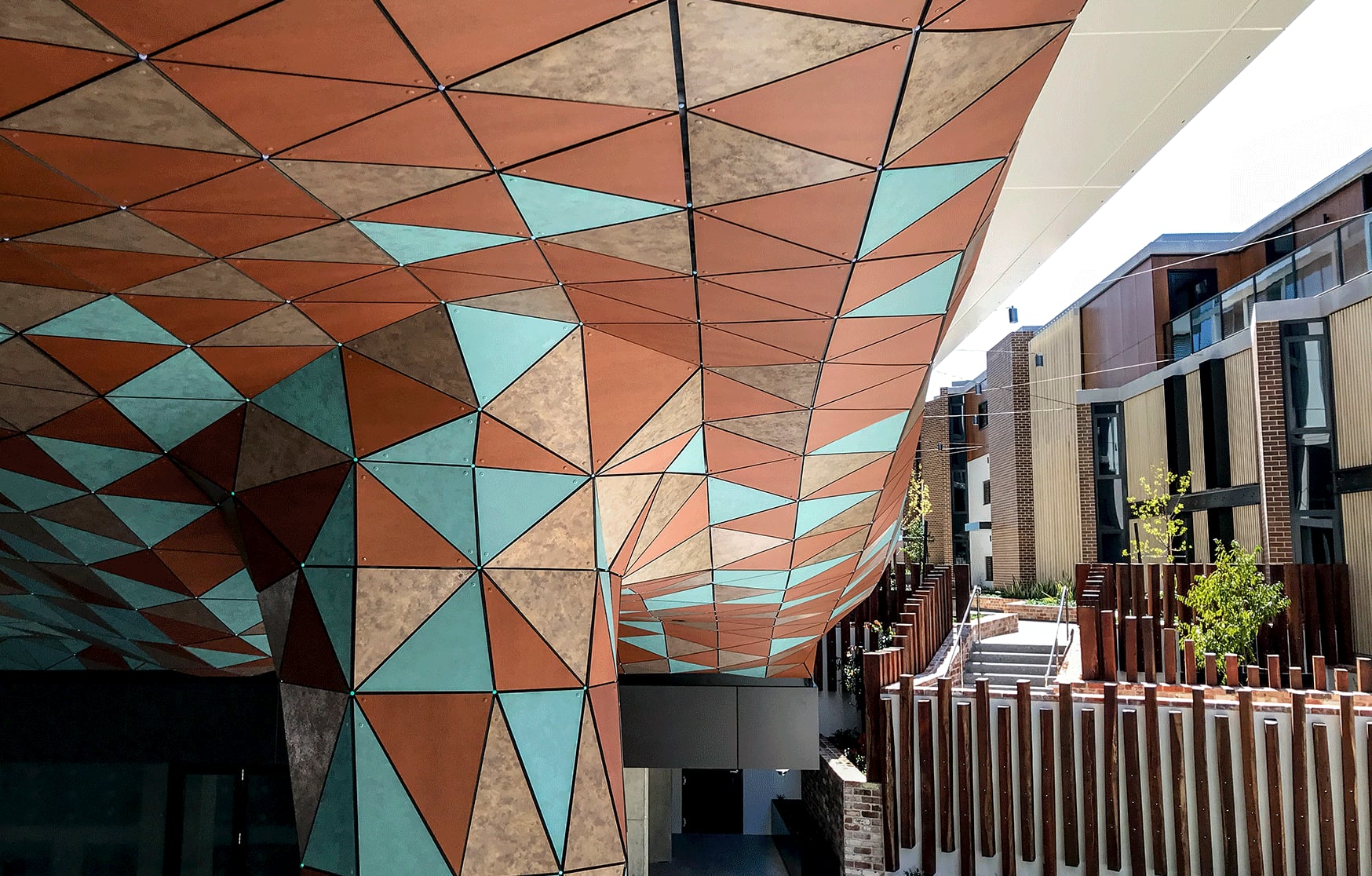
Anemoi, in Fremantle, is the studio's clearest case. By day it is a wind formed canopy, a triangulated surface wrapping the entry of the LIV Apartments, its shape found by simulating the Fremantle Doctor blowing through a digital sail. By night, more than 800 programmable LED nodes at the panel intersections take over, driven in real time by a rooftop anemometer. Wind speed sets the tempo; wind direction selects the patterns. The day work shows what the wind did once. The night work shows what the wind is doing now.
Three kinds of night work
Not every night register needs a control system. There are three broad ways an artwork can live after dark, and the right one depends on the site, the budget and who is around to see it.
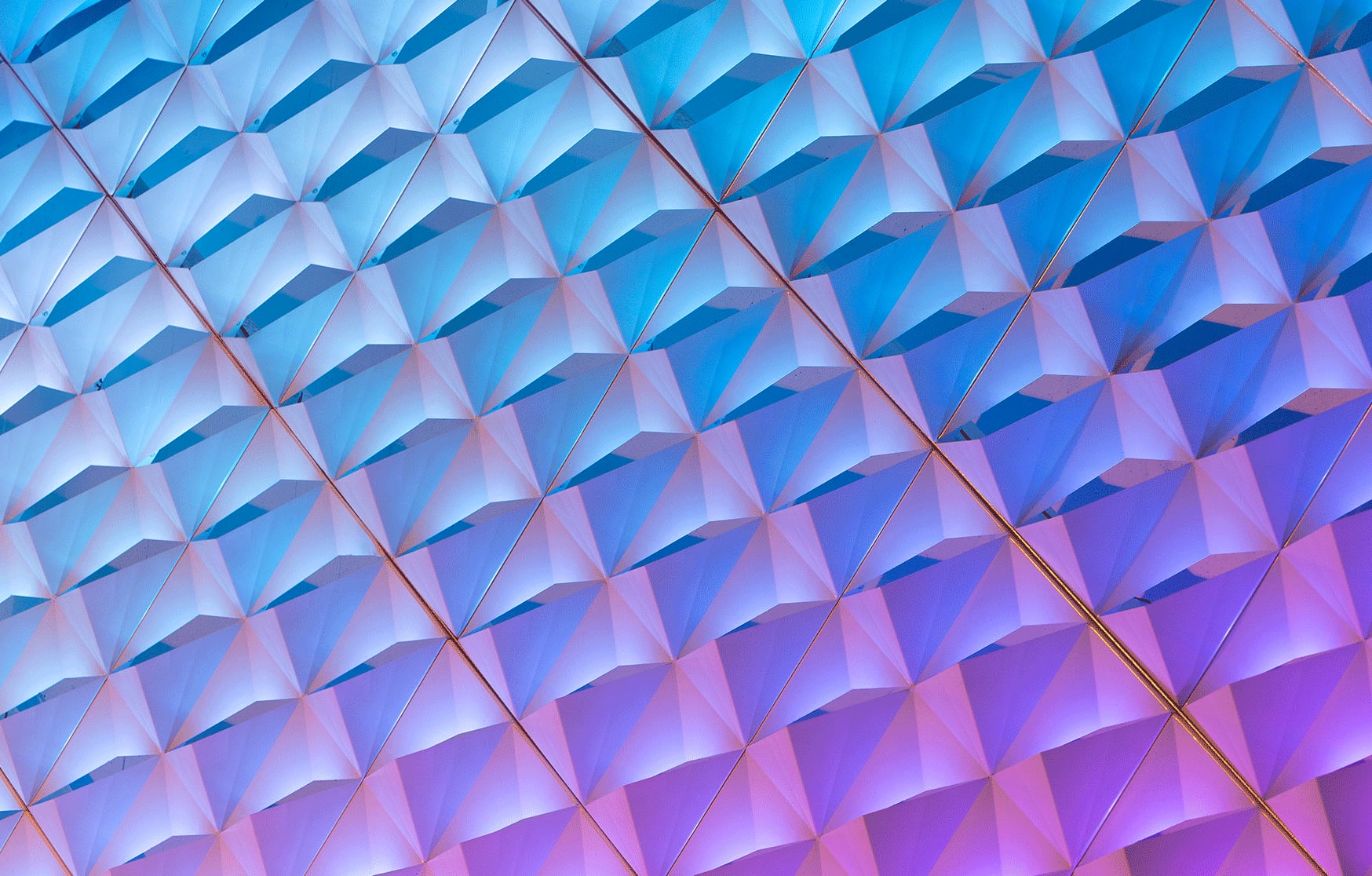
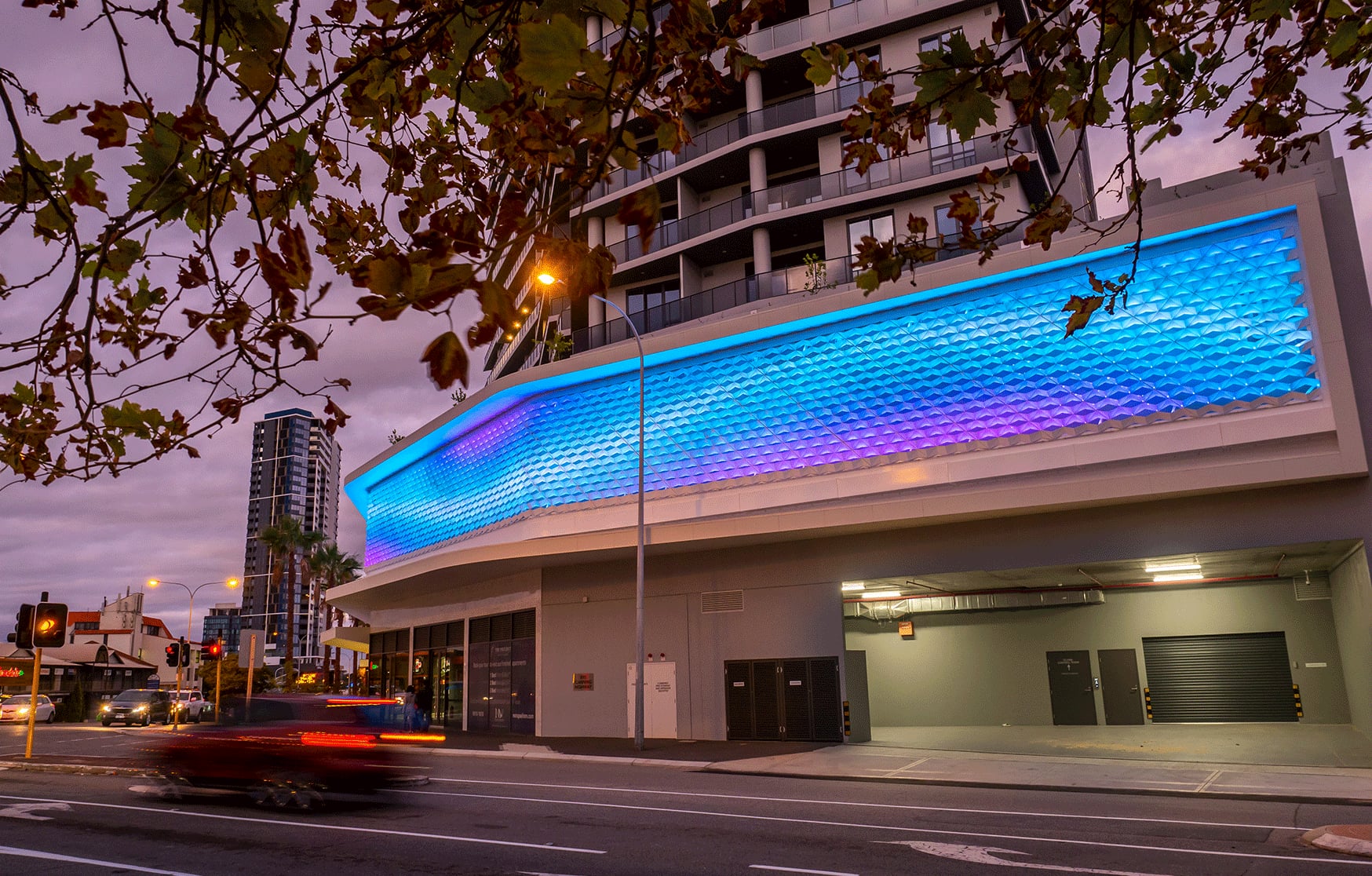
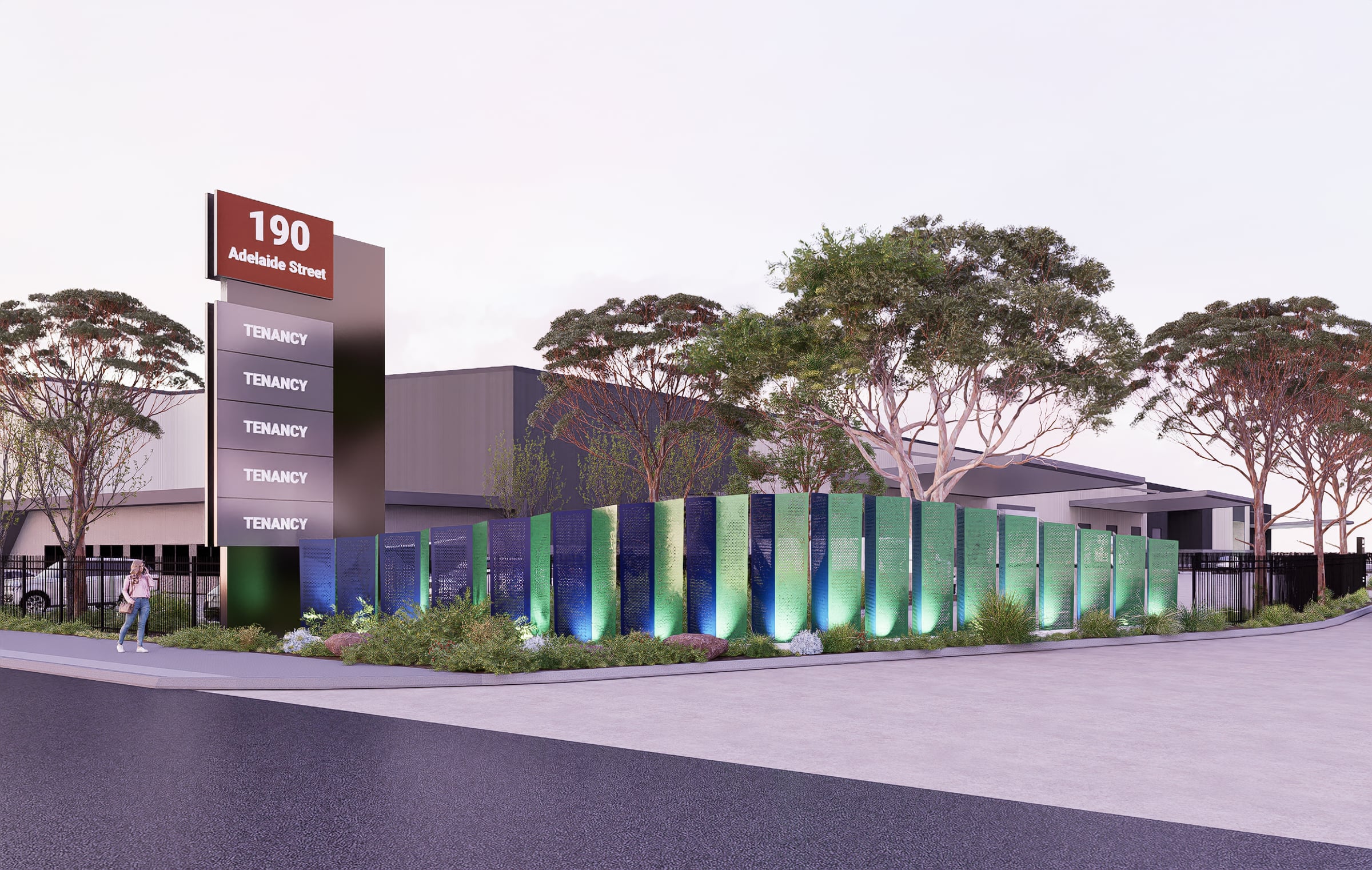
The responsive night. Light driven by something real: weather, traffic, time, the season. Anemoi reads the wind. The Precinct at Canning Bridge runs seven programmes across 2,100 nodes, cycling nightly so the facade is never the same two evenings running, its colour curves drawn from the river's own salinity and plankton data. The Duality and Orthonova entry statements for Hesperia carry programmable lighting in their perforated blades. This is the most expressive register and the most demanding: it needs power, control, programming and a plan for the day a node fails.
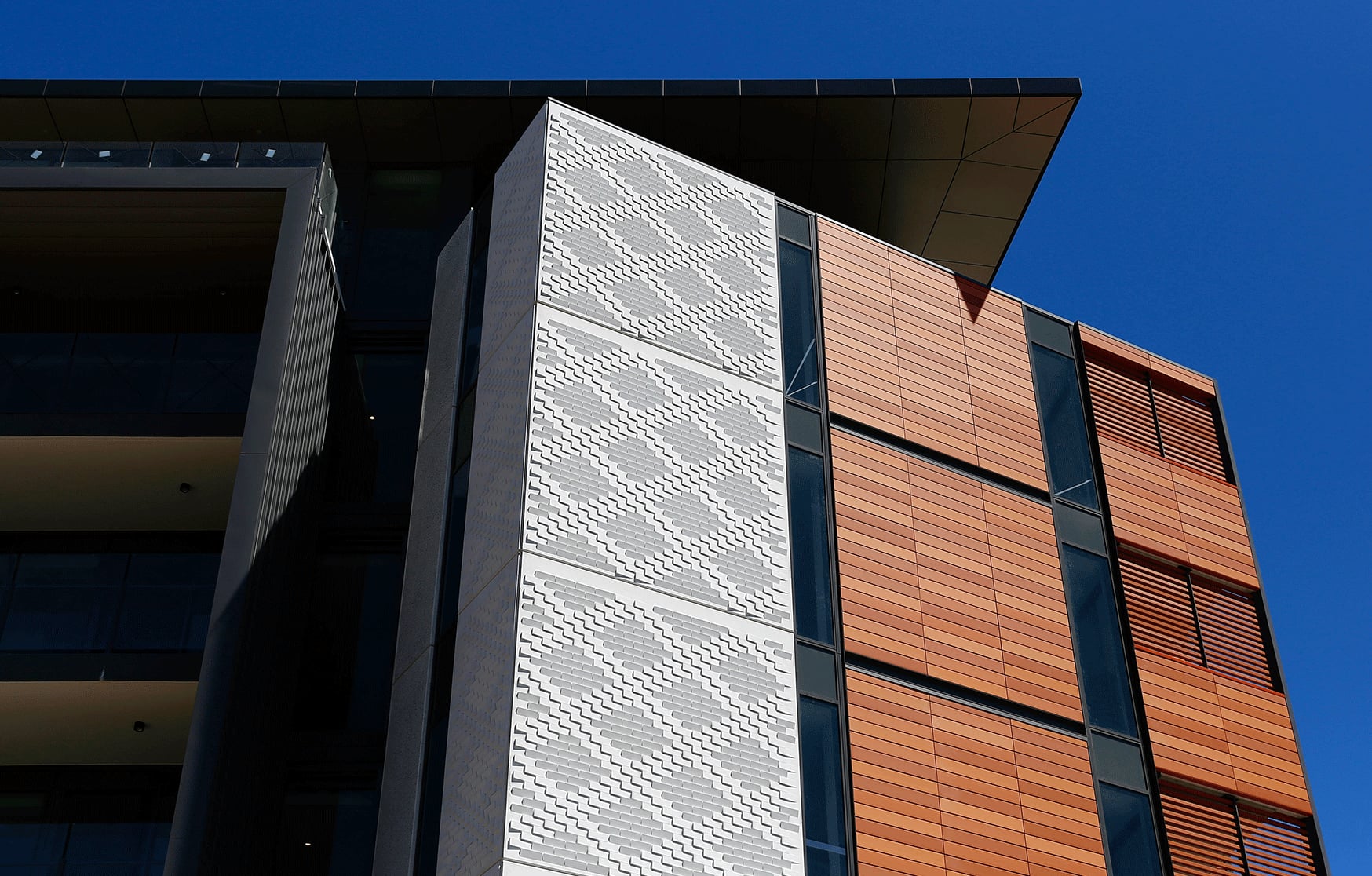
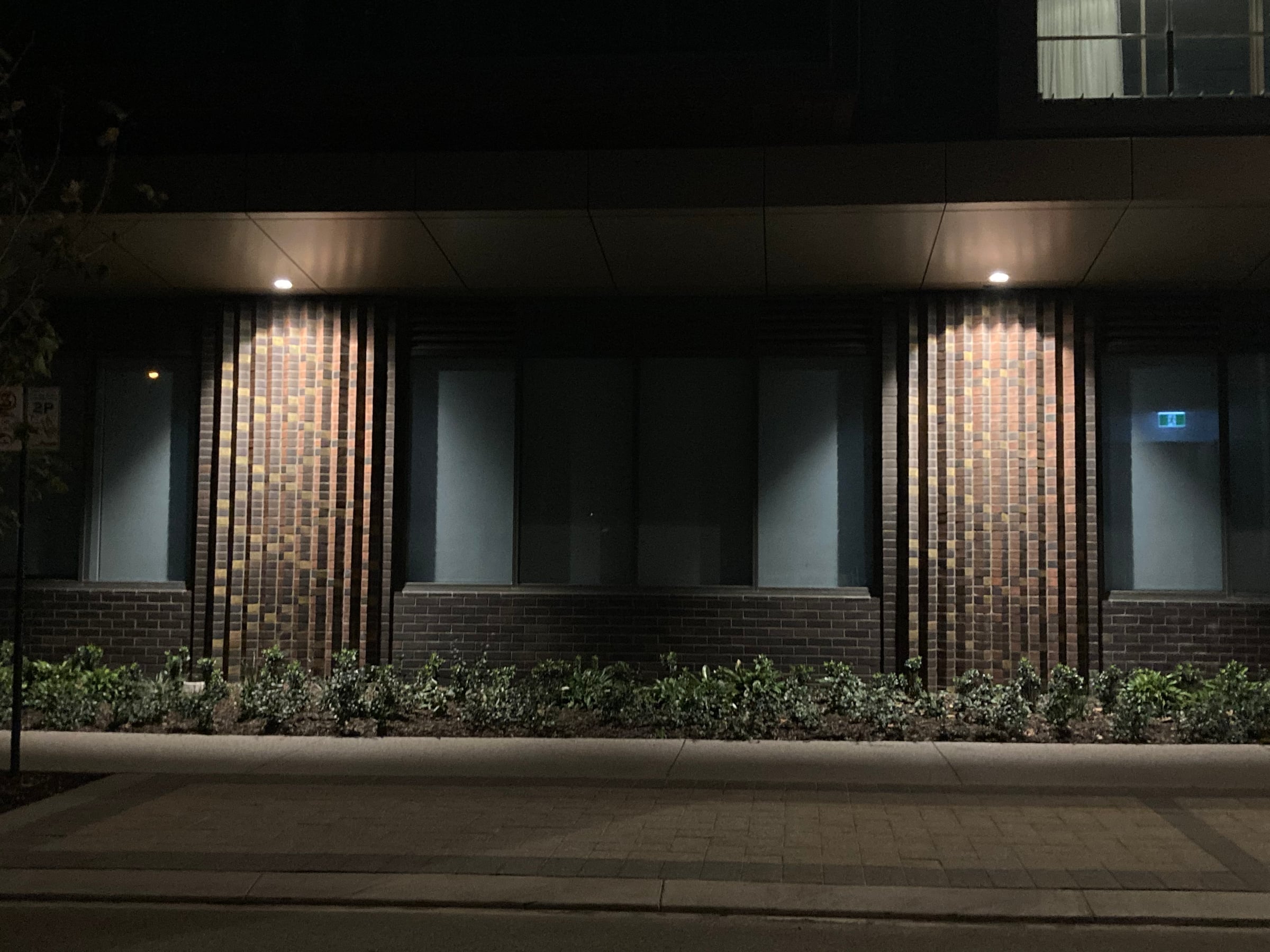
The lit night. A fixed light, placed with intent, revealing a form the sun never quite catches. At Queenslea in Claremont the angled brickwork carries colour by day through a directional stain; at night a low uplight rakes across the same folds, and the wall that was about colour becomes a wall about shadow. Nothing is programmed. A single luminaire, aimed properly, gives the work its second life.
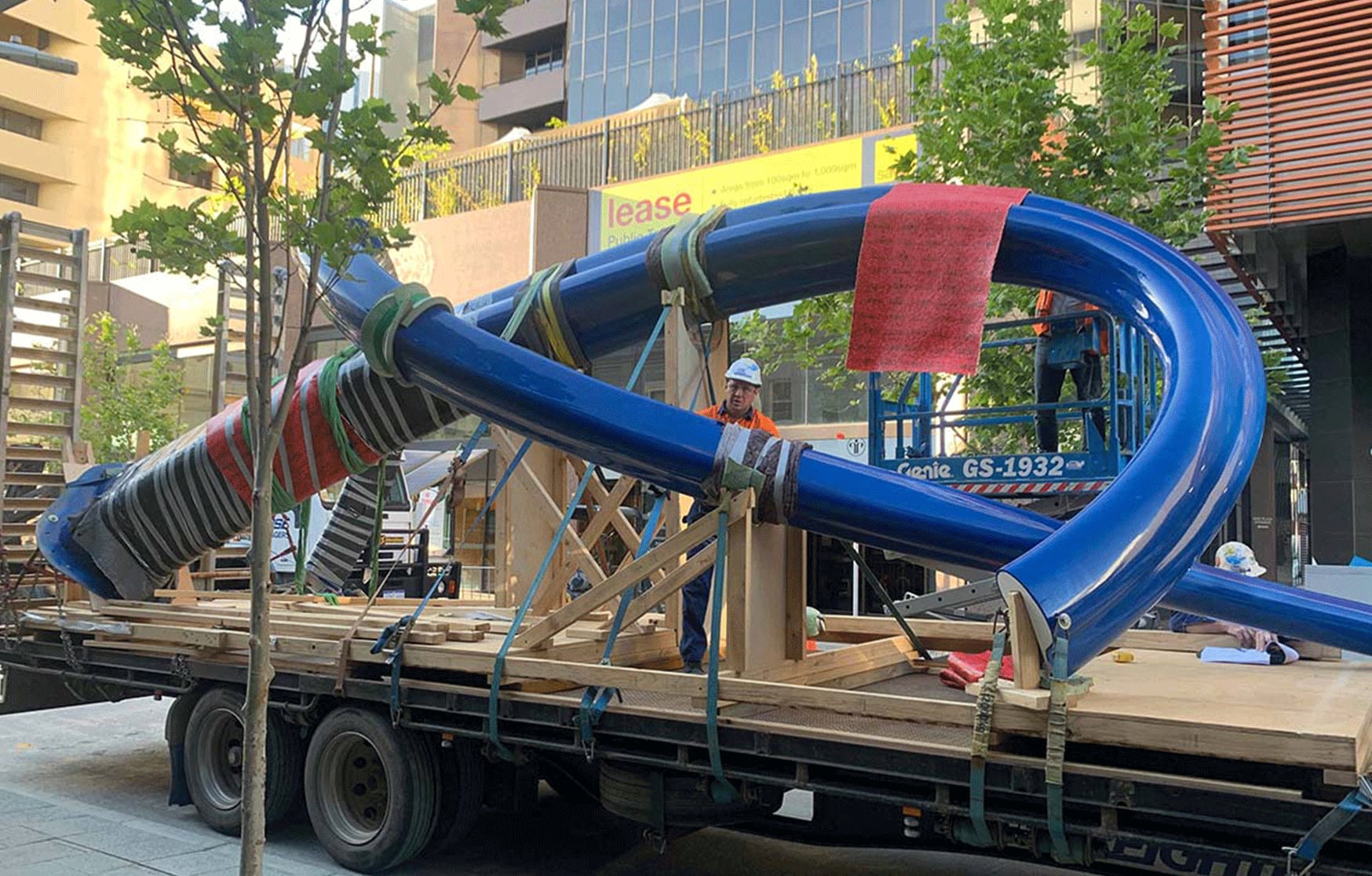
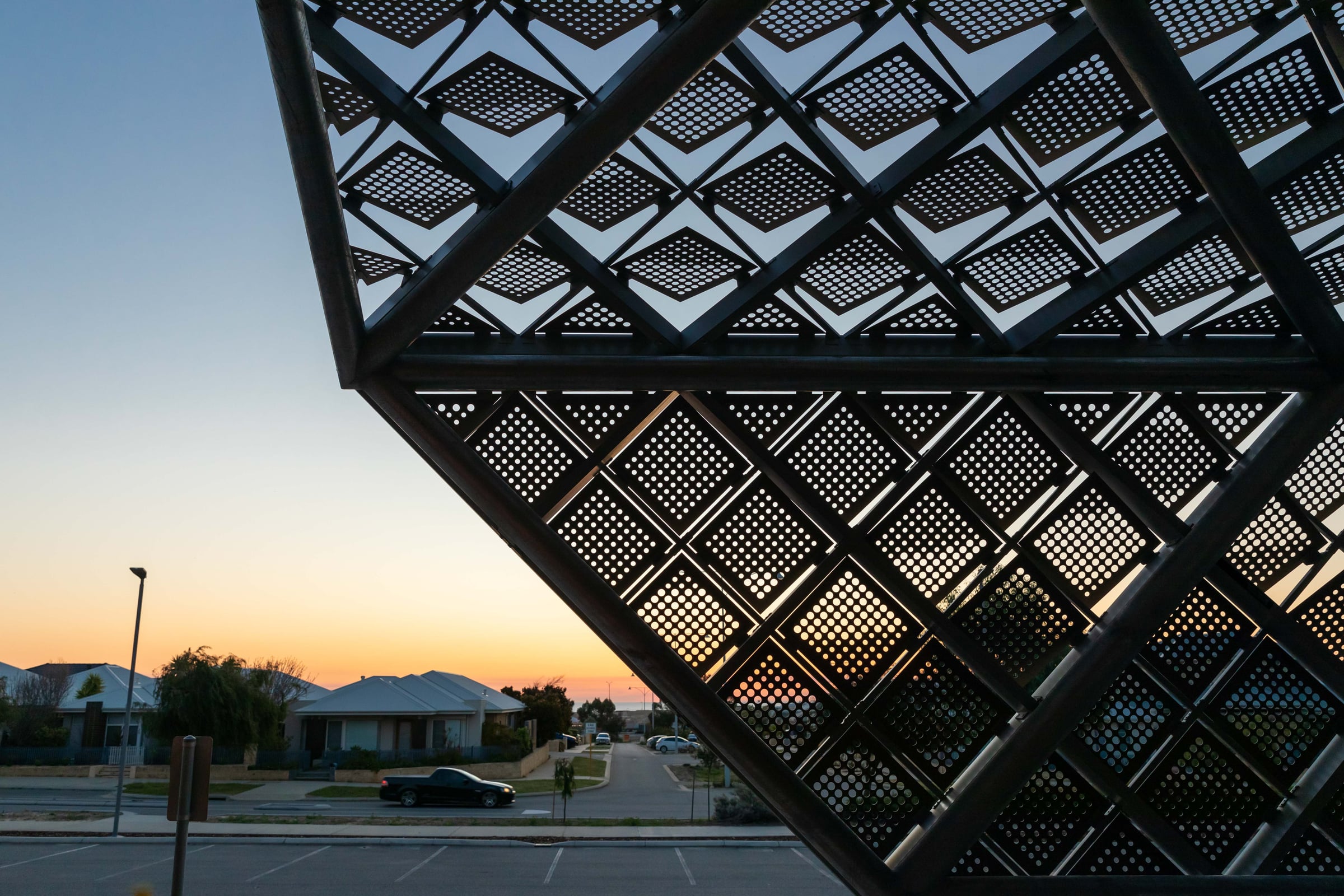
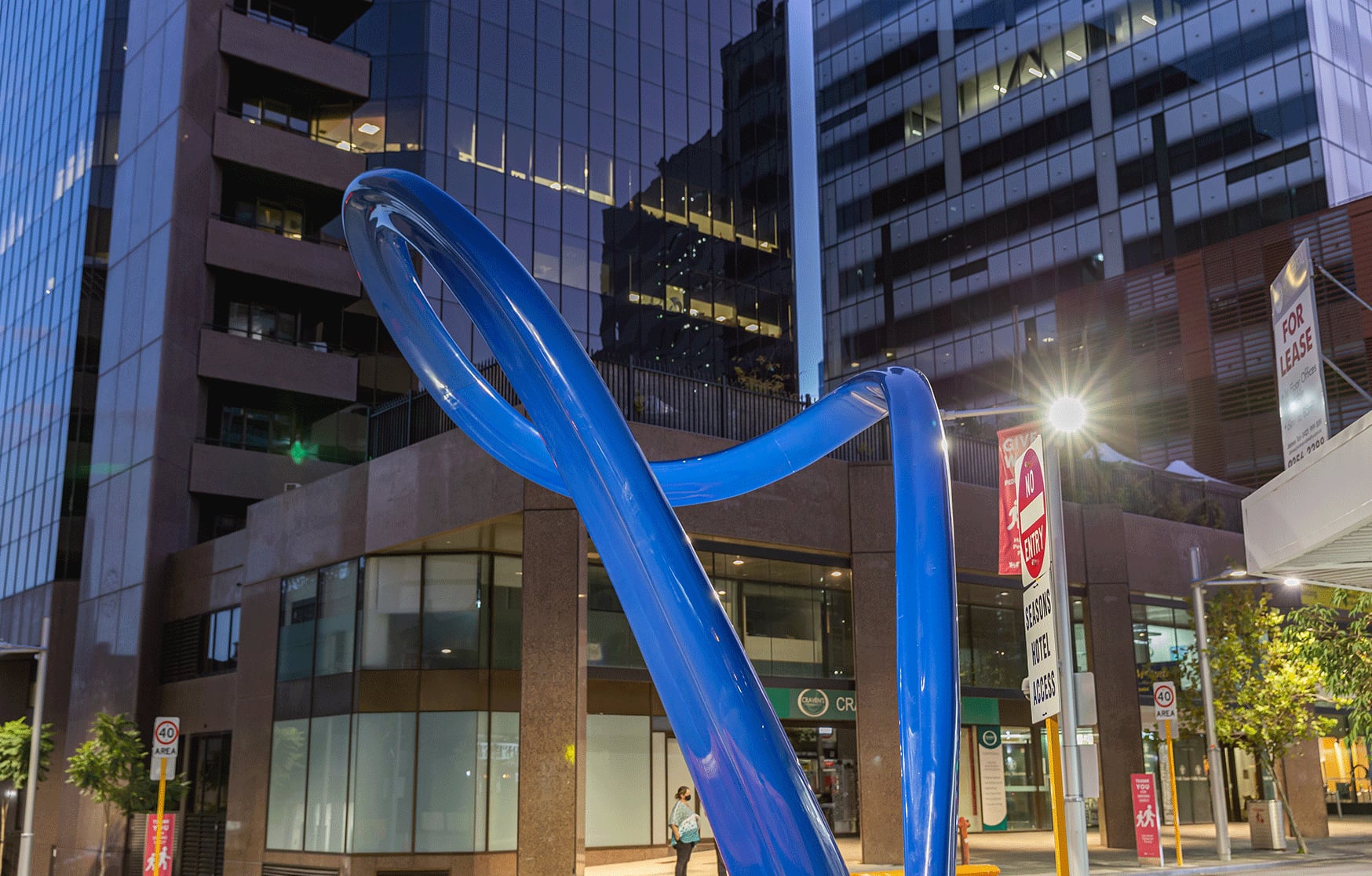
The borrowed night. No fittings of its own at all. A perforated or faceted surface changes character as the light around it changes, and the last of the sun, or the glow from the building behind, does the work. Windswept at Alkimos College is a surface catching sunlight through the day; as the sun drops behind it, the light comes through the perforations instead, and each rotated panel reads as a pixel of coastal light. Cygna in East Perth stands unlit but polished, and at dusk it borrows the lit towers around it, its blue loops carrying the city's own light down to the street. This register costs nothing to run and never fails.
What the night shift changes for commissioners
Safety and wayfinding become part of the brief. A well lit artwork at an entry does passive surveillance and navigation work. Cygna's loop points down Hay and Pier Streets toward the Swan River it maps; a lit landmark gives a precinct an after dark address, and a lit entry statement tells a visitor where the door is before they can read a sign.
Lighting is an engineering discipline. Anemoi's behaviour was developed with control systems specialists Light Application, and responsive systems are specified with a written replacement plan: which node, which driver, which controller, and where to reach them. A night work that fails reads worse than no night work at all, so the electronics are treated as a promise with a maintenance schedule attached.
Light is a budget line, and a large one. Every node needs a supply, a controller and access. The earlier post on what public art actually costs shows why the two lit works on this site sit at the top of the budget list. If the money is not there for a responsive night, a lit night or a borrowed night is not a lesser answer, and often a more durable one.
The panel should see both renders. If a concept presentation shows only the daylight view, ask for the 9pm view. Half the artwork's life happens there.
One idea, two shifts
The test of a double life work is that neither register feels like the accessory. Day and night should read as the same thought expressed in two materials: form and light. When that works, the artwork earns its site twice over, and the people who only ever pass at night get the full experience, not the leftovers.
See Anemoi's night work on the project page, or get in touch about a site that needs to work after dark.