Budgets are the part of public art nobody writes about, which is odd, because it is the first question every commissioner asks. Here is an honest anatomy: where the number comes from, what it has to cover, what it has bought on real projects, and what makes the same money go further or disappear.
Where the number comes from
On most projects the budget is set before an artist is anywhere near it.
State projects. Western Australia's Percent for Art Scheme allocates up to one percent of the construction budget on new public buildings over $2 million. A $30 million school carries up to $300,000 of artwork; a $12 million police station, up to $120,000. The figure is fixed by the building, not by the ambition of the brief.
Private developments. Many WA councils attach a public art condition to developments above a value threshold, usually around one percent of the estimated construction cost, sometimes with a cap. A $20 million apartment building can arrive with a $200,000 condition attached, and some councils offer to take a cash in lieu contribution instead. The earlier post on percent for art in WA walks through the condition itself.
Direct commissions. Developers, institutions and councils also commission outside any obligation, for a landmark, an entry statement or a facade that will sell the address. Here the budget is a decision, and the honest way to make it is to start from what the artwork has to do and where it will sit, then price that, rather than picking a number and hoping.
Whichever route, the figure is almost always all inclusive. It has to cover everything from the first sketch to the maintenance manual, and that is where the surprises live.
What the number has to carry
A public art budget is not a price tag on an object. It funds a process, and the object at the end of it. A typical commission budget carries:
- Concept and design development. Site research, community and stakeholder listening, concept options, panel presentations, then design documentation: parametric modelling, structural coordination and shop drawings.
- Engineering and certification. An artwork in a public place is a structure. It needs an engineer's signature, and on integrated work, coordination with the building's own structure and services.
- Fabrication. Usually the largest single line. Materials, workshop labour, finishes, prototypes and samples.
- Installation. Cranage, traffic management, access equipment, site labour and the quiet costs of working inside someone else's construction program.
- The long tail. Artist fees across the timeline, insurances, lighting and electrical, documentation and handover: certification records, asset register entries and a maintenance manual.
A commissioner comparing two proposals should ask how each budget splits across those lines. A proposal that is all fabrication and no documentation is telling you where the pain will arrive later. Fabrication is the biggest line on almost every project, but it is rarely more than two thirds of the total, and on a lit or integrated work the engineering, coordination and electrical lines grow quickly. As a guide, the National Association for the Visual Arts publishes a fee scale for public art that puts the artist's fee at roughly a fifth to a third of the budget, higher when the artist also carries engineering, fabrication management and community engagement. It is a benchmark rather than a rule; the right split is worked out project by project.
What it has bought
The budgets on this site are public, and they are a fair guide to what different kinds of work cost in Western Australia in the last few years:
- $120,000 bought Waterford: 130 square metres of custom brickwork along a parkland path, 6,500 bricks.
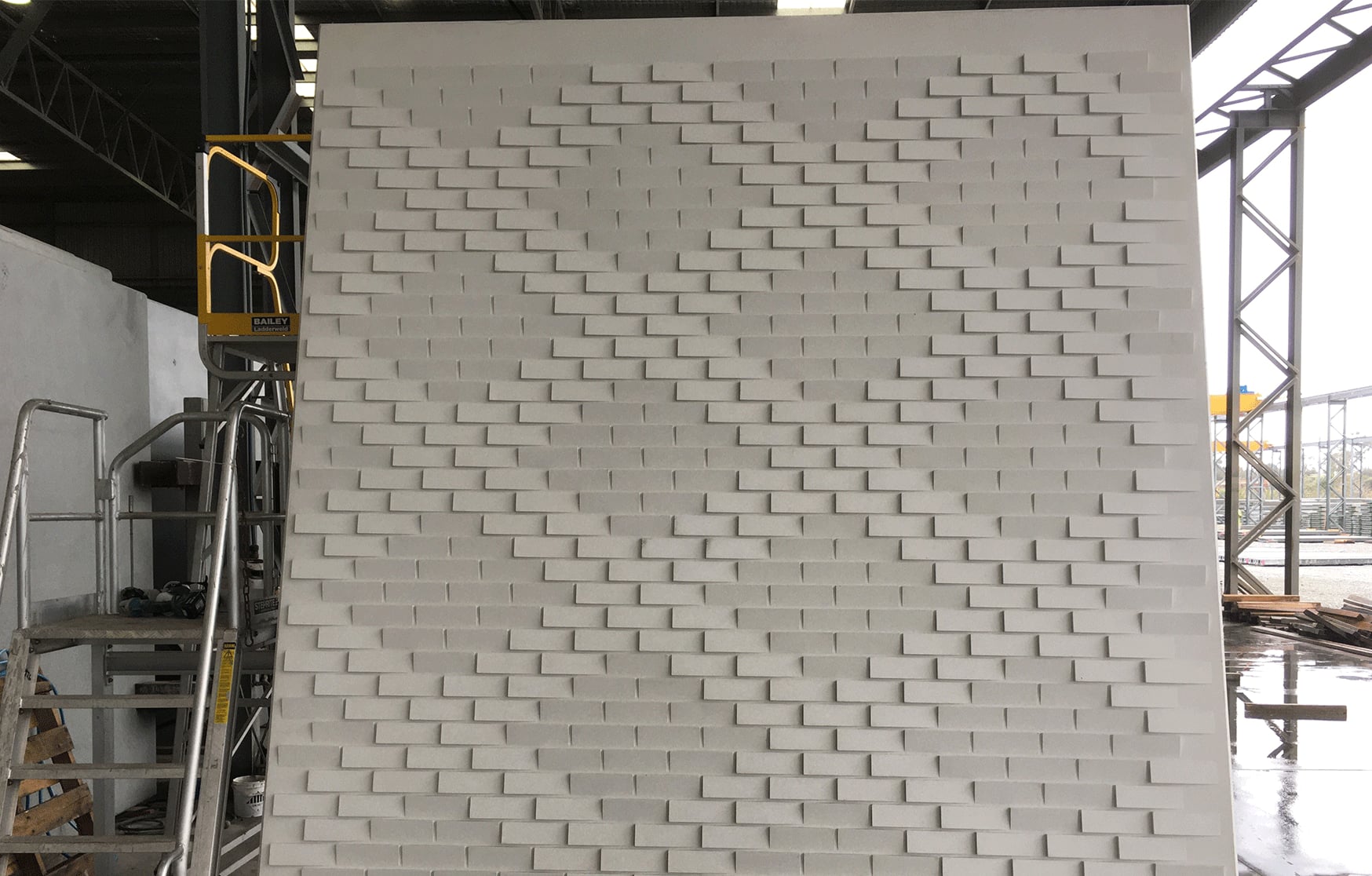
- $220,000 bought Queenslea: 171 square metres of patterned precast facade and 71 square metres of stained lenticular brickwork on an aged care building.
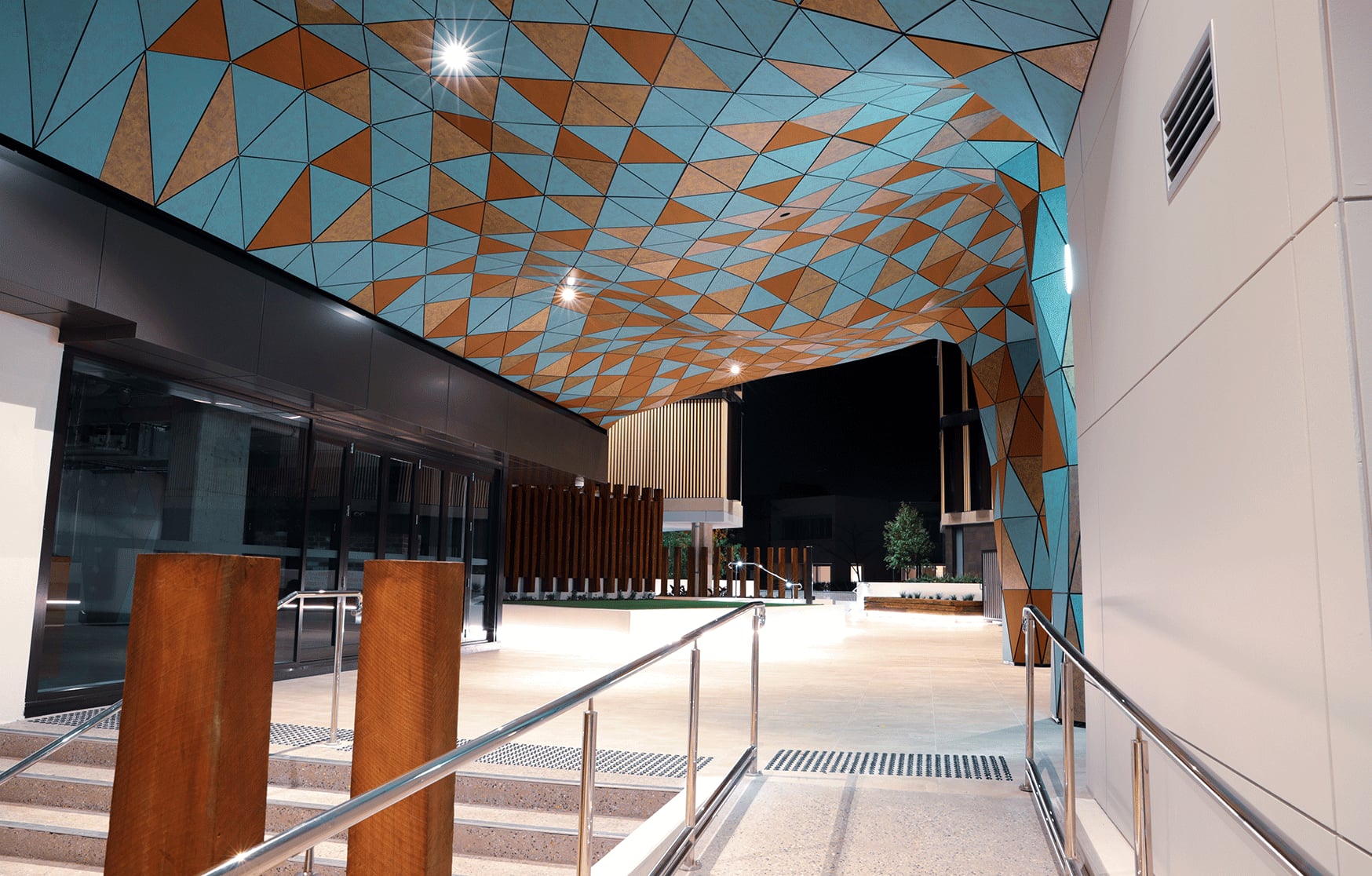
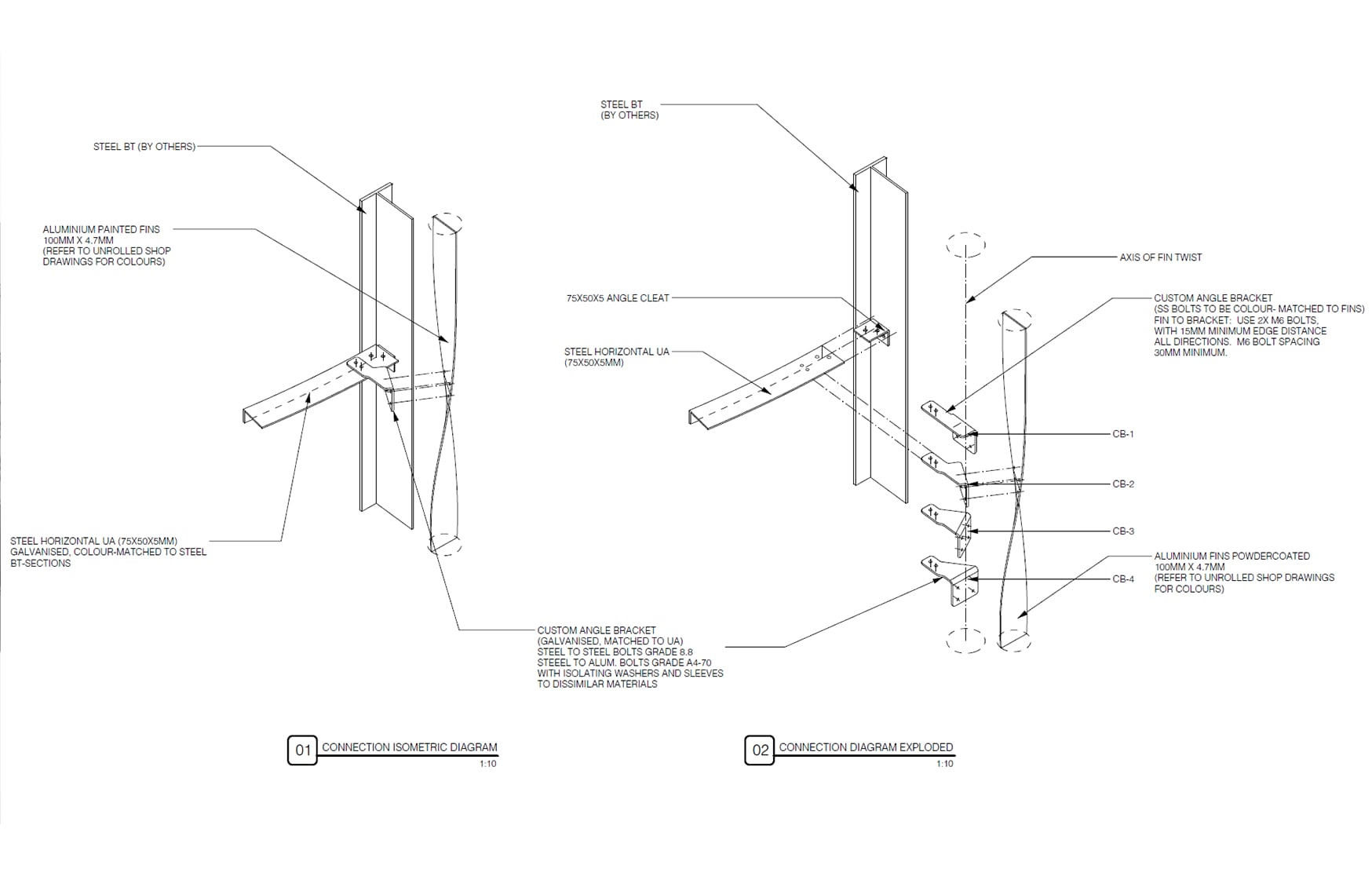
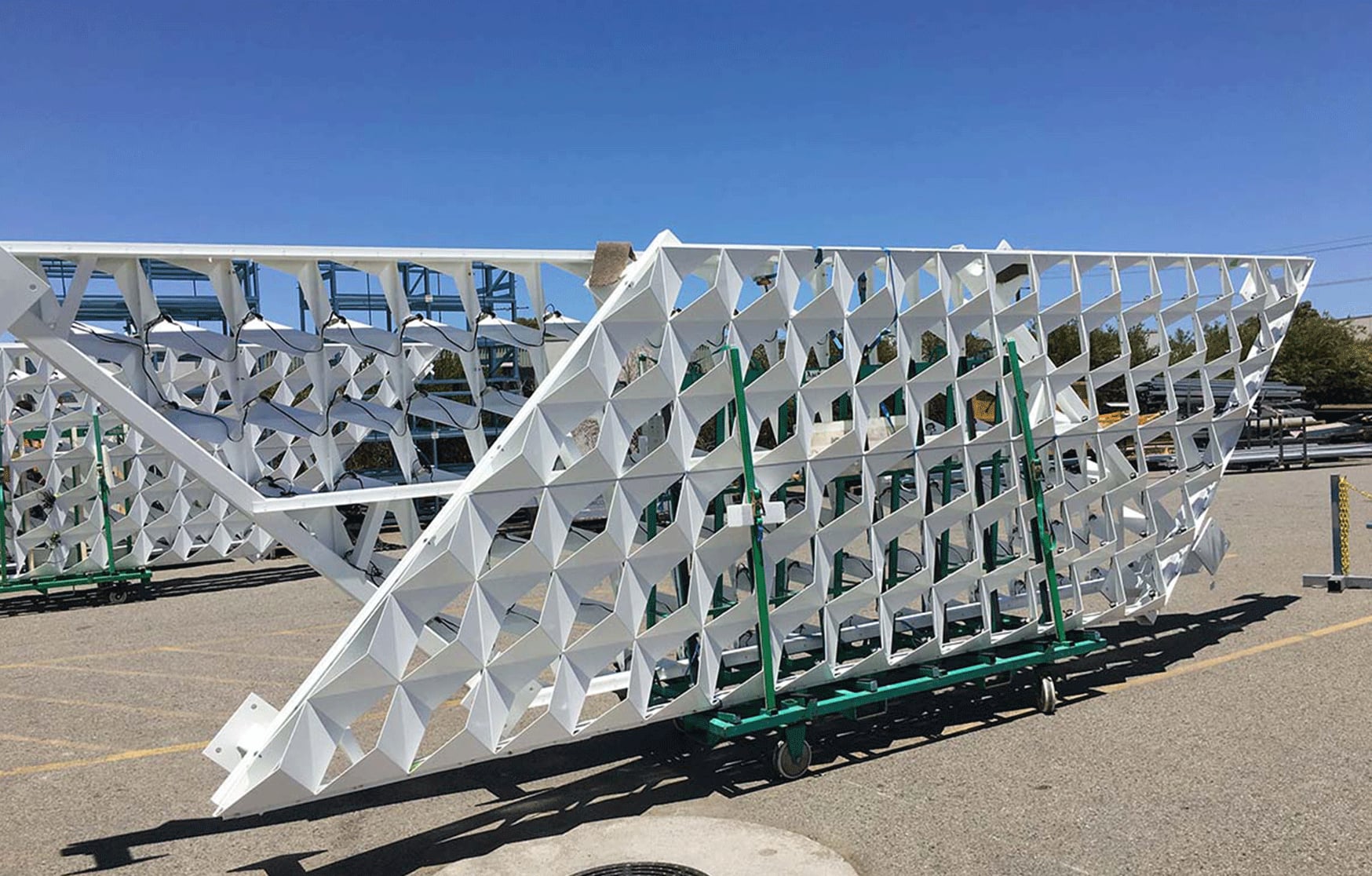
- $250,000 bought Pleated Histories: an 80 square metre entry statement of folded anodised fins at North Regional TAFE in Broome.
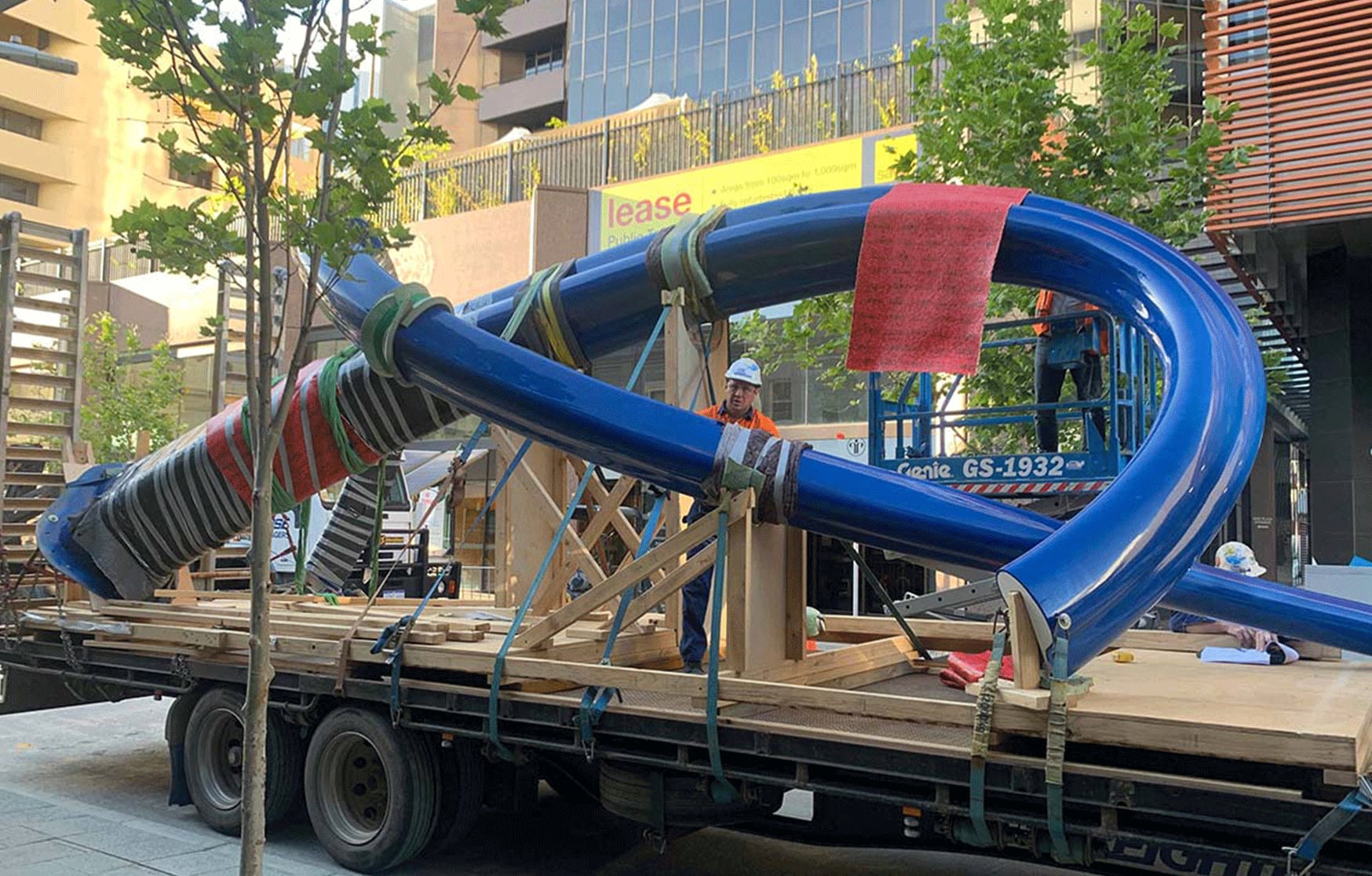
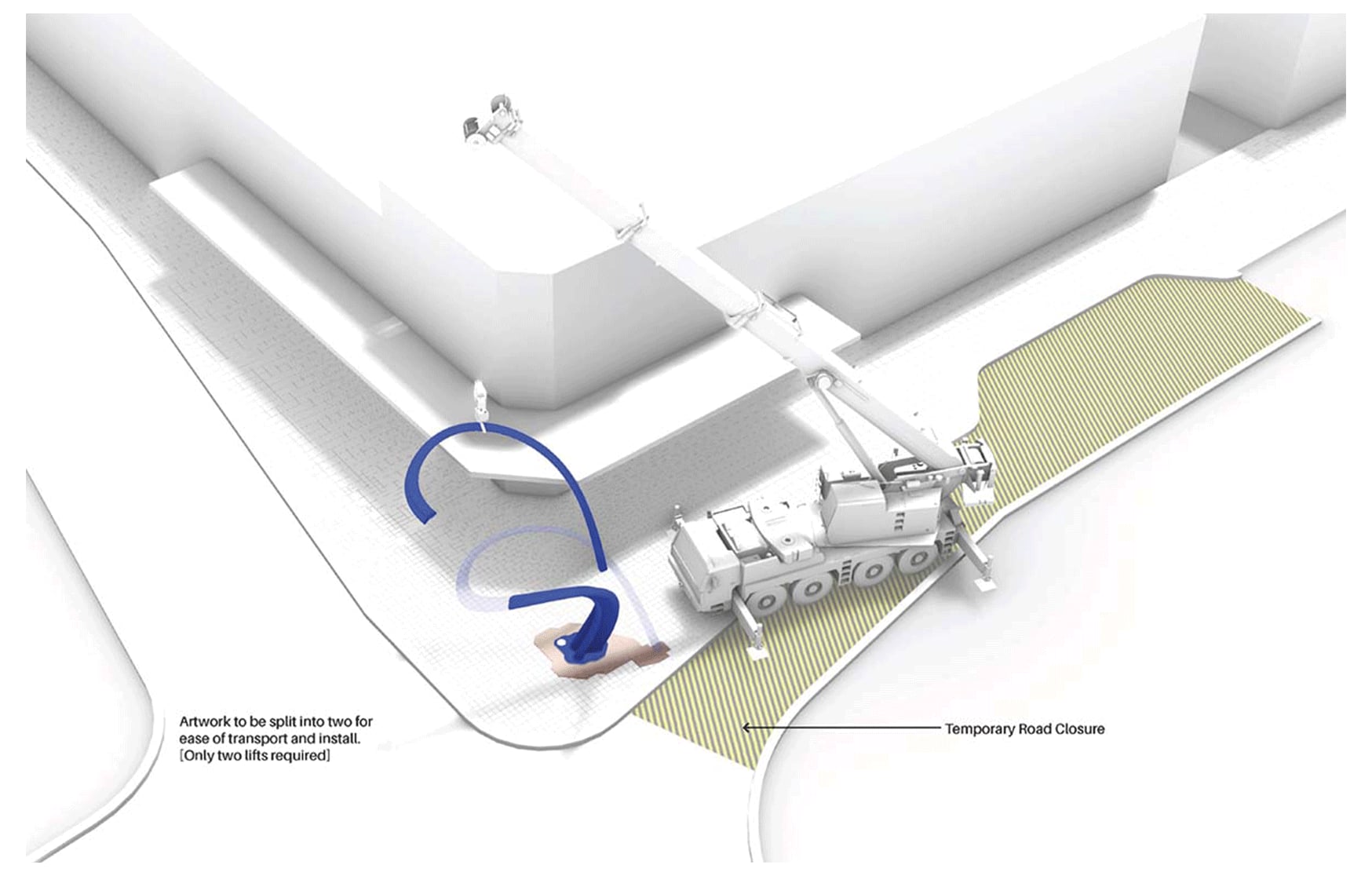
- $297,000 bought Cygna: a freestanding carbon fibre landmark, six and a half metres high, on a city corner.
- $500,000 bought Anemoi: 200 square metres of wind formed soffit and columns with more than 800 LED nodes driven by a live anemometer.
- $600,000 bought The Precinct: 312 square metres of folded aluminium facade with 2,100 programmable light nodes on Canning Highway.
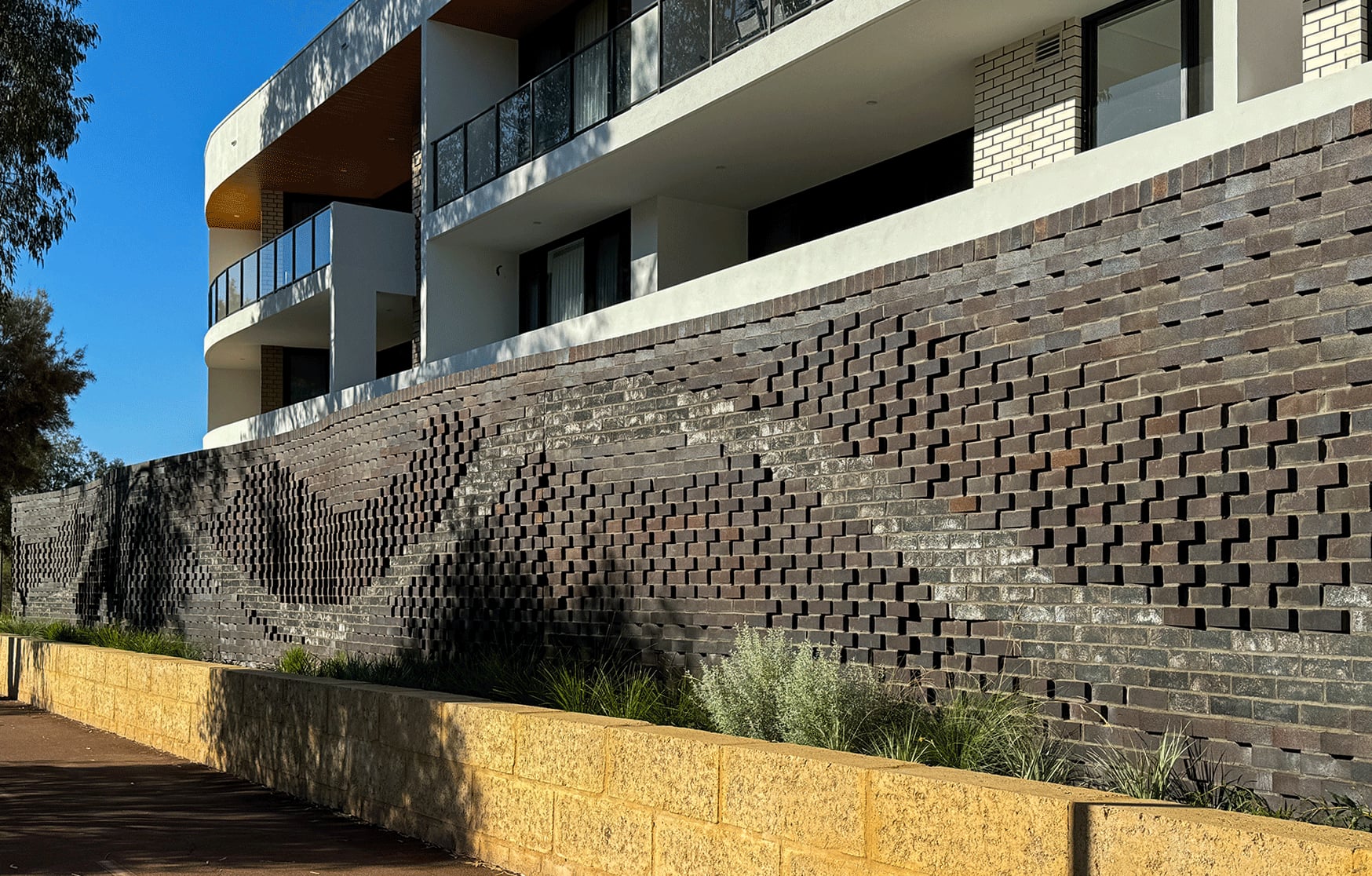
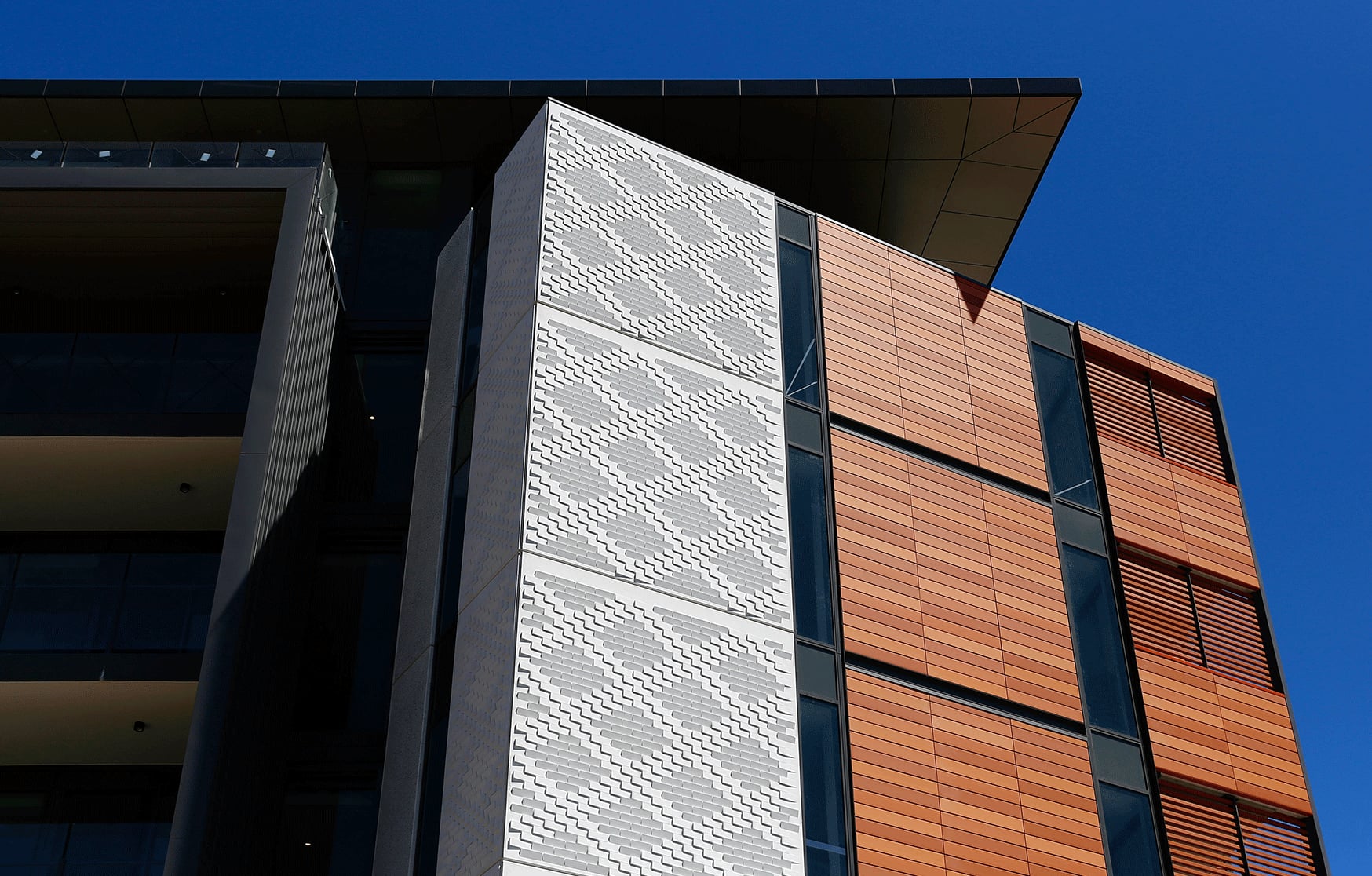
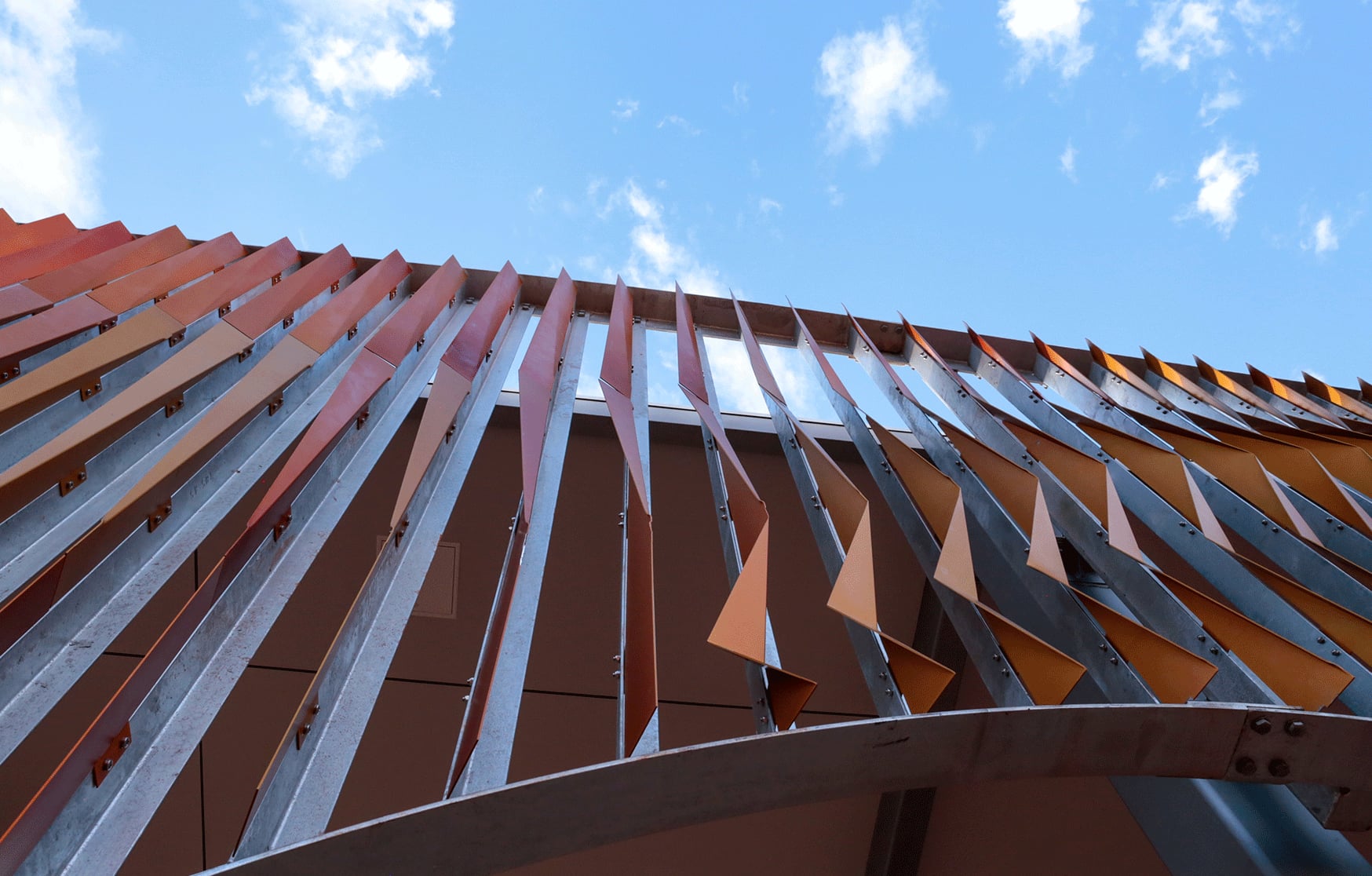
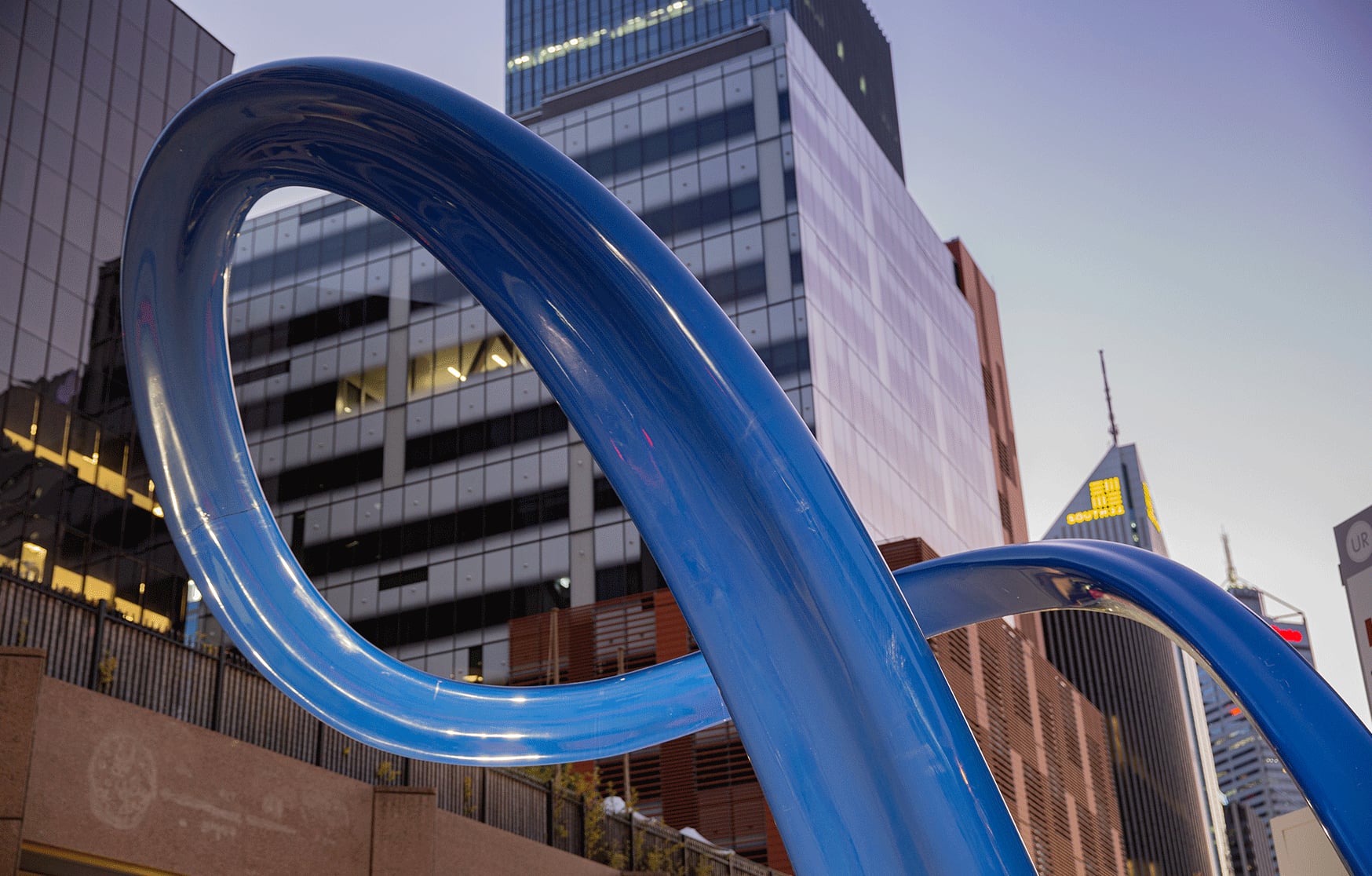
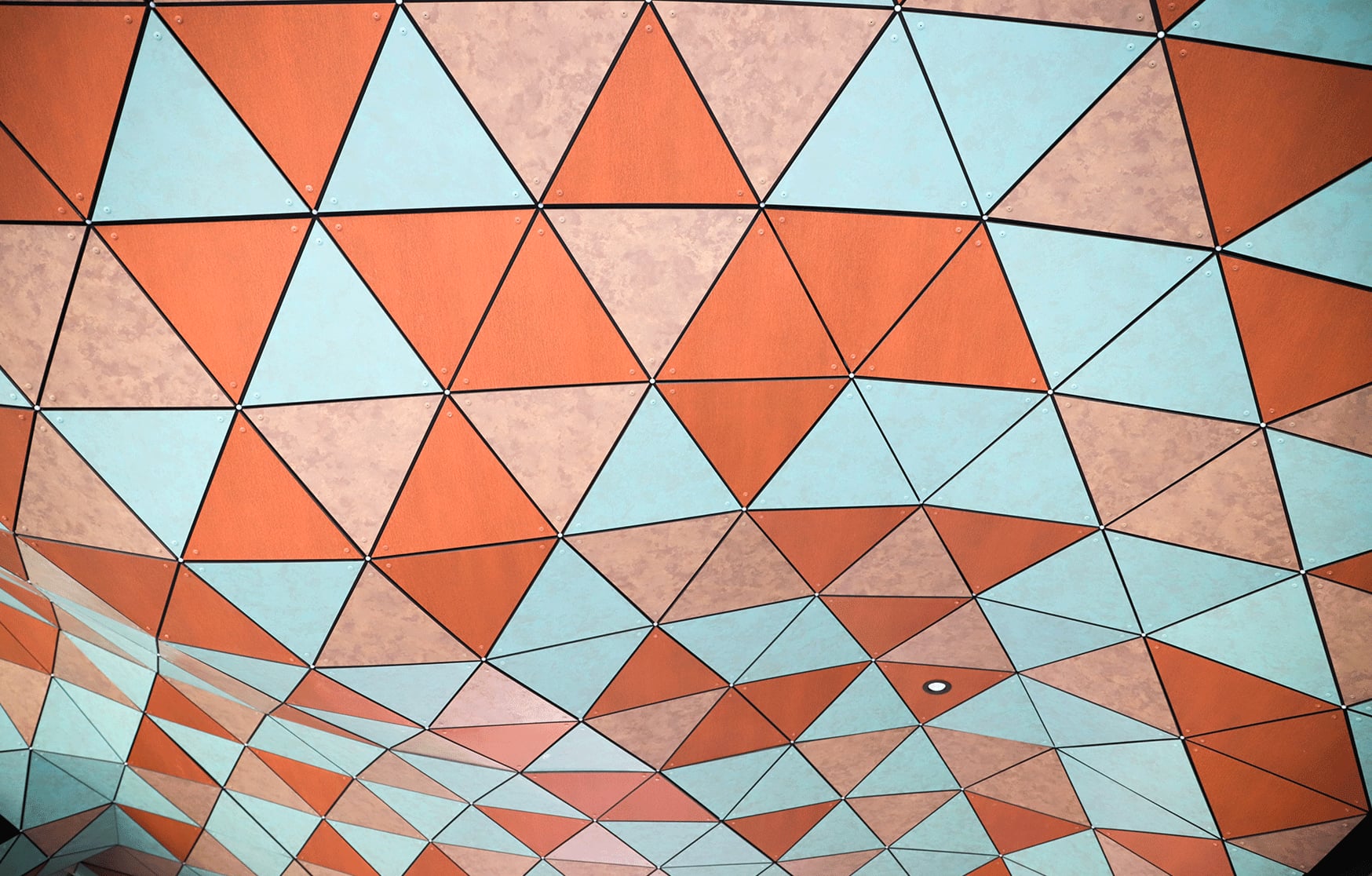

Two things stand out. The integrated works at the lower end were run on a value adding basis, where the base building carried the cost of the plain wall or standard panel and the art budget paid for the difference, which is what stretches $120,000 across 130 square metres. And light is expensive: the two lit works sit at the top of the list because every node needs power, control, programming and a way to be reached when it fails.
What makes the same budget go further
Timing. The single biggest factor. At masterplan or DA stage, an integrated artwork shares the building's structure, trades and program. After construction starts, everything is a variation. There is a whole post on when to bring a public artist in.
Riding on standard methods. At Queenslea, casting the pattern into precast concrete panels delivered brick scale ornament within a standard precast budget. At Waterford, a custom brick shape cost a die at the brickworks, after which every brick was an ordinary brick to lay. The craft rode on a construction method the project was already paying for.
Parametric documentation. When the geometry lives in a parametric model, design changes flow through to shop drawings without redrawing. On Anemoi, shop drawings updated as the building was constructed around the artwork. Redrawing is the invisible cost on projects that change late, and it is the one a good model removes.
Prototypes before production. A sample fin, a test panel, a course of bricks laid on a pallet. Cheap to make, and they settle finishes, tolerances and fixings before the expensive run begins.
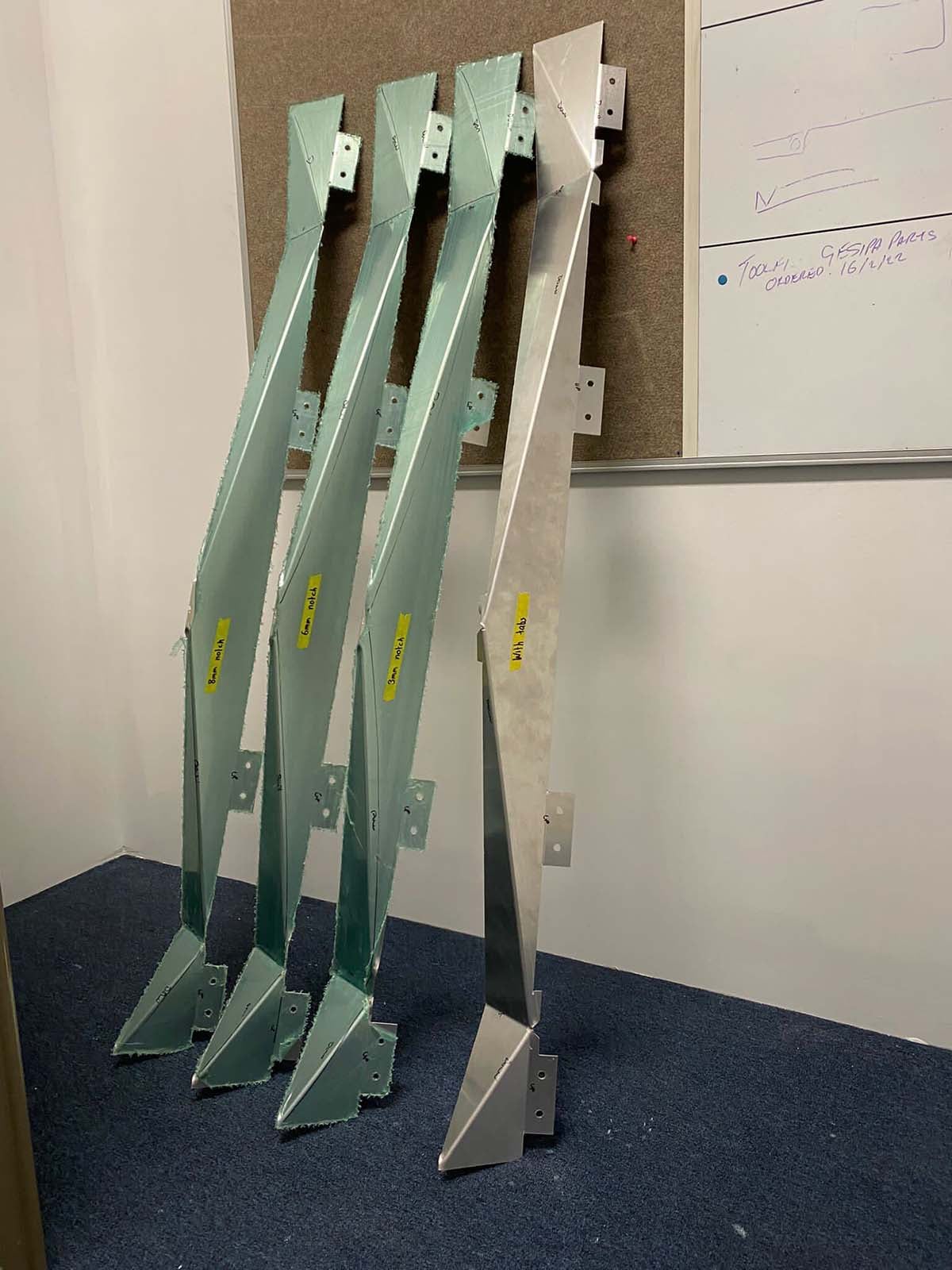
An honest maintenance conversation, early. Materials chosen for graceful ageing cost less over the artwork's life than materials chosen for the render.
What eats a budget
The same list, read the other way.
Arriving late. An artwork introduced once the builder is on site pays for penetrations, fixings and loads as variations, and pays the builder's margin on each of them.
Site unknowns. On Anemoi the as built structure had to be point cloud scanned and the slab scanned for post tensioning strands before anything could be anchored. Necessary, and not in anyone's first estimate.
Light and power. Every LED node is a small electrical device with a supply, a controller and a maintenance question. Lit works are wonderful, and they should be budgeted as lighting projects as well as artworks.
Transport and cranes. A work that does not fit on a truck costs a second truck, or a redesign into modules. A work that needs a crane on a city street costs a traffic management plan and a night.
Redesign after approval. A concept the panel loved that the engineer cannot certify, or that the budget cannot build, gets designed twice. The fix is to have the engineer and the fabricator in the concept conversation, not after it.
What StudioDG works with
There is no minimum. The projects on this site range from a brick wall to a lit facade, and what matters is not the size of the budget but the fit between the budget and the ambition. A small budget is not a reason to shrink the idea; it is a reason to change its form. Where a freestanding object would spread the money too thin, the same figure can go into the building itself: a pattern cast into precast, a perforation designed into a screen, a treatment on the glazing. The artwork becomes a layer of the architecture rather than a small object trying to hold a big site, and it is often the better work for it.
So bring the number you have, whatever it is. The useful conversation is about what it can become.
The uncomfortable truth
The most expensive public artwork is the one commissioned late, designed twice and value engineered in a panic. The cheapest is the one where the artist, architect and builder were solving the same problem from the start. The budget conversation and the timing conversation are the same conversation.
Bring a budget, a condition or a hunch to a first conversation. There is no fee to talk.